
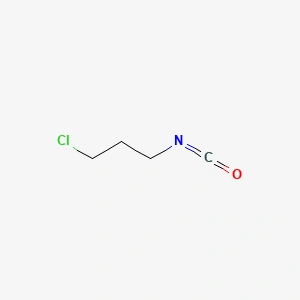
3-Chloropropyl isocyanate
3-Chloropropyl isocyanate, identified by CAS number 13010-19-0, is a versatile organoisocyanate characterized by the presence of both a reactive isocyanate group and a terminal chlorine atom. This bifunctional nature makes it a valuable intermediate in organic synthesis, as it allows for sequential or simultaneous functionalization at two different reactive sites. The compound typically appears as a clear to slightly yellowish liquid and is known for its high reactivity toward nucleophiles such as alcohols, amines, and thiols.
In industrial and research settings, this chemical serves as a critical building block for the modification of surfaces and the synthesis of complex molecules. Due to its sensitivity to moisture and its reactive profile, it requires careful handling under inert conditions, such as a nitrogen or argon atmosphere. Proper storage in cool, dry environments is essential to maintain its purity and prevent polymerization or hydrolysis. As a specialized raw material, it is primarily utilized by chemical manufacturers and research laboratories focused on advanced material science and fine chemical synthesis.
• This compound is extensively used as a functionalizing agent in polymer science, particularly for the modification of hydroxyl-terminated or amine-terminated polymers. By introducing the chloropropyl moiety onto a polymer backbone, researchers can create reactive sites for further cross-linking or the attachment of specific ligands, thereby tailoring the physical and chemical properties of the resulting materials for specialized industrial applications.
• In the field of surface chemistry, 3-chloropropyl isocyanate acts as an effective coupling agent for the silanization and functionalization of inorganic substrates like silica or glass. The isocyanate group can react with surface silanol groups or other active sites, while the terminal chlorine atom provides a platform for subsequent nucleophilic substitution reactions. This dual functionality is crucial for developing high-performance coatings, adhesives, and stationary phases for chromatography.
• The chemical serves as a key intermediate in the synthesis of various pharmaceutical and agrochemical precursors. Its ability to undergo controlled reactions allows for the construction of heterocyclic frameworks and the introduction of specific side chains into bioactive molecules. By leveraging the differential reactivity of the isocyanate and alkyl halide groups, synthetic chemists can efficiently assemble complex molecular architectures required for drug discovery and crop protection research.
Product Name: 3-Chloropropyl isocyanate
For global customers, we provide complete technical documentation to support product evaluation, regulatory compliance and safe handling during transportation and application.