
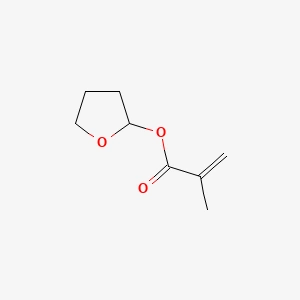
2-Tetrahydrofuranyl methacrylate
2-Tetrahydrofuranyl methacrylate, identified by CAS number 15895-80-4, is a specialized monofunctional monomer featuring a methacrylate group attached to a tetrahydrofuranyl ring. This chemical is characterized by its unique acetal-like structure, which imparts specific reactivity profiles compared to standard alkyl methacrylates. As a clear, liquid monomer, it is valued in advanced material science for its ability to undergo polymerization while maintaining a functional group that is sensitive to specific environmental triggers, such as acidic conditions.
In industrial and research settings, handling this material requires standard precautions for volatile organic compounds and reactive monomers. Its chemical characteristics make it a versatile building block for synthesizing polymers with tailored solubility and degradability. The inclusion of the cyclic ether moiety enhances the polarity and adhesion properties of the resulting polymer chains, making it a critical component in the development of high-performance resins and specialty coatings.
• In the field of microlithography and semiconductor manufacturing, 2-Tetrahydrofuranyl methacrylate serves as a pivotal component in chemically amplified photoresist formulations. The acid-labile nature of the tetrahydrofuranyl group allows for precise solubility changes upon exposure to light and acid catalysts, facilitating the creation of high-resolution patterns on silicon wafers.
• The monomer is extensively utilized in the synthesis of functional polymers for controlled release applications and drug delivery systems. Its ability to undergo hydrolysis under mildly acidic conditions enables the design of pH-responsive materials that can release encapsulated active ingredients in specific biological or environmental contexts, providing a mechanism for targeted delivery.
• Within the coatings and adhesives industry, this compound is employed to improve the surface adhesion and mechanical flexibility of acrylic resins. The cyclic ether structure contributes to enhanced wetting properties on various substrates, while the methacrylate backbone ensures robust cross-linking during the curing process, resulting in durable and chemically resistant finishes.
• It also finds application in the development of specialty optical materials and dental resins. By incorporating 2-Tetrahydrofuranyl methacrylate into copolymer systems, researchers can fine-tune the refractive index and shrinkage characteristics of the final product, which is essential for producing high-quality lenses and restorative dental components.
Product Name: 2-Tetrahydrofuranyl methacrylate
For global customers, we provide complete technical documentation to support product evaluation, regulatory compliance and safe handling during transportation and application.