
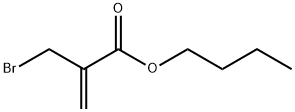
Butyl 2-(bromomethyl)acrylate
Butyl 2-(bromomethyl)acrylate, identified by CAS number 170216-64-5, is a specialized acrylate ester characterized by the presence of a reactive bromomethyl group at the alpha position of the acrylic backbone. This structural feature classifies it as a functionalized monomer and a versatile building block in organic synthesis. It typically appears as a clear to slightly yellow liquid and is valued for its dual reactivity, combining the polymerizable nature of an acrylate with the electrophilic substitution potential of an allylic bromide.
In a research and industrial context, this compound serves as a critical intermediate for the preparation of complex macromolecules and functional polymers. Due to the sensitivity of the bromomethyl group, it requires careful handling and storage, often under refrigerated conditions and protected from light or moisture to prevent premature polymerization or degradation. Its unique reactivity profile makes it an essential tool for chemists looking to introduce specific functional groups into polymeric systems or synthesize bioactive molecular scaffolds.
• Polymer Modification and Grafting: The primary utility of Butyl 2-(bromomethyl)acrylate lies in its role as a functional monomer for the synthesis of reactive polymers. The allylic bromine atom allows for post-polymerization modification through nucleophilic substitution reactions, enabling the attachment of various side chains such as amines, ethers, or thioethers. This capability is particularly useful in developing specialty coatings, adhesives, and smart materials where tailored surface properties or specific chemical functionalities are required.
• Organic Synthesis Intermediate: Beyond polymerization, this compound acts as a potent electrophile in organic synthesis. It is frequently employed in the construction of alpha-methylene-gamma-butyrolactones and other heterocyclic frameworks through cyclization reactions. The bromomethyl group facilitates carbon-carbon bond formation via Reformatsky-type reactions or palladium-catalyzed coupling, making it a valuable precursor for synthesizing complex organic molecules and fine chemicals.
• Advanced Materials Research: In the field of materials science, it is utilized to create well-defined block copolymers and dendrimers. Its compatibility with controlled radical polymerization techniques, such as Atom Transfer Radical Polymerization (ATRP), allows researchers to design architectures with precise molecular weights and narrow polydispersity. These materials are often investigated for applications in drug delivery systems, responsive hydrogels, and high-performance electronic components.
Product Name: Butyl 2-(bromomethyl)acrylate
For global customers, we provide complete technical documentation to support product evaluation, regulatory compliance and safe handling during transportation and application.