
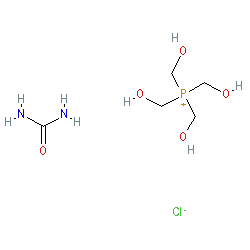
Tetrakis(hydroxymethyl)phosphonium chloride urea polymer
Tetrakis(hydroxymethyl)phosphonium chloride urea polymer, identified by CAS 27104-30-9, is a specialized organophosphorus compound widely recognized for its efficacy as a durable flame retardant. This polymer is typically synthesized through the condensation of tetrakis(hydroxymethyl)phosphonium chloride (THPC) with urea, resulting in a pre-polymerized structure that facilitates superior bonding with cellulosic substrates. In its industrial form, it is often handled as a concentrated aqueous solution, characterized by its stability and compatibility with various textile processing techniques.
The chemical architecture of this polymer allows for deep penetration into fiber structures, where it undergoes further cross-linking during the curing process. This ensures that the flame-retardant properties remain intact even after multiple laundering cycles. Beyond its primary role in textiles, the material serves as a critical component in research and development for advanced polymer coatings and functional surface treatments requiring enhanced thermal resistance and char-forming capabilities.
• The primary application of this polymer is in the textile industry for the durable flame-retardant finishing of cotton, linen, and other cellulosic fibers. It is typically applied through a pad-dry-cure process, followed by ammonia gas curing, which creates a permanent phosphorus-nitrogen synergistic network within the fabric, significantly improving resistance to ignition and thermal degradation.
• In the production of protective workwear and industrial uniforms, CAS 27104-30-9 is valued for its ability to provide high-level fire protection without compromising the inherent comfort or breathability of natural fibers. The polymer ensures that the treated textiles meet rigorous safety standards for heat and flame exposure while maintaining physical integrity over the garment’s lifecycle.
• This chemical intermediate also finds utility in the formulation of specialized coatings and adhesives where flame retardancy is a functional requirement. By incorporating the THPC-urea polymer into resin systems, manufacturers can enhance the fire-resistant properties of wood products, paper, and non-woven materials, leveraging its excellent char-forming mechanisms to suppress combustion.
• In a research context, the polymer is utilized to study phosphorus-based flame retardancy mechanisms and the development of new synergistic chemical systems. Its reactive hydroxymethyl groups allow for further chemical modification, making it a versatile building block for synthesizing novel flame-retardant additives and high-performance thermosetting materials.
Product Name: Tetrakis(hydroxymethyl)phosphonium chloride urea polymer
For global customers, we provide complete technical documentation to support product evaluation, regulatory compliance and safe handling during transportation and application.