
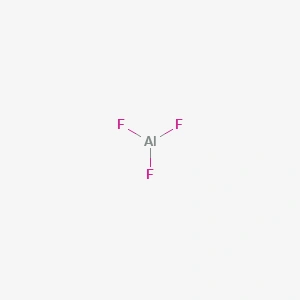
Aluminum Fluoride
Aluminum fluoride (CAS 7784-18-1) is an inorganic compound primarily recognized as a white, crystalline solid. It is characterized by its high melting point and thermal stability, making it a vital component in high-temperature industrial processes. Chemically, it exists as a trihydrate or in anhydrous form, exhibiting low solubility in water and most organic solvents. Its structure typically consists of aluminum centers coordinated with fluorine atoms, forming a robust lattice that contributes to its physical properties.
In industrial and research settings, aluminum fluoride is valued for its role as a flux and its ability to modify the physical characteristics of molten salts. Handling this material requires standard safety protocols to manage dust exposure and potential reactivity with strong acids. As a versatile chemical intermediate, it serves as a cornerstone in the metallurgical and materials science sectors, facilitating the production of essential metals and specialized glass formulations.
• The primary application of aluminum fluoride is in the production of metallic aluminum via the Hall-Héroult electrolytic process. By acting as an additive to the molten electrolyte bath, it significantly lowers the melting point of alumina and enhances the electrical conductivity of the mixture. This reduction in operating temperature leads to substantial energy savings and improves the overall efficiency of the smelting operation.
• In the glass and ceramics industries, this compound serves as a critical additive to refine optical properties and improve chemical resistance. It is frequently utilized in the manufacturing of specialized glass, such as infrared-transmitting glass, and as a component in ceramic glazes to achieve specific textures and durability. Its presence helps control the refractive index and thermal expansion characteristics of the final product.
• Aluminum fluoride functions as an effective catalyst and chemical intermediate in various organic synthesis and fluorination reactions. It is employed in the production of fluorinated hydrocarbons and other specialized chemicals where controlled acidity and halogenation are required. Its role in these processes allows for the synthesis of complex molecules used in industrial coatings and advanced material applications.
• Beyond metallurgy and glass, it is utilized in the formulation of specialized inhibitors and fermentation agents in laboratory research. It acts as a reagent to study biochemical pathways, particularly in the investigation of G-protein signaling and enzyme activity. This versatility makes it a valuable tool for researchers exploring molecular biology and inorganic chemistry.
Product Name: Aluminum Fluoride
For global customers, we provide complete technical documentation to support product evaluation, regulatory compliance and safe handling during transportation and application.