
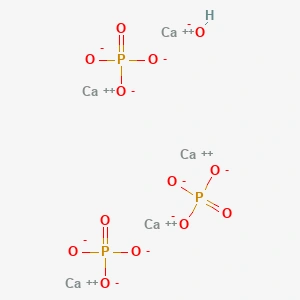
Hydroxyapatite
Hydroxyapatite, identified by CAS number 1306-06-5, is a naturally occurring mineral form of calcium apatite that serves as the primary inorganic component of vertebrate bone and tooth enamel. Chemically characterized by its crystalline structure and high calcium-to-phosphorus ratio, this material is highly valued for its exceptional biocompatibility and bioactivity. In its synthetic form, it typically appears as a fine white powder that maintains structural stability across a range of environmental conditions.
Beyond its biological significance, hydroxyapatite is a versatile material in material science and industrial chemistry. Its unique surface chemistry allows for effective ion exchange and adsorption, making it a subject of extensive research in chromatography and environmental remediation. The material’s ability to integrate seamlessly with biological tissues without eliciting significant immune responses makes it a cornerstone of modern biomaterial engineering and advanced ceramic production.
• In the field of biomedical engineering, hydroxyapatite is extensively utilized as a coating for metallic implants, such as titanium hip replacements and dental posts, to enhance osseointegration. By providing a bioactive surface, it facilitates a direct chemical bond between the implant and the surrounding bone tissue, significantly improving the long-term stability and success rate of prosthetic devices.
• Within the oral care industry, this compound is integrated into toothpaste and professional dental treatments as a remineralizing agent. Its structural similarity to natural tooth enamel allows it to fill microscopic defects on the tooth surface, helping to reduce dentin hypersensitivity and restore mineral content lost to acid erosion without the need for aggressive chemical additives.
• The material serves as a highly effective stationary phase in liquid chromatography, particularly for the purification of proteins, enzymes, and nucleic acids. Its unique adsorption properties allow for the separation of complex biological molecules based on their specific interactions with calcium and phosphate sites on the crystal surface, providing high resolution in laboratory settings.
• In environmental and industrial applications, hydroxyapatite is employed for the remediation of contaminated water and soil. Its high ion-exchange capacity enables the effective sequestration of heavy metal ions, such as lead, cadmium, and zinc, from aqueous solutions, transforming them into stable mineral phases and preventing their leaching into the ecosystem.
Product Name: Hydroxyapatite
For global customers, we provide complete technical documentation to support product evaluation, regulatory compliance and safe handling during transportation and application.