
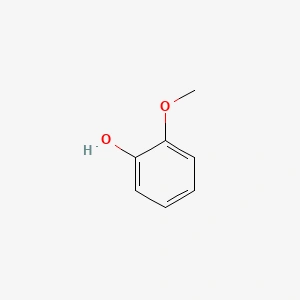
Pyroguaiac acid
Pyroguaiac acid, commonly known as guaiacol, is an organic compound with the chemical formula C7H8O2. It is a naturally occurring phenolic substance typically derived from wood creosote or guaiacum resin, though it is also produced synthetically for industrial applications. Characterized by its distinct smoky, medicinal aroma, this compound appears as a colorless to pale yellow liquid or crystalline solid that darkens upon exposure to air and light. Its chemical structure, featuring a methoxy group ortho to a hydroxyl group on a benzene ring, renders it a versatile building block in organic synthesis.
In industrial and research settings, guaiacol is valued for its reactivity and its role as a precursor to more complex molecules. It serves as a fundamental starting material in the production of various flavorings, fragrances, and active pharmaceutical ingredients. Due to its phenolic nature, it requires careful handling in controlled environments, typically involving storage in amber containers under inert atmospheres to maintain its chemical integrity and prevent oxidative degradation.
• Guaiacol serves as a critical primary intermediate in the large-scale synthesis of vanillin. Through various chemical processes such as the glyoxylic acid route, it is converted into this widely used flavoring agent, which finds extensive application in the food, beverage, and cosmetic industries.
• In the pharmaceutical sector, it acts as a precursor for the synthesis of several medicinal compounds, including expectorants like guaifenesin. Its chemical framework allows for the efficient derivation of various ethers and esters used in the formulation of therapeutic agents targeting respiratory and cardiovascular conditions.
• The compound is extensively utilized in the fragrance industry to impart woody, smoky, or leathery notes to perfumes and personal care products. Its unique olfactory profile makes it a staple ingredient for creating complex aromatic accords that mimic the scent of tobacco or charred wood.
• In analytical chemistry and laboratory research, guaiacol is frequently employed as a reagent for the detection and quantification of various enzymes, such as peroxidases. Its ability to undergo colorimetric changes upon oxidation makes it an effective indicator in biochemical assays and environmental testing procedures.
Product Name: Pyroguaiac acid
For global customers, we provide complete technical documentation to support product evaluation, regulatory compliance and safe handling during transportation and application.