
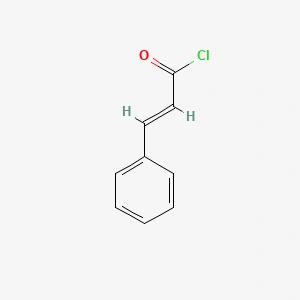
Cinnamoyl chloride
Cinnamoyl chloride, identified by CAS number 102-92-1, is a versatile organic compound characterized as the acid chloride derivative of cinnamic acid. It typically appears as a yellow liquid or a low-melting crystalline solid with a pungent odor. As an acyl halide, it exhibits significant reactivity, particularly towards nucleophiles like alcohols, amines, and water. Due to its corrosive nature and sensitivity to moisture, it requires careful handling within controlled laboratory or industrial environments, usually under inert atmospheres to prevent hydrolysis.
In the realm of chemical synthesis, this compound serves as a critical building block for introducing the cinnamoyl moiety into various molecular frameworks. Its primary value lies in its ability to undergo acylation reactions, facilitating the production of esters, amides, and other derivatives. Research and industrial sectors utilize cinnamoyl chloride for the development of complex organic molecules, benefiting from its reliable performance in esterification and amidation processes.
• It serves as a fundamental intermediate in the pharmaceutical industry for the synthesis of various bioactive compounds and drugs. By reacting with specific amines or alcohols, it enables the formation of cinnamamides and cinnamates, which are structural motifs found in several therapeutic agents, including certain enzyme inhibitors and anti-inflammatory candidates.
• In the fragrance and flavor industry, cinnamoyl chloride is utilized to produce a wide array of ester derivatives. These esters often possess distinct aromatic profiles, making them valuable components in the formulation of perfumes, cosmetics, and food-grade flavoring agents that require specific spicy or floral notes.
• The compound is widely employed in polymer science and materials research to modify the surface properties of polymers or to synthesize photo-crosslinkable materials. The introduction of cinnamoyl groups allows for the creation of polymers that can undergo [2+2] cycloaddition upon exposure to ultraviolet light, which is useful in liquid crystal displays and optical coatings.
• It acts as a key reagent in organic chemistry research for the protection of functional groups or as a starting material for the synthesis of heterocyclic compounds. Its high reactivity allows for efficient Friedel-Crafts acylation and other carbon-carbon bond-forming reactions, aiding in the construction of complex natural products and synthetic scaffolds.
Product Name: Cinnamoyl chloride
For global customers, we provide complete technical documentation to support product evaluation, regulatory compliance and safe handling during transportation and application.