
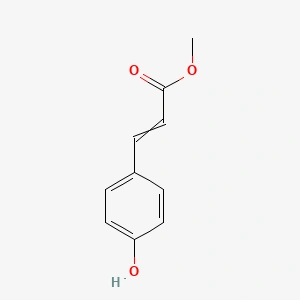
p-Hydroxycinnamic acid methyl ester
p-Hydroxycinnamic acid methyl ester, also known as methyl p-coumarate, is a phenolic compound derived from the esterification of p-coumaric acid. It typically presents as a white to off-white crystalline solid and is recognized for its role as a versatile intermediate in organic synthesis and biochemical research. As a naturally occurring derivative found in various plant species, it exhibits distinct chemical properties associated with hydroxycinnamic acids, including potential antioxidant and biological activities that make it a subject of interest in pharmacological and phytochemical studies.
In a laboratory and industrial context, this compound is valued for its reactivity and stability under standard conditions. It serves as a foundational building block for the development of more complex molecules, particularly in the synthesis of polymers, liquid crystals, and bioactive agents. Proper handling involves standard safety protocols for fine chemicals, ensuring it is stored in a cool, dry environment away from strong oxidizing agents to maintain its structural integrity and purity for high-precision applications.
• This compound serves as a critical intermediate in the synthesis of various organic derivatives and functional materials. It is frequently utilized in the production of liquid crystalline polymers and specialty resins where the phenolic and cinnamate moieties provide specific structural rigidity and thermal stability required for advanced material science applications.
• In biochemical and pharmaceutical research, p-hydroxycinnamic acid methyl ester is extensively employed as a reference standard or a precursor for developing bioactive molecules. It is particularly noted for its role in studies concerning tyrosinase inhibition and its potential as an antioxidant agent, helping researchers explore new pathways for skin-lightening formulations and protective treatments against oxidative stress.
• The chemical is also utilized in the fragrance and flavor industry as a starting material or modifier. Its structural relationship to cinnamic acid derivatives allows it to contribute to the synthesis of aromatic compounds that provide specific sensory profiles, making it useful for creating complex olfactory compositions in consumer products.
• Furthermore, it acts as a valuable tool in analytical chemistry and plant physiology studies. Researchers use it to investigate the metabolic pathways of phenylpropanoids in plants, serving as a substrate for enzymatic assays or as a marker in the identification and quantification of phenolic compounds within diverse botanical extracts.
Product Name: p-Hydroxycinnamic acid methyl ester
For global customers, we provide complete technical documentation to support product evaluation, regulatory compliance and safe handling during transportation and application.