
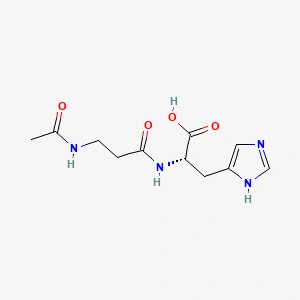
N-Acetyl-L-Carnosine
N-Acetyl-L-carnosine (NAC; CAS 56353-15-2) is the N-acetylated derivative of the dipeptide β-alanyl-L-histidine (carnosine).Acetylation is associated with greater resistance to carnosinase-mediated degradation than unmodified carnosine; this chemical property does not itself establish clinical benefit or suitability for a finished product.
This material is described principally in biochemical and ophthalmic research contexts, including investigation of antioxidant, anti-glycation, and ocular-delivery hypotheses. These are research topics, not claims of established cataract prevention or treatment, or of approved therapeutic, nutritional, or cosmetic uses. Commercially supplied material may be designated for research use only. Assess identity, purity, grade, stability, and supplier safety documentation for the intended laboratory work, and confirm jurisdictional requirements before any non-research use.
– Use as a research reagent in biochemical studies of acetylated carnosine, carnosinase susceptibility, or comparisons with carnosine. Select suitable controls and analytical readouts for the model. Greater enzyme resistance is a molecular property to investigate, not evidence of efficacy or a promised biological outcome.
– Ophthalmic research has investigated N-acetyl-L-carnosine in topical delivery and cataract-related experimental contexts, including the hypothesis that it can serve as a more stable carnosine source. Treat these strictly as investigational topics; do not describe this material as an approved eye medicine or proven cataract treatment.
– In vitro studies may examine redox-related, lipid-peroxidation, or anti-glycation mechanisms associated with carnosine compounds. Interpret results within the tested system and distinguish findings for this exact acetylated compound from findings for carnosine or other analogues; do not imply established human benefit.
Product Name: N-Acetyl-L-Carnosine
For global customers, we provide complete technical documentation to support product evaluation, regulatory compliance and safe handling during transportation and application.