
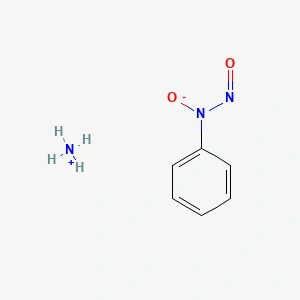
Cupferron
Cupferron (CAS 135-20-6) is ammonium N-nitroso-N-phenylhydroxylamine, also called ammonium N-nitrosophenylhydroxylamine (formula C6H9N3O2; molecular mass 155.15 g/mol). It is a metal-complexing precipitant used as an analytical reagent, rather than a general-purpose formulation ingredient. This listing describes an industrial-grade product with assay ≥98% and a white to pale cream crystalline appearance; confirm the exact specification against the lot certificate.
Cupferron forms sparingly soluble complexes with selected metal ions, supporting their separation, isolation, or determination in analytical chemistry. Established applications include classical precipitation/gravimetric analysis and solvent-extraction methods; selectivity and suitability depend on the analyte, sample matrix, reagent condition, and validated method. It is a specialist laboratory and research reagent, not an established food, medical, nutritional, or cosmetic ingredient, and no such approval or use is implied here. Review the current supplier safety data sheet and applicable institutional and local requirements before professional handling or disposal.
– Analytical separation and determination: Cupferron is used as a chelating precipitant for selected metal ions in classical analytical methods. Its role is selective complex formation to support separation or measurement, not general-purpose metal treatment. Which ions are retained depends on the sample matrix and method conditions; confirm performance using a validated method.
– Gravimetric and precipitation analysis: The reagent has historical and continuing use in laboratory procedures that isolate selected metals as sparingly soluble complexes for analytical determination. Apply only within a documented, validated method and verify that the product grade and assay meet the method requirements. This description does not provide a procedure or imply suitability for production-scale processing.
– Solvent-extraction analysis: Cupferron complexes have been used to transfer selected metals into an organic phase for analytical separation or quantification. Solvent choice, selectivity, and compatibility are method-specific; assess them through approved laboratory methods and applicable safety controls rather than assuming universal performance.
– Coordination chemistry and research: The compound may serve as a reagent or ligand in studies of metal complexes and analytical separations. Limit use to appropriately equipped professional laboratory or research settings. Consult the current supplier SDS for hazards, storage, and disposal; observe institutional and local rules, and do not infer medical, nutritional, cosmetic, or other consumer-product suitability.
Product Name: Cupferron
For global customers, we provide complete technical documentation to support product evaluation, regulatory compliance and safe handling during transportation and application.