
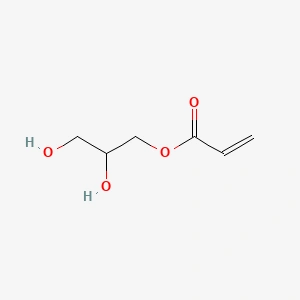
2,3-Dihydroxypropyl acrylate
2,3-Dihydroxypropyl acrylate, identified by CAS 10095-20-2, is a versatile hydrophilic monomer characterized by the presence of a reactive acrylate group and two pendant hydroxyl groups. As a derivative of glycerol, this compound offers a unique combination of polymerizability and polarity, making it a valuable building block in the synthesis of specialized functional polymers. Its molecular structure allows for the introduction of hydrophilic sites into polymer backbones, which significantly alters the physical and chemical properties of the resulting materials.
In industrial and research settings, this monomer is recognized for its ability to undergo radical polymerization while maintaining the availability of its diol functionality for further chemical modification or cross-linking. Handling requires standard precautions associated with acrylate esters, including protection against premature polymerization and skin contact. Its role as a specialty intermediate facilitates the development of advanced materials where moisture retention, biocompatibility, or specific surface interactions are required.
• Utilized as a primary building block in the synthesis of hydrophilic polymers and hydrogels. The dual hydroxyl groups provide significant water-binding capacity and improve the wettability of copolymer systems, making it essential for applications in contact lenses, wound dressings, and moisture-sensitive coatings.
• Serves as a functional monomer in the formulation of UV-curable resins and specialty adhesives. Its inclusion enhances adhesion to polar substrates and allows for the adjustment of cross-link density through the reactivity of the hydroxyl groups, which can participate in secondary reactions with isocyanates or epoxies.
• Employed in the production of biocompatible materials and drug delivery systems. The glycerol-based structure contributes to the low toxicity and high compatibility of the resulting polymer matrices, facilitating the controlled release of active ingredients or the creation of non-fouling surfaces in biomedical research.
• Acts as a reactive intermediate for the modification of textile fibers and paper products. By grafting 2,3-Dihydroxypropyl acrylate onto natural or synthetic fibers, manufacturers can impart permanent hydrophilic properties, improving dye uptake, antistatic behavior, and overall comfort in technical textile applications.
Product Name: 2,3-Dihydroxypropyl acrylate
For global customers, we provide complete technical documentation to support product evaluation, regulatory compliance and safe handling during transportation and application.