
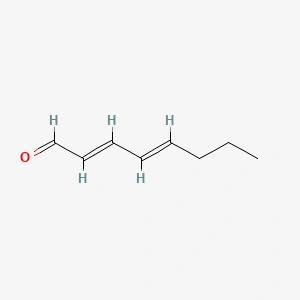
2,4-Octadienal, (2E,4E)-
(2E,4E)-2,4-Octadienal, identified by CAS number 30361-28-5, is an unsaturated aliphatic aldehyde characterized by its distinct and potent organoleptic profile. Naturally occurring in various food items such as cooked poultry, fish, and certain vegetable oils, this compound is valued for its fatty, nutty, and slightly cucumber-like aroma. Chemically, it exists as a clear to pale yellow liquid that is insoluble in water but highly miscible with organic solvents, making it a versatile component in complex chemical formulations.
In industrial and research settings, this substance requires careful handling due to its susceptibility to oxidation when exposed to air and light. It is typically stored under inert gas and at low temperatures to maintain its chemical integrity and olfactory quality. As a reactive intermediate, it also serves as a building block in the synthesis of more complex organic molecules, contributing to the development of sophisticated aromatic profiles and specialized chemical products.
• Flavor Industry: This compound is extensively utilized as a flavoring agent to impart authentic fatty and savory notes to food products. It is particularly effective in replicating the characteristic aroma of cooked chicken, roasted nuts, and fried foods. Its high potency allows for significant impact even at low concentrations, enhancing the depth and realism of savory flavor profiles in snacks, gravies, and processed meats.
• Fragrance Formulation: In the perfumery sector, (2E,4E)-2,4-octadienal is employed to introduce unique green, fatty, or aldehydic nuances to fragrance compositions. It helps perfumers create complex accords that mimic natural scents, such as fresh cucumber or specific floral notes. Its ability to blend seamlessly with other aldehydes and esters makes it a valuable tool for achieving specific top and middle note transitions in fine fragrances and personal care products.
• Chemical Research and Synthesis: Beyond its sensory applications, this unsaturated aldehyde serves as a significant intermediate in organic chemistry. Its conjugated diene structure makes it a suitable substrate for various chemical transformations, including Diels-Alder reactions and nucleophilic additions. Researchers utilize this molecule to study reaction mechanisms or to synthesize larger, more complex bioactive compounds and specialty chemicals.
• Food Science Studies: The compound is frequently used in analytical chemistry and food science research as a reference standard. It plays a crucial role in studying lipid oxidation processes and the degradation of unsaturated fatty acids in food systems. By monitoring its presence and concentration, scientists can better understand the shelf-life and sensory degradation of oils and fat-containing products over time.
Product Name: 2,4-Octadienal, (2E,4E)-
For global customers, we provide complete technical documentation to support product evaluation, regulatory compliance and safe handling during transportation and application.