
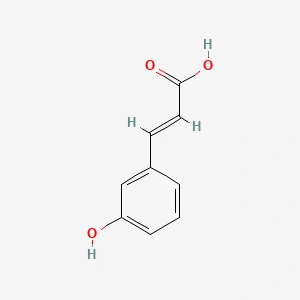
3-coumaric acid, (E)-
3-coumaric acid, specifically the (E)- isomer (CAS 14755-02-3), is a phenolic acid belonging to the hydroxycinnamic acid family. As a structural isomer of the more common p-coumaric acid, it features a hydroxyl group at the meta-position of the phenyl ring. This compound typically appears as a crystalline solid and is recognized for its role as a secondary metabolite in various plant species, contributing to the complex chemical profile of natural polyphenols.
In a research and industrial context, (E)-3-coumaric acid serves as a vital building block for organic synthesis and biochemical assays. Its unique substitution pattern influences its reactivity and biological activity compared to its ortho and para counterparts. Proper handling involves standard laboratory safety protocols, including the use of personal protective equipment and storage in a cool, dry environment to maintain chemical stability.
• Chemical Synthesis and Derivatization: (E)-3-coumaric acid is utilized as a versatile intermediate in the synthesis of more complex organic molecules, including liquid crystals, polymers, and specialized dyes. Its phenolic and carboxylic acid functional groups allow for various esterification and etherification reactions, making it a valuable starting material for creating custom chemical scaffolds.
• Biochemical Research and Enzyme Studies: This compound is frequently employed in laboratory studies to investigate the metabolic pathways of phenolic compounds in plants and microorganisms. Researchers use it as a substrate or inhibitor to study the specificity and kinetics of enzymes, providing insights into the biosynthesis of lignin and other phenylpropanoids.
• Antioxidant and Bioactivity Screening: Due to its phenolic structure, (E)-3-coumaric acid is a subject of interest in antioxidant research. It is used in comparative studies to evaluate free radical scavenging capabilities and the structural-activity relationships of hydroxycinnamic acids in various biological models.
• Analytical Standards and Quality Control: It serves as a high-purity reference standard in analytical chemistry for the identification and quantification of phenolic acids in food, beverages, and botanical extracts. By using this compound in HPLC or GC-MS methodologies, laboratories can accurately profile the phytochemical composition of natural products.
Product Name: 3-coumaric acid, (E)-
For global customers, we provide complete technical documentation to support product evaluation, regulatory compliance and safe handling during transportation and application.