
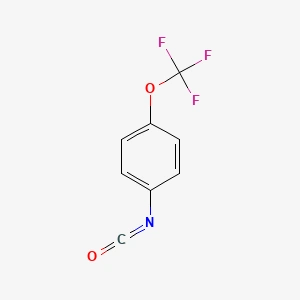
4-(trifluoromethoxy)phenyl isocyanate
4-(Trifluoromethoxy)phenyl isocyanate, identified by CAS number 35037-73-1, is a specialized organofluorine building block characterized by the presence of a reactive isocyanate group and a trifluoromethoxy substituent on a benzene ring. This clear to pale yellow liquid is highly valued in synthetic chemistry for its ability to introduce the trifluoromethoxy moiety, which is known to significantly alter the physicochemical properties of the resulting molecules. Due to its reactive nature, it is typically handled under anhydrous conditions to prevent hydrolysis.
In industrial and research settings, this compound serves as a critical intermediate for the development of high-performance materials and bioactive compounds. The electron-withdrawing trifluoromethoxy group enhances lipophilicity and metabolic stability, making it a preferred choice for fine chemical synthesis. Proper safety protocols, including the use of inert atmospheres and personal protective equipment, are essential when working with this moisture-sensitive electrophile.
• In medicinal chemistry, this isocyanate is extensively used to synthesize urea and carbamate derivatives. The trifluoromethoxy group is a bioisostere that can improve the pharmacokinetic profile of drug candidates by increasing their lipophilicity and resistance to oxidative metabolism.
• The compound is a vital intermediate in the production of advanced agrochemicals. By incorporating the trifluoromethoxy-phenyl fragment into herbicide or fungicide structures, manufacturers can achieve higher potency and better environmental stability, ensuring effective crop protection.
• Within materials science, it is employed to create fluorinated polyurethanes and specialty coatings. These materials benefit from the unique properties of the trifluoromethoxy group, such as increased hydrophobicity, low surface energy, and enhanced resistance to chemical degradation and weathering.
• It serves as a versatile reagent in organic synthesis for the functionalization of amines and alcohols. Researchers utilize its high reactivity to create diverse chemical libraries for screening, facilitating the discovery of new catalysts and functional small molecules in laboratory settings.
Product Name: 4-(trifluoromethoxy)phenyl isocyanate
For global customers, we provide complete technical documentation to support product evaluation, regulatory compliance and safe handling during transportation and application.