
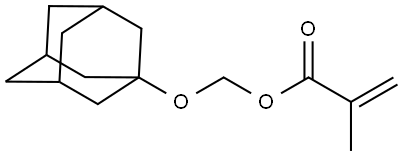
(Adamantan-1-yloxy)methyl methacrylate
(Adamantan-1-yloxy)methyl methacrylate, identified by CAS 863198-25-8, is a specialized functional monomer characterized by the incorporation of a bulky adamantyl cage into a methacrylate framework. This unique molecular architecture combines the reactive polymerizable nature of the methacrylate group with the rigid, hydrophobic properties of the adamantane moiety. The resulting monomer is typically utilized in the synthesis of high-performance polymers where structural integrity and specific physical properties are paramount.
In a research and industrial context, this chemical is valued for its ability to enhance the thermal and mechanical characteristics of copolymer systems. Its chemical stability and low volatility make it a reliable component in advanced materials science. Handling should follow standard laboratory protocols for organic methacrylates, ensuring protection against polymerization during storage through appropriate temperature control and the use of inhibitors.
• The primary application of (Adamantan-1-yloxy)methyl methacrylate lies in the semiconductor industry, specifically as a key component in the formulation of photoresist resins for deep ultraviolet (DUV) and extreme ultraviolet (EUV) lithography. The inclusion of the adamantyl group significantly improves the dry-etch resistance and thermal stability of the polymer film, which is critical for maintaining high-resolution patterns during plasma etching processes.
• This monomer is frequently employed in the development of optical materials and high-refractive-index coatings. Due to the high carbon density and rigid structure of the adamantane unit, polymers derived from this monomer exhibit excellent transparency, low shrinkage during curing, and enhanced durability against environmental degradation, making them suitable for specialized lens coatings and optoelectronic devices.
• In the field of advanced polymer engineering, it serves as a performance-enhancing additive to increase the glass transition temperature (Tg) of acrylic resins. By introducing steric hindrance and reducing chain mobility, it allows for the creation of heat-resistant plastics and adhesives that maintain their mechanical properties at elevated temperatures where standard methacrylates might fail.
Product Name: (Adamantan-1-yloxy)methyl methacrylate
For global customers, we provide complete technical documentation to support product evaluation, regulatory compliance and safe handling during transportation and application.