
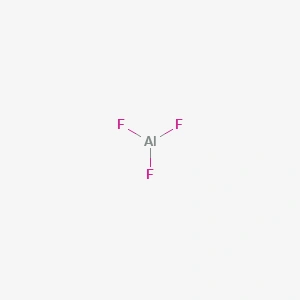
Aluminum fluoride (CAS 7784-18-1) is an inorganic compound primarily recognized as a white, crystalline solid. It is characterized by its high melting point and thermal stability, making it a vital component in high-temperature industrial processes. Chemically, it exists as a trihydrate or in anhydrous form, exhibiting low solubility in water and most organic solvents. Its structure typically consists of aluminum centers coordinated with fluorine atoms, forming a robust lattice that contributes to its physical properties.
In industrial and research settings, aluminum fluoride is valued for its role as a flux and its ability to modify the physical characteristics of molten salts. Handling this material requires standard safety protocols to manage dust exposure and potential reactivity with strong acids. As a versatile chemical intermediate, it serves as a cornerstone in the metallurgical and materials science sectors, facilitating the production of essential metals and specialized glass formulations.