
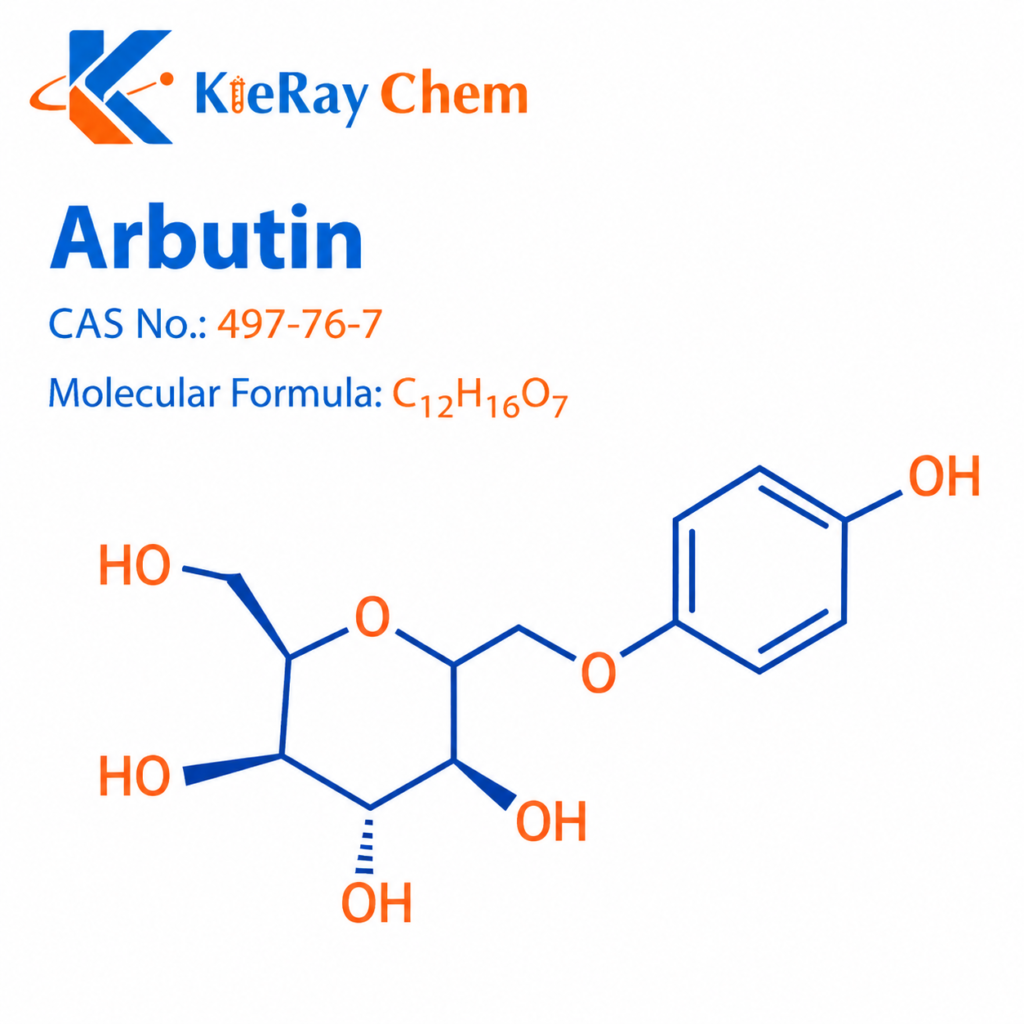
Arbutin
### Arbutin (CAS 497-76-7): Reliable Cosmetic Ingredient for Skin-Brightening Formulations
Arbutin, also known as **β-Arbutin** or **Hydroquinone-β-D-glucoside**, is a high-value cosmetic ingredient widely used in skincare and personal-care formulations. As a functional skin-conditioning and brightening agent, it helps improve the appearance of uneven skin tone, dullness, dark spots, post-blemish marks, and visible pigmentation. Arbutin is commonly incorporated into facial serums, brightening creams, lotions, masks, eye-care products, and targeted spot-treatment formulas.
Its key functional value is associated with the regulation of tyrosinase-related melanin formation, making it a popular choice for complexion-enhancing products. Arbutin can also be combined with niacinamide, vitamin C derivatives, kojic acid, licorice extract, and sunscreen ingredients to create advanced tone-correcting skincare solutions. For optimal performance, formulators should carefully control purity, concentration, pH, packaging, storage, and hydroquinone-related impurities while complying with the regulations of the target market.
**KieRay Chem is a stable and reliable supplier of Arbutin CAS 497-76-7**, providing consistent product quality, dependable supply capacity, professional technical support, and responsive customer service. From laboratory samples to commercial-scale procurement, KieRay Chem helps global customers source high-quality cosmetic raw materials with confidence. Choose KieRay Chem for **quality you can trust, supply you can rely on, and partnership that supports your formulation success**.
**Product: Arbutin (β-Arbutin, CAS 497-76-7)**
1. **Skin-Brightening Function**
Arbutin is a naturally derived hydroquinone glycoside widely used in cosmetic and personal-care formulations for skin brightening. It helps improve the appearance of dullness, uneven skin tone, and visible discoloration, making it a popular active ingredient in brightening creams, serums, lotions, masks, and spot-care products.
2. **Tyrosinase Inhibition**
Its primary cosmetic function is the inhibition of tyrosinase, an enzyme involved in melanin production. By helping regulate the formation of melanin, Arbutin may gradually reduce the visible appearance of dark spots, sun-related discoloration, post-blemish marks, and areas of uneven pigmentation without relying on aggressive exfoliation.
3. **Support for an Even Complexion**
With consistent use in a well-designed skincare formula, Arbutin can help promote a more uniform and radiant-looking complexion. It is often combined with ingredients such as niacinamide, vitamin C derivatives, licorice extract, or gentle exfoliating acids to create comprehensive tone-correcting and skin-brightening products.
4. **Antioxidant and Skin-Conditioning Benefits**
Arbutin is also associated with antioxidant and skin-conditioning properties. It may help support the skin against oxidative stress caused by environmental factors and contribute to a smoother, healthier-looking appearance. Its inclusion can enhance the functional profile of formulas designed for sensitive, dull, or uneven-looking skin.
5. **Formulation and Regulatory Considerations**
Arbutin is suitable for facial creams, body lotions, serums, and other topical cosmetic products. Formulators should control purity, pH, packaging, storage, and hydroquinone impurities. Regulatory requirements differ by market; the EU SCCS concluded that beta-arbutin is safe in face creams up to 7% under the assessed conditions. Final claims and usage levels should be validated according to local regulations.
Product Name: Arbutin
For global customers, we provide complete technical documentation to support product evaluation, regulatory compliance and safe handling during transportation and application.