
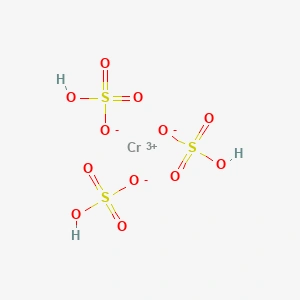
Basic chromic sulfate
Basic chromic sulfate, identified by CAS number 39380-78-4, is a vital inorganic compound primarily recognized for its role in the global leather industry. It typically appears as a dark green or black odorless powder or flake, exhibiting high solubility in water. Chemically, it is a complex mixture of chromium(III) species, often characterized by its basicity, which refers to the ratio of hydroxyl groups to chromium ions. This parameter is crucial as it dictates the reactivity and penetration depth of the compound during chemical processes.
Beyond its primary industrial utility, basic chromic sulfate is valued for its stability and consistent performance under varying pH conditions. It is produced through the reduction of sodium dichromate in the presence of sulfuric acid, ensuring a high-purity trivalent chromium source. While essential for manufacturing, it requires careful handling and adherence to environmental regulations due to the potential ecological impact of chromium compounds. Proper storage in cool, dry areas is necessary to maintain its chemical integrity and prevent clumping.
• The most significant application of basic chromic sulfate is in the chrome tanning process of leather production. It reacts with the collagen fibers in animal hides to create stable cross-links, which significantly enhances the leather’s thermal stability, mechanical strength, and resistance to microbial decay. This process, often referred to as “wet blue” production, results in a versatile intermediate material that can be further processed into high-quality leather for footwear, upholstery, and garments.
• In the textile industry, this compound serves as an effective mordant for dyeing processes. It helps fix dyes to various fiber types, particularly wool and silk, ensuring better color fastness and vibrancy. By forming coordination complexes with dye molecules and the fabric surface, basic chromic sulfate prevents premature fading and washing out of pigments, which is essential for industrial-scale textile manufacturing and specialty fabric treatments.
• It is also utilized in the production of high-performance pigments and green ceramic glazes. The trivalent chromium ions provide a distinct green coloration that is stable at high temperatures, making it suitable for decorative ceramics and glass coloration. Additionally, it finds niche applications in the synthesis of other chromium-based chemicals and as a catalyst in certain organic synthesis reactions, where its specific oxidation state and coordination properties are advantageous for promoting chemical transformations.
Product Name: Basic chromic sulfate
For global customers, we provide complete technical documentation to support product evaluation, regulatory compliance and safe handling during transportation and application.