
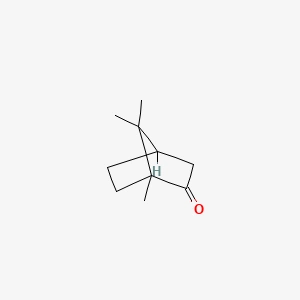
camphor
Camphor (CAS 76-22-2) is a naturally occurring bicyclic monoterpene ketone traditionally derived from the wood of the camphor laurel tree, though it is now predominantly synthesized from turpentine for industrial scale. It is characterized by its distinct, penetrating aromatic odor and a waxy, translucent white appearance. Chemically, it is a volatile solid that sublimes at room temperature, requiring careful storage in airtight containers to prevent loss of material.
In industrial and research contexts, camphor serves as a versatile intermediate and functional additive. Its unique chemical structure, featuring a bridgehead ketone, makes it a valuable chiral starting material in organic synthesis and a stabilizer in various formulations. Due to its flammability and volatility, it is handled with specific safety protocols in laboratory and manufacturing environments, where it is prized for its solvency and characteristic scent profile.
• Camphor is extensively utilized as a plasticizer in the production of celluloid and other nitrocellulose-based plastics. It helps improve the flexibility and durability of these materials, making it a critical component in the manufacturing of traditional film, lacquers, and specialized coatings.
• In the fragrance and flavor industry, it is valued for its cooling sensation and intense, clean aroma. It is frequently incorporated into perfumes, soaps, and household cleaning products to provide a fresh scent, and it serves as a masking agent in industrial formulations to neutralize unpleasant odors.
• Within the field of organic chemistry, camphor and its derivatives, such as camphorsulfonic acid, are employed as chiral auxiliaries and catalysts. Its rigid bicyclic structure allows for high stereoselectivity in asymmetric synthesis, making it an essential reagent for researchers developing complex molecules and specialty chemicals.
• It also finds application as a preservative and repellent in textile and museum conservation. Its volatile nature allows it to permeate enclosed spaces, providing protection for organic materials against certain types of degradation and pest infestation without leaving liquid residues.
Product Name: camphor
For global customers, we provide complete technical documentation to support product evaluation, regulatory compliance and safe handling during transportation and application.