
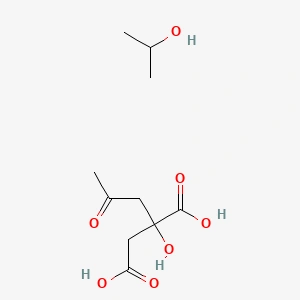
Isopropyl citrate, identified by CAS 39413-05-3, is a specialized ester derived from the reaction of citric acid with isopropyl alcohol. This compound typically exists as a mixture of mono-, di-, and tri-isopropyl esters, resulting in a versatile chemical profile characterized by its solubility in both aqueous and organic media. Its primary function in industrial settings is as a sequestering agent and antioxidant synergist, where it leverages the natural chelating properties of the citrate backbone to stabilize various formulations against oxidative degradation.
In terms of handling, isopropyl citrate is valued for its relative stability and compatibility with a wide range of surfactants and oily phases. It is frequently utilized in research and manufacturing environments where the prevention of metal-catalyzed oxidation is critical for maintaining the integrity of sensitive ingredients. Its chemical structure allows it to effectively bind trace metal ions, thereby enhancing the shelf life and performance of complex chemical systems without significantly altering their pH or sensory characteristics.