
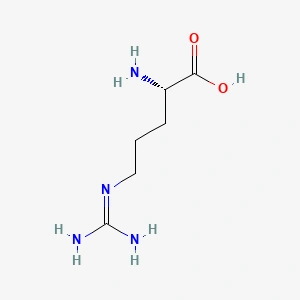
L-Arginine, identified by CAS 74-79-3, is a naturally occurring basic alpha-amino acid that plays a fundamental role in various biological processes. Chemically, it is characterized by the presence of a complex guanidino side chain, which imparts a high degree of alkalinity and polarity to the molecule. In its pure form, L-Arginine typically appears as a white crystalline powder or colorless crystals that exhibit excellent solubility in water while remaining relatively insoluble in common organic solvents.
From an industrial and research perspective, this compound is valued for its versatility and stability under standard handling conditions. It serves as a vital building block in protein synthesis and acts as a key metabolic intermediate in the urea cycle. Due to its unique chemical properties, L-Arginine is frequently utilized as a reagent in biochemical research, a pH regulator in specialized formulations, and a precursor for the synthesis of various derivatives. Proper storage in a cool, dry environment is recommended to maintain its integrity against moisture absorption.