
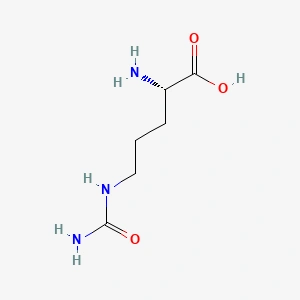
L-Citrulline, identified by CAS number 372-75-8, is a naturally occurring alpha-amino acid that plays a critical role as an intermediate in the urea cycle. Chemically known as (2S)-2-amino-5-(carbamoylamino)pentanoic acid, it is characterized by its white crystalline appearance and high solubility in water. Unlike many other amino acids, it is not coded for by DNA but is produced through the enzymatic modification of arginine or as a byproduct of nitric oxide synthesis.
In industrial and laboratory settings, L-Citrulline is valued for its high purity and stability under standard storage conditions. As a vital component in nitrogen metabolism, it serves as a precursor to L-arginine, facilitating the efficient removal of ammonia from biological systems. Its chemical structure makes it a versatile building block in organic synthesis and a key subject in metabolic research, particularly concerning amino acid transport and enzymatic pathways.