
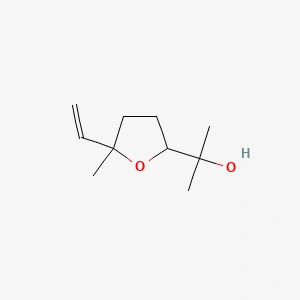
Linalool oxide
Linalool oxide, identified by CAS number 1365-19-1, is a naturally occurring cyclic ether that serves as a significant aromatic constituent in numerous botanical species. It is primarily derived from the oxidative degradation of linalool and is frequently encountered in essential oils such as lavender, geranium, and various tea extracts. Chemically, it exists as a mixture of isomeric forms, most commonly the furanoid and pyranoid structures, which contribute to its distinct olfactory profile.
This compound is characterized by a complex aroma that blends floral, woody, and sweet notes with subtle earthy undertones. In industrial and research settings, it is valued for its stability and its ability to enhance the sensory depth of consumer products. As a volatile organic compound, it requires standard chemical handling procedures, including storage in airtight containers away from direct light and heat to maintain its chemical integrity and olfactory quality.
• In the fragrance industry, linalool oxide is utilized as a sophisticated flavoring and scenting agent. Its unique floral-woody profile makes it an essential component for recreating the natural scent of lavender and lily of the valley. It is frequently incorporated into fine perfumes, soaps, and cosmetic formulations to provide a realistic botanical nuance and to round out sharp citrus or herbal top notes.
• Within the food and beverage sector, this material plays a critical role in the development of authentic flavor profiles. It is a key aromatic marker in many types of tea, particularly black and oolong varieties, where it contributes to the characteristic “tea” aroma. It is also used in the formulation of fruit-based flavors and is a naturally occurring component in various wines, helping to define their complex bouquet.
• Linalool oxide serves as an important reference standard in analytical chemistry and essential oil research. Scientists use it to monitor the oxidation levels of linalool-rich oils, as its presence often indicates the aging or processing history of the raw material. It is also studied for its potential biological properties, including its role in plant defense mechanisms and its interactions with insect pollinators.
• The compound is widely employed in the formulation of household and ambient scenting products. Due to its pleasant odor and compatibility with various surfactants, it is added to detergents, fabric softeners, and air fresheners. Its ability to mask unpleasant chemical odors while providing a clean, naturalistic scent makes it a versatile tool for product developers seeking to improve consumer sensory experiences.
Product Name: Linalool oxide
For global customers, we provide complete technical documentation to support product evaluation, regulatory compliance and safe handling during transportation and application.