
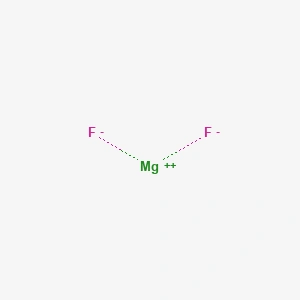
Magnesium fluoride, identified by CAS number 7783-40-6, is an inorganic compound appearing as a white, crystalline powder or as transparent crystals. This salt is characterized by its exceptional physical and chemical stability, remaining insoluble in water and most organic solvents while showing slight solubility in dilute acids. Its crystal structure is typically tetragonal, similar to rutile, which contributes to its mechanical durability and resistance to thermal shock, making it a reliable material for demanding industrial environments.
In research and manufacturing, magnesium fluoride is valued primarily for its unique optical properties, specifically its low refractive index and broad transmission range extending from the vacuum ultraviolet to the infrared spectrum. Because it is chemically inert and possesses a high melting point, it serves as a critical component in high-performance coatings and specialized glass formulations. Proper handling is required to manage its fine particulate form, though it remains a staple material in advanced material science and vacuum-based processing.