
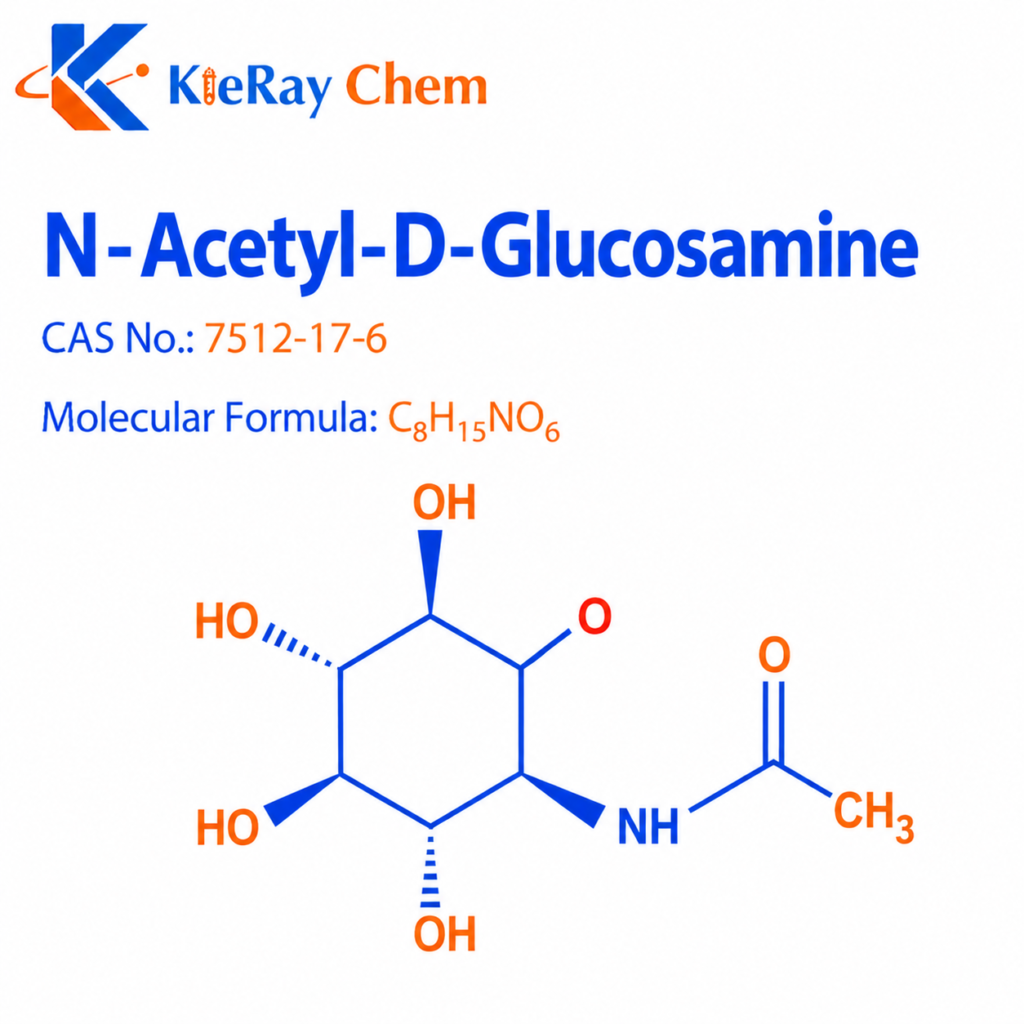
N-Acetyl-D-Glucosamine
### N-Acetyl-D-Glucosamine (CAS 7512-17-6): Functional Cosmetic and Nutraceutical Ingredient
N-Acetyl-D-Glucosamine, also known as **NAG, GlcNAc, or Acetyl Glucosamine**, is a high-value chemical raw material identified by **CAS No. 7512-17-6**. As a monosaccharide derivative of glucose, it is widely used in cosmetic, nutraceutical, pharmaceutical, food, biochemical, and research applications. In skincare formulations, N-Acetyl-D-Glucosamine is valued for its **skin-conditioning, moisturizing, smoothing, and tone-care properties**. It can be incorporated into facial serums, creams, lotions, eye-care products, masks, and advanced personal-care formulas designed for dry, rough, dull, or uneven-looking skin.
N-Acetyl-D-Glucosamine is highly water-soluble and can support skin hydration, improve the appearance of rough texture, and help promote a softer and more comfortable skin feel. It is frequently combined with niacinamide, hyaluronic acid, panthenol, ceramides, alpha-arbutin, and vitamin C derivatives to create multifunctional skincare solutions. Formulators should verify purity, microbial quality, concentration, pH compatibility, packaging, storage stability, and applicable market regulations before commercialization.
**KieRay Chem is a stable and reliable supplier of N-Acetyl-D-Glucosamine CAS 7512-17-6**, offering consistent quality, dependable supply capacity, professional technical support, and responsive international service. From laboratory samples to bulk procurement, KieRay Chem supports cosmetic brands, nutraceutical manufacturers, pharmaceutical companies, formulators, and distributors worldwide. Choose KieRay Chem for **trusted quality, secure sourcing, reliable delivery, and formulation-ready ingredients that turn innovation into market-ready performance**.
**Product: N-Acetyl-D-Glucosamine (NAG, CAS 7512-17-6)**
1. **Skin-Conditioning Function**
N-Acetyl-D-Glucosamine, commonly abbreviated as NAG or GlcNAc, is a naturally occurring monosaccharide derivative of glucose. In cosmetic formulations, it is recognized primarily as a skin-conditioning ingredient. It can be incorporated into facial serums, creams, lotions, masks, eye-care products, and other personal-care formulations designed to improve the overall appearance and feel of the skin.
2. **Moisture and Hydration Support**
NAG is highly water-soluble and can contribute to the moisturization profile of skincare products. By supporting water availability in the outer layers of the skin, it may help reduce the appearance of dryness, rough texture, and dehydration-related discomfort. It is often combined with humectants such as hyaluronic acid, glycerin, panthenol, or sodium PCA.
3. **Uneven-Tone Management**
NAG is frequently used in formulations targeting dullness, uneven skin tone, and visible discoloration. Some cosmetic research suggests that it may influence pathways associated with melanin production and help improve the appearance of dark spots when used consistently. For enhanced tone-correcting performance, formulators may combine it with niacinamide, arbutin, kojic acid derivatives, or sunscreen.
4. **Appearance of Fine Lines and Texture**
Through its conditioning and moisturizing effects, NAG may help skin appear smoother, softer, and more supple. Improved hydration can make fine lines related to dryness look less noticeable and can enhance the sensory quality of a finished product. It is suitable for formulations intended for dry, mature-looking, or environmentally stressed skin.
5. **Biological and Nutraceutical Relevance**
NAG is a structural component related to chitin, glycosaminoglycans, and various glycoproteins. It is therefore used in biochemical, pharmaceutical, nutraceutical, and research applications. However, evidence and regulatory requirements differ substantially between topical cosmetics, dietary supplements, and medical products; one application should not be used to support claims for another.
6. **Quality and Formulation Considerations**
NAG is generally supplied as a white crystalline, water-soluble powder. Manufacturers should verify identity, purity, microbial quality, concentration, pH compatibility, packaging, and storage stability. Cosmetic claims must be supported by suitable testing, and any therapeutic or disease-related claims require separate clinical evidence and regulatory authorization.
Product Name: N-Acetyl-D-Glucosamine
For global customers, we provide complete technical documentation to support product evaluation, regulatory compliance and safe handling during transportation and application.