
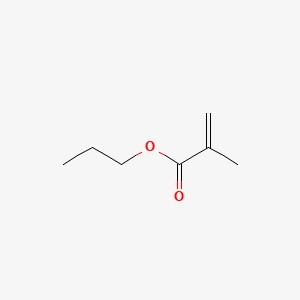
n-Propyl methacrylate, identified by CAS number 2210-28-8, is a clear, colorless liquid ester derived from methacrylic acid. As a versatile monomer, it is characterized by its ability to undergo radical polymerization, forming polymers with specific physical properties that bridge the gap between methyl and butyl methacrylates. Its molecular structure provides a balance of flexibility and chemical resistance, making it an essential building block in the synthesis of specialized acrylic resins and copolymers.
In industrial and research settings, n-propyl methacrylate is valued for its contribution to internal plasticization and its influence on the glass transition temperature of the resulting materials. Due to its reactive nature, it is typically handled with appropriate stabilizers to prevent premature polymerization. It serves as a critical intermediate in organic synthesis and material science, facilitating the development of high-performance coatings, adhesives, and optical materials that require precise mechanical characteristics.