
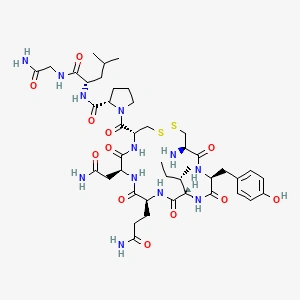
Oxytocin (CAS 50-56-6) is a naturally occurring cyclic nonapeptide hormone; the CAS identity aligns with its name, formula C43H66N12O12S2, and molecular weight of 1007.19 g/mol. Its sequence is Cys-Tyr-Ile-Gln-Asn-Cys-Pro-Leu-Gly-NH2, with a disulfide bridge between cysteine residues. Synthesized in hypothalamic neurons and released from the posterior pituitary, oxytocin binds specific oxytocin receptors, including receptors on uterine smooth muscle and mammary myoepithelial cells.
Pharmaceutical oxytocin formulations have established obstetric uses, principally induction or augmentation of labor when indicated and management of the third stage of labor to reduce postpartum bleeding; approved indications and labeling vary by jurisdiction. The molecule is also used in receptor, endocrine, and neurobehavioral research, but experimental findings are not proof of benefit for social behavior or other conditions. A supplier’s “pharmaceutical grade” descriptor alone does not establish sterility, injectable suitability, clinical authorization, or fitness as a reference standard; those depend on product-specific specifications and applicable regulatory controls.