Polyvinyl Alcohol
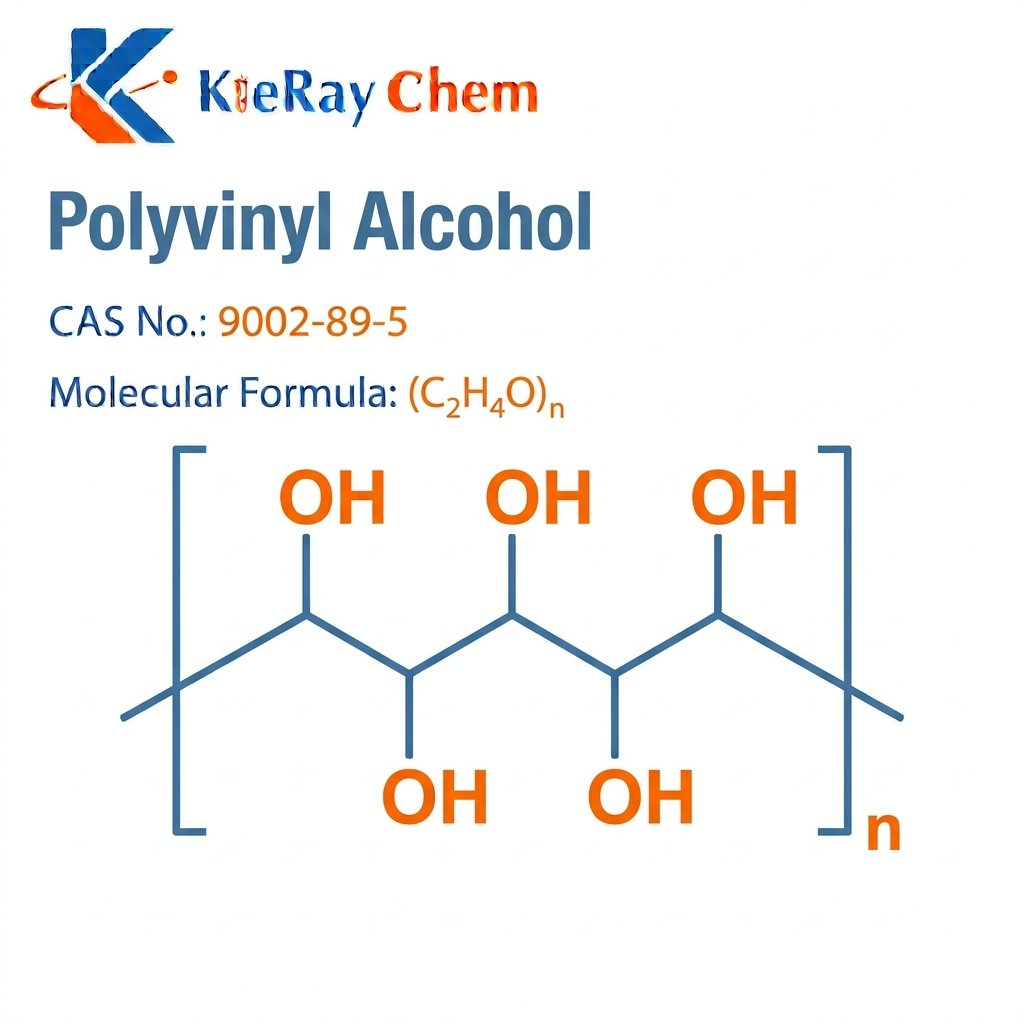
Polyvinyl alcohol (CAS 9002-89-5) is a water-soluble synthetic polymer composed of repeating vinyl alcohol units (formula (C2H4O)n). It is produced by hydrolysis of polyvinyl acetate and is supplied in grades that differ by degree of hydrolysis and molecular weight (viscosity). Polyvinyl alcohol forms flexible films, exhibits good adhesive properties, and offers excellent chemical resistance to oils and greases while maintaining water solubility and film-forming capability that make it widely useful across adhesives, coatings, paper and textile industries.
KieRay Chem is a dependable supplier of Polyvinyl alcohol with consistent lot-to-lot quality, documented specifications and flexible packaging to suit laboratory through industrial needs. We maintain secure stocks of common hydrolysis and viscosity grades, and our technical team supports customers in selecting the right PVA grade for bonding, film casting, sizing or emulsion stabilization to ensure process reproducibility and product performance. Polyvinyl alcohol is selected by formulators and purchasing teams that need dependable identity, consistent handling, and repeatable performance from batch to batch. KieRay Chem supports customers with responsive technical communication, careful document control, export-ready packing, and stable supply planning. Our team can coordinate specification confirmation, sample evaluation, production scheduling, and international logistics so that this CAS 9002-89-5 material is easier to qualify and reorder.
1. Adhesives and binders: Polyvinyl alcohol is widely used as a primary binder in water-based adhesives for paper, packaging, wood and non-wovens. Its film-forming ability produces strong, flexible bonds with good initial tack and final strength. The controlled hydrolysis and molecular weight allow tuning of drying rate and adhesive flexibility for packaging, label and bag applications. It also helps users improve process consistency, manage production risk, and maintain predictable results across scale-up, routine manufacturing, and finished-product quality checks for Polyvinyl alcohol (CAS 9002-89-5).
2. Paper and textile sizing: as a sizing agent, Polyvinyl alcohol improves wet and dry strength, enhances printability and reduces fiber fuzzing. In textile warp sizing, PVA increases yarn abrasion resistance and reduces breakage during weaving; it is also readily removable with hot water later in processing, facilitating downstream finishing. It also helps users improve process consistency, manage production risk, and maintain predictable results across scale-up, routine manufacturing, and finished-product quality checks for Polyvinyl alcohol (CAS 9002-89-5).
3. Emulsion and protective colloid: PVA acts as a stabilizer and protective colloid in polymer emulsion polymerization, improving particle stability and control of polymer morphology. This function benefits coatings and adhesive manufacturers by enhancing shelf stability and performance of latex dispersions. It also helps users improve process consistency, manage production risk, and maintain predictable results across scale-up, routine manufacturing, and finished-product quality checks for Polyvinyl alcohol (CAS 9002-89-5).
4. Film formation and packaging films: PVA forms clear, oxygen-barrier films used in packaging applications where gas barrier properties are important (e.g., food barrier layers). Grades with higher hydrolysis often yield improved barrier properties, while lower hydrolysis grades enhance solubility for water-soluble film applications. It also helps users improve process consistency, manage production risk, and maintain predictable results across scale-up, routine manufacturing, and finished-product quality checks for Polyvinyl alcohol (CAS 9002-89-5).
5. Construction and coating modifiers: in cementitious systems and gypsum formulations, small additions of PVA improve cohesion, reduce cracking and enhance adhesion of coatings. PVA-modified cement mortars show improved flexural strength and durability in repair mortars and tile adhesives. It also helps users improve process consistency, manage production risk, and maintain predictable results across scale-up, routine manufacturing, and finished-product quality checks for Polyvinyl alcohol (CAS 9002-89-5).
6. Wastewater treatment and flocculation: water-soluble Polyvinyl alcohol derivatives and formulations serve as flocculation aids or as components in anionic/cationic copolymers for sludge dewatering. Benefits include controlled settling, improved clarifier performance and compatibility with existing treatment chemistries; KieRay Chem offers technical guidance on selecting the appropriate viscosity and hydrolysis grade for specific process conditions. It also helps users improve process consistency, manage production risk, and maintain predictable results across scale-up, routine manufacturing, and finished-product quality checks for Polyvinyl alcohol (CAS 9002-89-5).
Product Name: Polyvinyl Alcohol
For global customers, we provide complete technical documentation to support product evaluation, regulatory compliance and safe handling during transportation and application.