
Rhodium(III) Chloride (CAS: 10049-07-7) is the anhydrous form of rhodium trichloride, a red-brown crystalline powder with a high and consistent rhodium content. It is the standard precursor for making rhodium catalysts and rhodium complexes, including Wilkinson-type catalysts, phosphine complexes and supported hydrogenation catalysts, and it is also used to prepare rhodium plating baths and rhodium-containing electronic materials. Anhydrous material is chosen when water must be excluded or when a high metal loading per unit weight is important. It dissolves in water with hydrolysis and in some organic media, and it must be stored dry because it is hygroscopic.
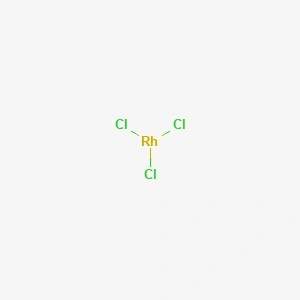
Rhodium(III) Chloride
Category:Electronic Chemicals
CAS No.:10049-07-7
Product Grade: Industrial Grade
Purity / Assay: Rh 48–49%
Molecular Formula:RhCl₃
Molecular Weight:209.26
EINECS No.:233-165-4
Synonym(s):Rhodium Trichloride; Rhodium(III) Chloride, anhydrous; RhCl3
Rhodium(III) Chloride (CAS: 10049-07-7) is the anhydrous form of rhodium trichloride, a red-brown crystalline powder with a high and consistent rhodium content. It is the standard precursor for making rhodium catalysts and rhodium complexes, including Wilkinson-type catalysts, phosphine complexes and supported hydrogenation catalysts, and it is also used to prepare rhodium plating baths and rhodium-containing electronic materials. Anhydrous material is chosen when water must be excluded or when a high metal loading per unit weight is important. It dissolves in water with hydrolysis and in some organic media, and it must be stored dry because it is hygroscopic.
• Catalyst manufacture: a precursor for homogeneous hydrogenation, hydroformylation and carbonylation catalysts.
• Coordination chemistry: used to prepare rhodium–phosphine, amine and diene complexes for research and industry.
• Electroplating and electronics: applied in rhodium plating electrolytes and conductive-material formulations.
• Precious-metal processing: serves as a defined rhodium source for refining, doping and specialty oxide preparation.
1kg/bottle, 25kg/drum
CAS No.: 10049-07-7
Product Name: Rhodium(III) Chloride
Purity / Assay:Rh 48–49%
Molecular Formula:RhCl₃
Molecular Weight:209.26
EINECS No.:233-165-4
Synonym(s):Rhodium Trichloride; Rhodium(III) Chloride, anhydrous; RhCl3
For global customers, we provide complete technical documentation to support product evaluation, regulatory compliance and safe handling during transportation and application.