
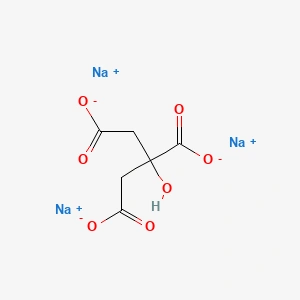
Sodium citrate
Sodium citrate, identified by CAS 68-04-2, is the sodium salt of citric acid, typically appearing as a white, odorless, crystalline powder or granular solid. It is highly soluble in water and exhibits a slightly alkaline pH in aqueous solution. This compound is valued for its chemical stability and non-toxic profile, making it a staple in various industrial and laboratory environments. Its chemical structure allows it to function effectively as a buffering agent, maintaining precise pH levels across a wide range of chemical and biological applications.
In industrial contexts, sodium citrate is recognized for its ability to sequester metal ions, preventing precipitation and enhancing the performance of complex formulations. It is handled as a stable chemical, though its hygroscopic nature requires storage in cool, dry conditions to prevent clumping. Beyond its role as a stabilizer, it serves as a critical reagent in biochemical research and chemical synthesis, providing reliable performance where acidity control and ionic strength are paramount for experimental consistency.
• In the food and beverage industry, sodium citrate acts as a versatile acidity regulator and emulsifying agent. It is frequently employed to control pH levels in carbonated drinks and to stabilize dairy products by preventing the curdling of proteins, ensuring a consistent texture and flavor profile in processed goods.
• Within the pharmaceutical and personal care sectors, the compound serves as a buffering agent in various formulations, including syrups and topical creams. Its ability to maintain a stable pH environment helps preserve the integrity of active ingredients and enhances the shelf life of cosmetic products such as shampoos and soaps.
• In industrial cleaning and water treatment, sodium citrate functions as a high-performance builder and chelating agent. It effectively sequesters calcium and magnesium ions in hard water, improving the efficiency of detergents and preventing the formation of scale in machinery and piping systems.
• For laboratory and diagnostic use, it is utilized as a reagent in biochemical assays and sample preparation. Its capacity to bind metal ions makes it essential for maintaining the stability of biological samples and facilitating specific enzymatic reactions during research and analytical testing procedures.
Product Name: Sodium citrate
For global customers, we provide complete technical documentation to support product evaluation, regulatory compliance and safe handling during transportation and application.