
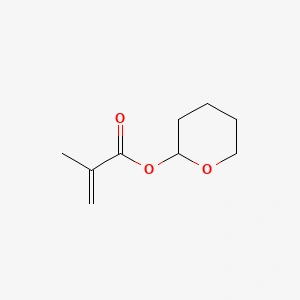
Tetrahydropyranyl methacrylate
Tetrahydropyranyl methacrylate, identified by CAS number 52858-59-0, is a specialized monomer characterized by the presence of an acid-labile tetrahydropyranyl protecting group attached to a methacrylate backbone. This clear, colorless to pale yellow liquid is highly valued in advanced polymer chemistry due to its unique reactivity profile. The molecule allows for the synthesis of polymers that can undergo controlled deprotection, transforming hydrophobic tetrahydropyranyl ester units into hydrophilic carboxylic acid groups upon exposure to acidic catalysts or thermal triggers.
In industrial and research settings, this monomer is handled with standard precautions for methacrylates, typically requiring stabilization with inhibitors to prevent premature polymerization. Its chemical stability under neutral conditions, combined with its predictable response to chemical stimuli, makes it a critical building block for designing smart materials. Researchers utilize tetrahydropyranyl methacrylate to develop sophisticated thin films and coatings where precise control over surface energy and solubility is required.
• The primary application of tetrahydropyranyl methacrylate is in the formulation of chemically amplified photoresists for deep ultraviolet (DUV) and extreme ultraviolet (EUV) lithography. By incorporating this monomer into a polymer backbone, manufacturers can create high-resolution patterns on semiconductor wafers, as the acid generated during exposure triggers a solubility change in the polymer matrix.
• It serves as a versatile intermediate in the synthesis of pH-responsive and stimuli-sensitive polymers. These materials are frequently explored in the development of advanced drug delivery systems and diagnostic tools, where the cleavage of the tetrahydropyranyl group allows for the controlled release of encapsulated agents or the activation of specific chemical functionalities in response to localized environmental changes.
• In the field of surface science and coatings, this monomer is used to produce functionalized thin films with tunable properties. By selectively deprotecting the tetrahydropyranyl groups, scientists can modify the wettability, adhesion, and chemical reactivity of a surface, facilitating the creation of microfluidic devices and specialized sensors that require precise spatial control over surface chemistry.
Product Name: Tetrahydropyranyl methacrylate
For global customers, we provide complete technical documentation to support product evaluation, regulatory compliance and safe handling during transportation and application.