
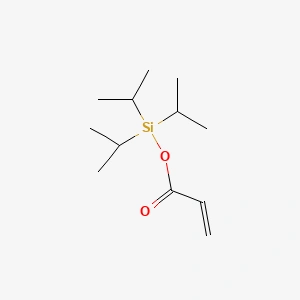
Triisopropylsilyl acrylate
Triisopropylsilyl acrylate, identified by CAS number 157859-20-6, is a specialized organosilicon monomer characterized by the presence of a bulky triisopropylsilyl (TIPS) group esterified with acrylic acid. This unique molecular architecture imparts significant steric hindrance, which distinguishes it from simpler silyl acrylates by providing enhanced hydrolytic stability and specific reactivity profiles. In its pure form, it typically appears as a clear, colorless to light yellow liquid that is sensitive to moisture and light.
In industrial and research settings, this compound is valued for its ability to undergo radical polymerization while maintaining the integrity of the silyl side chain. Proper handling requires storage under an inert atmosphere, typically with the addition of a polymerization inhibitor to ensure shelf stability. Its chemical nature makes it an essential building block for developing high-performance polymers that require precise control over surface energy, hydrophobicity, and degradation rates.
• The primary application of Triisopropylsilyl acrylate is in the formulation of self-polishing antifouling coatings for marine vessels. The bulky triisopropylsilyl group regulates the hydrolysis rate of the polymer matrix in seawater, allowing for a consistent and controlled release of active agents while ensuring the hull remains smooth and free of biofouling organisms over extended periods.
• It serves as a versatile monomer in the synthesis of functional copolymers via radical or controlled polymerization techniques. By incorporating this bulky silyl acrylate, researchers can tailor the mechanical properties, thermal stability, and solubility of the resulting materials, making them suitable for specialized adhesives and advanced architectural coatings.
• In the electronics and semiconductor industries, this compound is utilized in the development of photoresist materials and thin-film coatings. The silicon content and the steric bulk of the TIPS group provide excellent plasma etch resistance and help in achieving high-resolution patterning during lithographic processes.
• Additionally, it is employed in the creation of hydrophobic and oleophobic surface treatments. The silyl functionality allows for the modification of various substrates, enhancing their resistance to moisture and environmental degradation, which is particularly useful in protecting sensitive optical components and electronic sensors.
Product Name: Triisopropylsilyl acrylate
For global customers, we provide complete technical documentation to support product evaluation, regulatory compliance and safe handling during transportation and application.