English | 中文 | Español

Industrial Grade

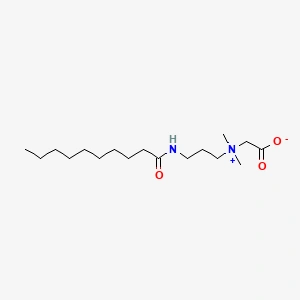
Decanoylamide propylbetaine

Decanoylamide propylbetaine, identified by CAS 73772-45-9, is a high-performance amphoteric surfactant derived from decanoic acid. As a member of the amidopropyl betaine family, it exhibits a unique zwitterionic character, allowing it to function effectively across a broad pH spectrum. This chemical raw material is prized for its ability to enhance foam stability and viscosity while

Decanoylamide propylbetaine Read More »
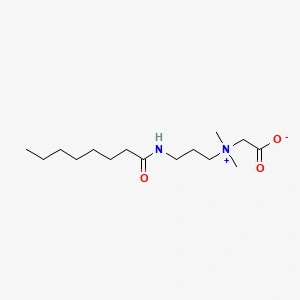
Caprylamidopropyl betaine

Caprylamidopropyl betaine (CAS 73772-46-0) is a high-purity amphoteric surfactant derived from caprylic acid, a short-chain fatty acid. It belongs to the amidopropyl betaine family and is characterized by its excellent solubility and stability across a wide pH range. Unlike longer-chain analogs, this C8-based surfactant offers unique performance characteristics, particularly in terms of foam quality and

Caprylamidopropyl betaine Read More »

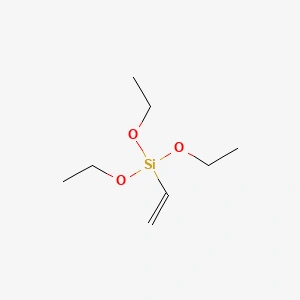
Vinyltriethoxysilane

Vinyltriethoxysilane, identified by CAS 78-08-0, is a versatile organosilicon monomer characterized by the presence of a reactive vinyl group and three hydrolyzable ethoxy groups. As a bifunctional silane, it serves as a critical bridge between inorganic substrates and organic polymer matrices. The molecule’s dual reactivity allows it to participate in radical polymerization through its vinyl

Vinyltriethoxysilane Read More »

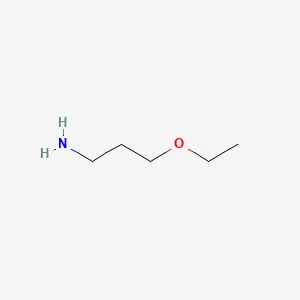
3-Ethoxypropylamine

3-Ethoxypropylamine, identified by CAS number 6291-85-6, is a versatile primary amine characterized by the presence of an ethoxy group attached to a three-carbon propyl chain. This bifunctional molecule combines the reactivity of a primary amino group with the solubility and solvent-like properties of an ether linkage. It typically appears as a clear, colorless to pale

3-Ethoxypropylamine Read More »

Disodium mono(polyoxyethylene alkyl) sulfosuccinate

Disodium mono(polyoxyethylene alkyl) sulfosuccinate, identified by CAS number 68911-93-3, is a versatile anionic surfactant belonging to the sulfosuccinate class. It is characterized by its ethoxylated alkyl chain, which imparts a unique balance of hydrophilicity and lipophilicity. This chemical structure results in a material that exhibits excellent surface activity while maintaining a profile of low toxicity

Disodium mono(polyoxyethylene alkyl) sulfosuccinate Read More »

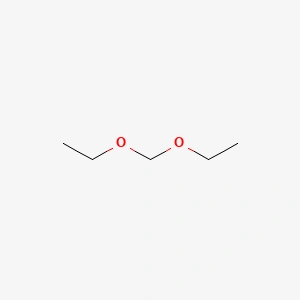
Diethoxymethane

Diethoxymethane, commonly referred to as formaldehyde diethyl acetal or ethylal, is a versatile organic compound characterized by its stable acetal structure. As a clear, colorless liquid with a relatively low boiling point, it serves as an efficient solvent and reagent across a broad spectrum of chemical processes. Its chemical stability under neutral and basic conditions,

Diethoxymethane Read More »

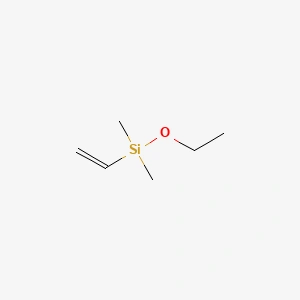
Ethoxydimethylvinylsilane

Ethoxydimethylvinylsilane, identified by CAS number 5356-83-2, is a versatile organosilicon monomer characterized by the presence of both a reactive vinyl group and a hydrolyzable ethoxy group. This bifunctional structure makes it a valuable intermediate in the synthesis of specialized silicone polymers and organic-inorganic hybrid materials. As a clear, colorless liquid, it exhibits the typical reactivity

Ethoxydimethylvinylsilane Read More »

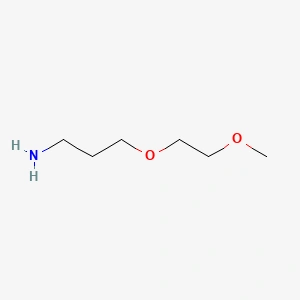
3-(2-Methoxyethoxy)propylamine

3-(2-Methoxyethoxy)propylamine, identified by CAS 54303-31-0, is a versatile ether amine characterized by the presence of a primary amino group and a methoxyethoxy side chain. This bifunctional structure provides a unique balance of reactivity and hydrophilicity, making it a valuable building block in organic synthesis. As a clear to pale yellow liquid, it exhibits the typical

3-(2-Methoxyethoxy)propylamine Read More »

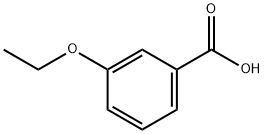
3 ethoxybenzoic acid 624 51 2 structure

3-Ethoxybenzoic acid

3-Ethoxybenzoic acid, identified by CAS number 624-51-2, is a substituted aromatic carboxylic acid characterized by an ethoxy group attached to the meta position of the benzene ring. This white to off-white crystalline powder serves as a versatile building block in organic chemistry. Its structural configuration provides specific reactivity patterns, making it a valuable precursor for

3-Ethoxybenzoic acid Read More »

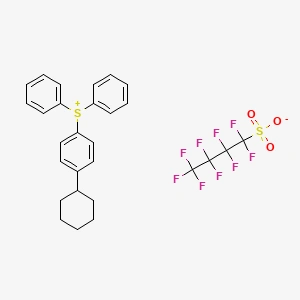
(4-Cyclohexylphenyl)diphenylsulfonium nonafluorobutanesulfonate

(4-Cyclohexylphenyl)diphenylsulfonium nonafluorobutanesulfonate, identified by CAS number 425670-64-0, is a high-performance ionic photoacid generator (PAG) belonging to the triarylsulfonium salt family. This compound features a bulky cyclohexyl substituent on one of the phenyl rings, which enhances its solubility in common organic solvents and improves its compatibility with various polymer matrices. The nonafluorobutanesulfonate (nonaflate) anion provides excellent

(4-Cyclohexylphenyl)diphenylsulfonium nonafluorobutanesulfonate Read More »

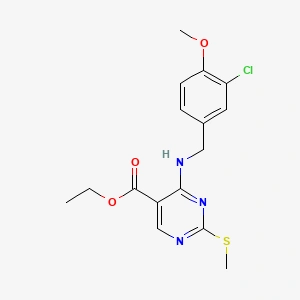
Ethyl 4-[(3-chloro-4-methoxybenzyl)amino]-2-(methylthio)pyrimidine-5-carboxylate

Ethyl 4-[(3-chloro-4-methoxybenzyl)amino]-2-(methylthio)pyrimidine-5-carboxylate, identified by CAS 330785-81-4, is a specialized organic building block primarily utilized in the synthesis of complex nitrogen-containing heterocycles. Structurally, it features a pyrimidine core substituted with an ethyl ester, a methylthio moiety, and a halogenated benzylamino group. This specific arrangement of functional groups makes it a versatile intermediate for downstream chemical transformations,

Ethyl 4-[(3-chloro-4-methoxybenzyl)amino]-2-(methylthio)pyrimidine-5-carboxylate Read More »

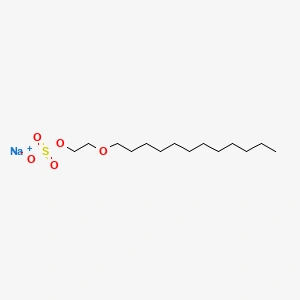
Sodium laureth-4 carboxylate

Sodium laureth-4 carboxylate, identified by CAS 38975-04-1, is a versatile anionic surfactant belonging to the alkyl ether carboxylate family. It is synthesized through the carboxymethylation of ethoxylated lauryl alcohol, typically containing an average of four moles of ethylene oxide. This chemical structure imparts unique properties, combining the high foaming and cleansing capabilities of traditional anionic

Sodium laureth-4 carboxylate Read More »

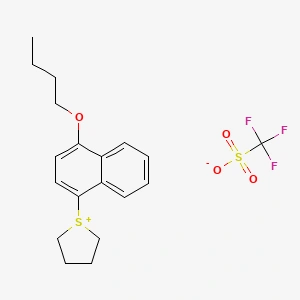
1-(4-Butoxy-1-naphthalenyl)tetrahydrothiophenium triflate

1-(4-Butoxy-1-naphthalenyl)tetrahydrothiophenium triflate, identified by CAS number 209482-15-5, is a high-performance ionic photoacid generator (PAG) belonging to the sulfonium salt family. This chemical compound features a naphthalene-based chromophore substituted with a butoxy group, paired with a cyclic tetrahydrothiophenium cation and a triflate anion. Its molecular design is engineered to provide excellent thermal stability and high sensitivity

1-(4-Butoxy-1-naphthalenyl)tetrahydrothiophenium triflate Read More »

Sodium laureth sulfate

Sodium laureth sulfate, identified by CAS 9004-82-4, is an anionic surfactant and detergent widely utilized in various industrial and commercial formulations. It is an ethoxylated alkyl sulfate, typically derived from ethoxylated lauryl alcohol. This chemical is characterized by its excellent foaming properties, emulsifying capabilities, and effective surface tension reduction. Its chemical structure allows it to

Sodium laureth sulfate Read More »

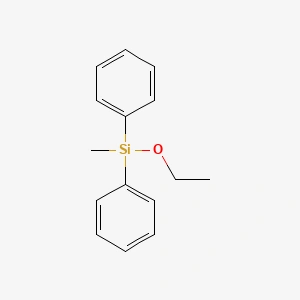
Diphenylmethyl ethoxysilane

Diphenylmethyl ethoxysilane (CAS 1825-59-8) is a specialized organosilicon monomer featuring a central silicon atom bonded to two phenyl groups, one methyl group, and a single hydrolyzable ethoxy group. This specific molecular configuration makes it a valuable building block in the synthesis of high-performance silicone polymers and resins. As a clear, liquid reagent, it is primarily

Diphenylmethyl ethoxysilane Read More »

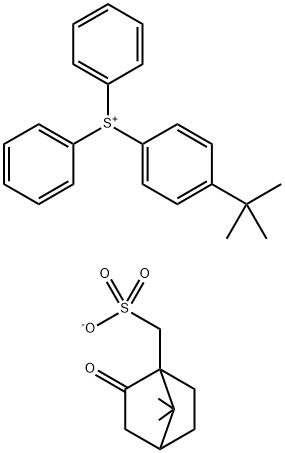
4 tert butylphenyldiphenylsulfonium camphorsulfonate 186769 11 9 structure

(4-tert-Butylphenyl)diphenylsulfonium camphorsulfonate

(4-tert-Butylphenyl)diphenylsulfonium camphorsulfonate, identified by CAS 186769-11-9, is a high-performance ionic photoacid generator (PAG) widely utilized in advanced electronic materials. This compound consists of a bulky sulfonium cation paired with a camphorsulfonate anion, a combination that provides excellent thermal stability and solubility in common organic solvents used in the semiconductor industry. Its molecular design is optimized

(4-tert-Butylphenyl)diphenylsulfonium camphorsulfonate Read More »

REQUEST A QUOTE

Product Inquiry — Popup Form