English | 中文 | Español

Industrial Grade

Undecanoic Delta Lactone 710 04 3 Structure

Undecanoic delta-lactone

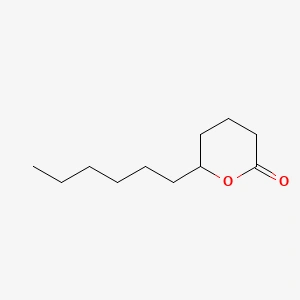
Undecanoic delta-lactone, identified by CAS number 710-04-3, is a cyclic ester belonging to the lactone family, specifically characterized by a six-membered ring structure. This organic compound typically presents as a clear, colorless to pale yellow liquid with a distinctively rich and creamy aroma profile. It is valued for its high chemical stability under standard storage

Undecanoic delta-lactone Read More »
Isopentyl Cinnamate 7779 65 9 Structure

Isopentyl cinnamate

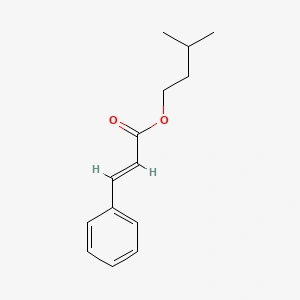
Isopentyl cinnamate, identified by CAS 7779-65-9, is an organic ester formed through the condensation of isoamyl alcohol and cinnamic acid. This compound is characterized by its distinct aromatic profile, often described as having sweet, balsamic, and slightly fruity notes with hints of cocoa and amber. Physically, it typically appears as a colorless to pale yellow

Isopentyl cinnamate Read More »

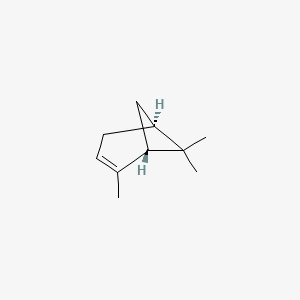
I Pinene 7785 26 4 Structure

I+–Pinene, (-)-

(-)-alpha-Pinene, identified by CAS 7785-26-4, is a naturally occurring bicyclic monoterpene and a primary constituent of various essential oils, most notably those derived from coniferous trees. As a clear, colorless liquid with a distinctively woody and pine-like aroma, it serves as a fundamental building block in the terpene chemistry landscape. This isomer is characterized by

I+–Pinene, (-)- Read More »

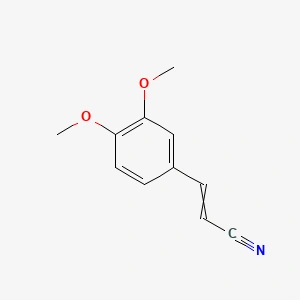
3 3 4 Dimethoxyphenyl 2 Propenenitrile 6443 72 7 Structure

3-(3,4-Dimethoxyphenyl)-2-propenenitrile

3-(3,4-Dimethoxyphenyl)-2-propenenitrile, identified by CAS number 6443-72-7, is a specialized organic compound characterized by its substituted cinnamonitrile structure. It features a propenenitrile backbone linked to a benzene ring with two methoxy groups at the 3 and 4 positions. This chemical is typically encountered as a crystalline solid and serves as a versatile building block in the

3-(3,4-Dimethoxyphenyl)-2-propenenitrile Read More »

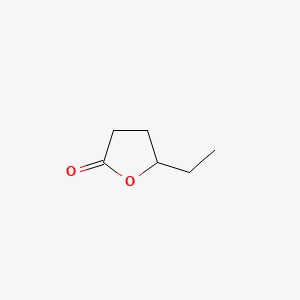
2 3H Furanone 5 Ethyldihydro 695 06 7 Structure

2(3H)-Furanone, 5-ethyldihydro-

2(3H)-Furanone, 5-ethyldihydro-, commonly known as gamma-caprolactone, is a versatile cyclic ester characterized by its distinct organoleptic properties. Identified by the CAS number 695-06-7, this compound typically appears as a colorless to slightly yellowish liquid at room temperature. It is recognized for its relative stability under standard conditions, although it should be handled with the standard

2(3H)-Furanone, 5-ethyldihydro- Read More »

5 Hydroxyoctanoic Acid Lactone 698 76 0 Structure

5-Hydroxyoctanoic acid lactone

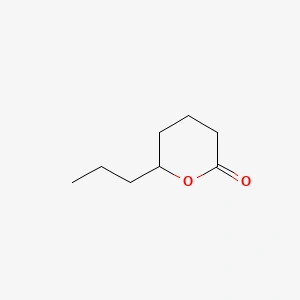
5-Hydroxyoctanoic acid lactone, widely recognized in the chemical industry as delta-octalactone, is a cyclic ester belonging to the delta-lactone family. Identified by CAS number 698-76-0, this organic compound is characterized by its distinct six-membered ring structure. It typically presents as a clear to slightly yellowish liquid with a high boiling point. Its chemical stability and

5-Hydroxyoctanoic acid lactone Read More »

2 3H Furanone 5 Hexyldihydro 706 14 9 Structure

2(3H)-Furanone, 5-hexyldihydro-

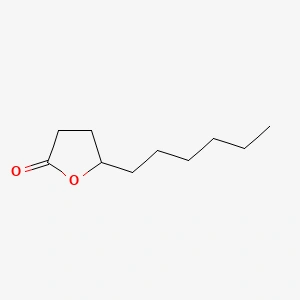
2(3H)-Furanone, 5-hexyldihydro-, widely recognized in the specialty chemical industry as gamma-decalactone, is a naturally occurring lactone that serves as a fundamental building block in the flavor and fragrance sectors. This compound is characterized by its distinct, intense aroma reminiscent of ripe peaches and apricots, presenting as a clear to pale yellow oily liquid. As a

2(3H)-Furanone, 5-hexyldihydro- Read More »

L Borneol 464 45 9 Structure

L-Borneol

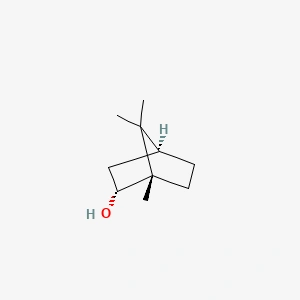
L-Borneol, identified by CAS number 464-45-9, is a naturally occurring bicyclic monoterpene alcohol characterized by its distinct, pungent, and slightly camphoraceous aroma. As a specific isomer of borneol, the L-form exhibits characteristic optical activity and typically appears as a white to off-white crystalline solid or translucent mass. It is highly valued across various industrial sectors

L-Borneol Read More »

4 Aminocinnamic Acid Ethyl Ester 5048 82 8 Structure

4-aminocinnamic acid ethyl ester

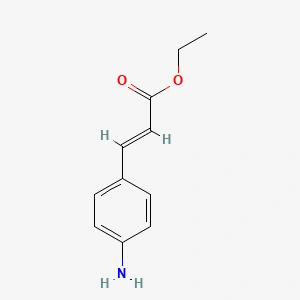
4-Aminocinnamic acid ethyl ester, identified by CAS number 5048-82-8, is a versatile organic compound belonging to the cinnamate ester family. Characterized by the presence of both an amino group and an alpha, beta-unsaturated ester moiety, this molecule serves as a significant building block in synthetic organic chemistry. It typically appears as a pale yellow to

4-aminocinnamic acid ethyl ester Read More »

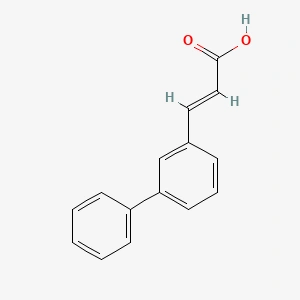
3 1 1 Biphenyl 3 Yl Acrylic Acid 60521 26 8 Structure

3-([1,1′-Biphenyl]-3-yl)acrylic acid

3-([1,1′-Biphenyl]-3-yl)acrylic acid, identified by CAS number 60521-26-8, is a specialized organic compound characterized by a biphenyl moiety substituted with a propenoic acid group at the meta-position. This structural configuration provides a rigid, conjugated backbone that is highly valued in synthetic chemistry. The compound typically appears as a crystalline solid and exhibits chemical properties consistent with

3-([1,1′-Biphenyl]-3-yl)acrylic acid Read More »

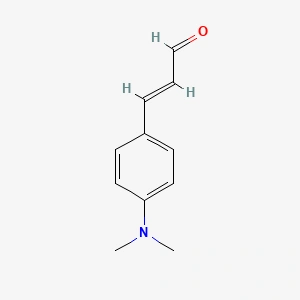
4 Dimethylamino Cinnamaldehyde 6203 18 5 Structure

4-(Dimethylamino)cinnamaldehyde

4-(Dimethylamino)cinnamaldehyde, identified by CAS number 6203-18-5, is an aromatic organic compound characterized by its distinct cinnamaldehyde backbone substituted with a dimethylamino group at the para position. This chemical typically appears as a yellow to orange-brown crystalline solid or powder. It is recognized for its reactivity as an electrophile and its ability to undergo condensation reactions

4-(Dimethylamino)cinnamaldehyde Read More »

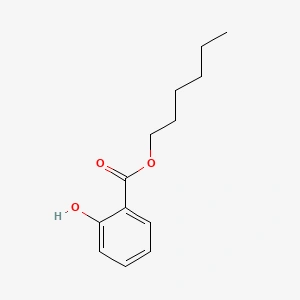
Hexyl Salicylate 6259 76 3 Structure

Hexyl salicylate

Hexyl salicylate, identified by CAS number 6259-76-3, is a clear, colorless to pale yellow liquid ester widely recognized for its mild, sweet, and floral-balsamic aroma. As a derivative of salicylic acid, it exhibits excellent stability and low volatility, making it a reliable component in various chemical formulations. Its chemical structure provides a smooth, tenacious scent

Hexyl salicylate Read More »

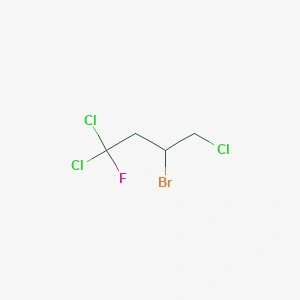
3 Bromo 1 1 4 Trichloro 1 Fluorobutane 406 67 7 Structure

3-Bromo-1,1,4-Trichloro-1-Fluorobutane

3-Bromo-1,1,4-trichloro-1-fluorobutane, identified by CAS number 406-67-7, is a specialized halogenated organic compound characterized by its unique substitution pattern of bromine, chlorine, and fluorine atoms on a butane backbone. As a multi-halogenated alkane, it serves as a versatile building block in complex organic synthesis, particularly where selective functionalization is required. The presence of multiple halogen groups

3-Bromo-1,1,4-Trichloro-1-Fluorobutane Read More »

3 4 Fluorophenyl 2 Propenoic Acid 459 32 5 Structure

3-(4-fluorophenyl)-2-propenoic acid

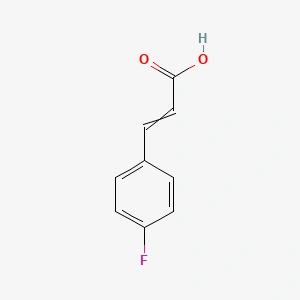
3-(4-fluorophenyl)-2-propenoic acid, also widely recognized as 4-fluorocinnamic acid, is an organic compound characterized by its cinnamic acid backbone with a fluorine substituent at the para position of the benzene ring. This white to off-white crystalline solid serves as a versatile building block in synthetic chemistry, owing to the presence of both an alpha, beta-unsaturated carboxylic

3-(4-fluorophenyl)-2-propenoic acid Read More »

5 Hydroxynonanoic Acid Lactone 3301 94 8 Structure

5-Hydroxynonanoic acid, lactone

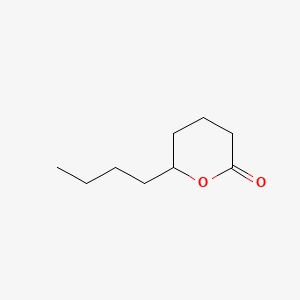
5-Hydroxynonanoic acid, lactone, identified by the CAS number 3301-94-8 and commonly known as delta-nonalactone, is a cyclic ester that serves as a vital component in the flavor and fragrance industries. This organic compound is characterized by its distinct creamy, milky, and coconut-like aroma, which provides a rich sensory profile to various formulations. Physically, it typically

5-Hydroxynonanoic acid, lactone Read More »

REQUEST A QUOTE

Product Inquiry — Popup Form