English | 中文 | Español

Chemical Products

Iridium(III) Chloride Trihydrate

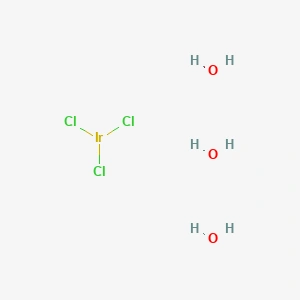
Iridium(III) chloride trihydrate (CAS 13569-57-8; IrCl₃·3H₂O; formula Cl₃H₆IrO₃; 352.62 g/mol) is a hydrated iridium(III) salt and a source of Ir(III) for inorganic and precious-metal chemistry. Its principal role is as a precursor for preparing iridium coordination compounds and other iridium-containing materials. Solubility and reactivity depend on the solvent and intended chemistry; the AI Mode answer

Iridium(III) Chloride Trihydrate Read More »

Hexaammineruthenium(III) Chloride

Hexaammineruthenium(III) chloride (CAS 14282-91-8; [Ru(NH3)6]Cl3; formula weight 309.61) is an inorganic coordination salt composed of a hexaammine ruthenium(III) cation and three chloride counterions. Its defined coordination structure and ruthenium oxidation state make it useful as a research reagent, particularly in electrochemistry and coordination chemistry. This material is a laboratory chemical, not a medicine, nutrient, or

Hexaammineruthenium(III) Chloride Read More »

N-Acetyl-L-Carnosine

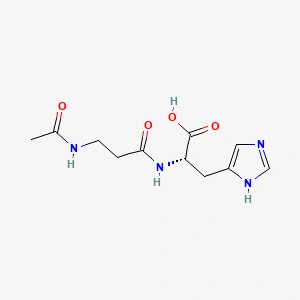
N-Acetyl-L-carnosine (NAC; CAS 56353-15-2) is the N-acetylated derivative of the dipeptide β-alanyl-L-histidine (carnosine).Acetylation is associated with greater resistance to carnosinase-mediated degradation than unmodified carnosine; this chemical property does not itself establish clinical benefit or suitability for a finished product. This material is described principally in biochemical and ophthalmic research contexts, including investigation of antioxidant, anti-glycation,

N-Acetyl-L-Carnosine Read More »

Cupferron

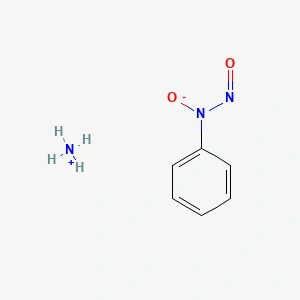
Cupferron (CAS 135-20-6) is ammonium N-nitroso-N-phenylhydroxylamine, also called ammonium N-nitrosophenylhydroxylamine (formula C6H9N3O2; molecular mass 155.15 g/mol). It is a metal-complexing precipitant used as an analytical reagent, rather than a general-purpose formulation ingredient. This listing describes an industrial-grade product with assay ≥98% and a white to pale cream crystalline appearance; confirm the exact specification against the

Cupferron Read More »

1-Acetoxy-4-diethylamino-2-butyne

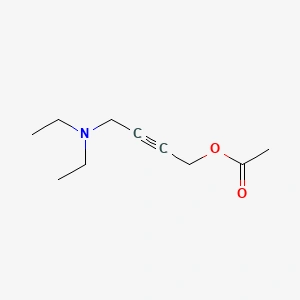
1-Acetoxy-4-diethylamino-2-butyne (CAS 22396-77-6), also named 4-(diethylamino)but-2-yn-1-yl acetate, is an organic compound bearing an alkyne, a tertiary diethylamino group, and an acetate ester.These functional groups characterize it as a functionalized building block for specialized organic synthesis. The supported use is as a laboratory or fine-chemical intermediate/reagent in research and process-development synthesis, including as a precursor for

1-Acetoxy-4-diethylamino-2-butyne Read More »

Palladium(II) Chloride

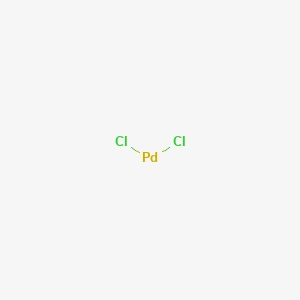
Palladium(II) chloride (palladous chloride; PdCl2; CAS 7647-10-1) is an inorganic palladium(II) salt with a molar mass of 177.33 g/mol. It is typically encountered as a dark reddish-brown to brown-black, moisture-sensitive solid. Its chemical form and palladium content matter when selecting it as a source of palladium for catalysts or materials; the compound can behave differently

Palladium(II) Chloride Read More »

Palladium(II) Acetate

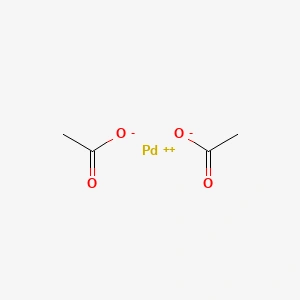
Palladium(II) acetate (CAS 3375-31-3; Pd(OAc)2, empirical formula C4H6O4Pd; formula-unit molar mass 224.50 g/mol) is a palladium(II) carboxylate supplied as a red-brown solid. Its molecular or solid-state association may be oligomeric, commonly described as a cyclic trimer, so formula-unit mass should not be confused with the mass of an associated species. Confirm identity, assay, and physical

Palladium(II) Acetate Read More »

Triethylhexanoin

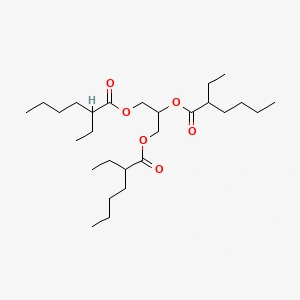
Triethylhexanoin (CAS 7360-38-5) is the triglyceride formed from glycerol and three 2-ethylhexanoic acid groups, also called glyceryl tri(2-ethylhexanoate), glyceryl triisocaprylate, or glycerol tris(2-ethylhexanoate). It is a lipophilic ester oil, not a drug active or a single fatty-acid ester. In personal-care formulations, it is used primarily as an emollient and skin-conditioning oil, contributing spreadability and a

Triethylhexanoin Read More »

Deoxyribonucleic Acid

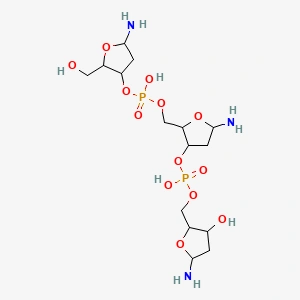
Deoxyribonucleic acid (DNA, CAS 9007-49-2) is a biopolymer of nucleotide units with a deoxyribose-phosphate backbone and adenine, thymine, guanine and cytosine bases. The CAS designation refers to DNA generally, not one defined sequence or chain length; a common repeat-unit representation is (C₁₅H₃₁N₃O₁₃P₂)ₙ. Source, fragment distribution and preparation (free acid or salt) can vary.

Deoxyribonucleic Acid Read More »

Tri(tridecyl) Trimellitate

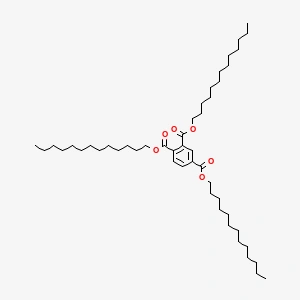
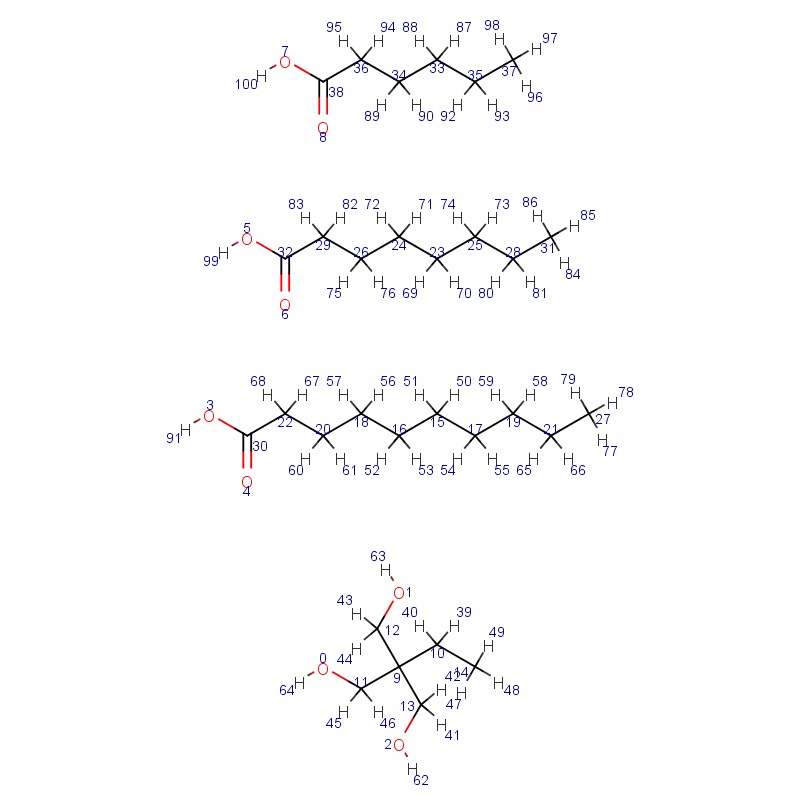
Tri(tridecyl) trimellitate (also called tridecyl trimellitate; CAS 94109-09-8) is the triester of trimellitic acid and tridecyl alcohol. It is described as a clear, viscous, colorless-to-pale-yellow liquid. Commercial tridecyl feedstocks may contain a distribution of alkyl chains, so the name alone does not specify every component or grade property. Supplier and ingredient listings describe uses in

Tri(tridecyl) Trimellitate Read More »

Tetrabutylphosphonium Bromide

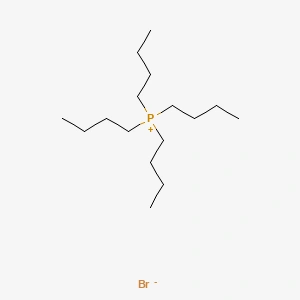
Tetrabutylphosphonium bromide (CAS 3115-68-2) is a quaternary phosphonium salt composed of a tetrabutylphosphonium cation and a bromide anion. It is also known as tetra-n-butylphosphonium bromide (TBPB). Its principal established application is as a phase-transfer catalyst in organic synthesis, where the lipophilic phosphonium cation can assist transfer of ionic species between phases. It is also used

Tetrabutylphosphonium Bromide Read More »

Isopropyl Lauroyl Sarcosinate

Isopropyl Lauroyl Sarcosinate (CAS 230309-38-3) is the isopropyl ester of N-lauroyl sarcosine, a lipophilic sarcosinate ester used as a cosmetic formulation ingredient. The supplied record specifies cosmetic grade, assay ≥98%, and a colorless to pale-yellow oily liquid. It is an oil-phase ingredient, not a therapeutic active. In personal-care formulations, its reported functions include lightweight emolliency,

Isopropyl Lauroyl Sarcosinate Read More »

Poly(glyceryl Methacrylate)

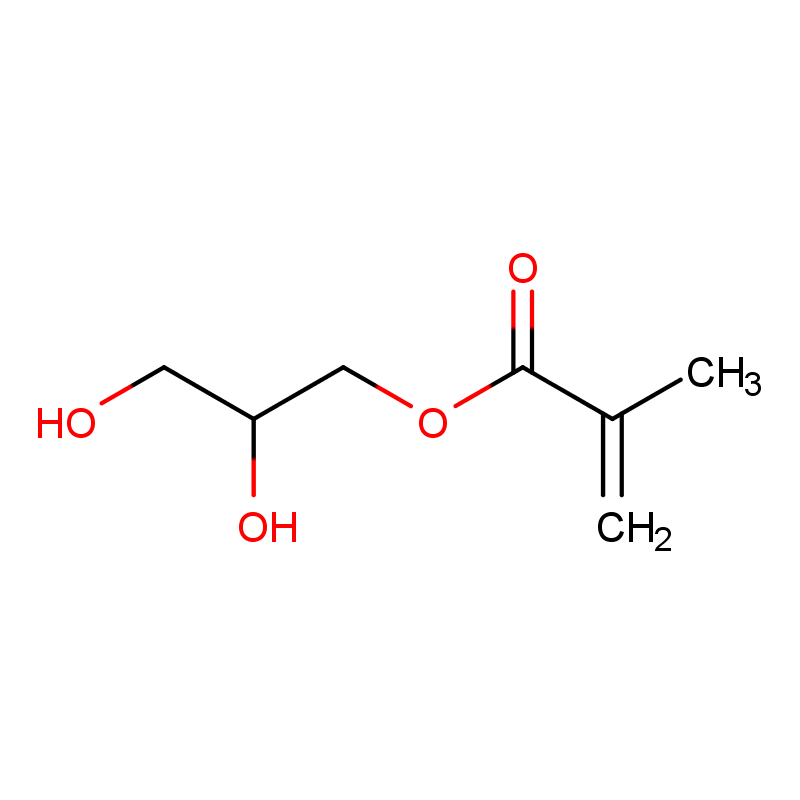
Poly(glyceryl methacrylate) (CAS 28474-30-8) is a polymer of glyceryl methacrylate, also known as poly(2,3-dihydroxypropyl methacrylate) or poly(glycerol monomethacrylate). The repeat unit is commonly represented as (C₇H₁₂O₄)ₙ; chain length and molecular-weight distribution vary by grade. The polymer is hydrophilic and bears glycerol-derived hydroxyl groups.

Poly(glyceryl Methacrylate) Read More »

Hexyl Laurate

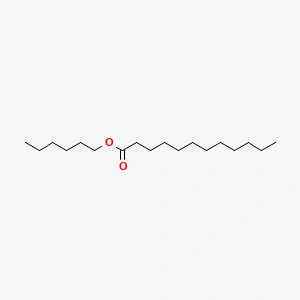
Hexyl Laurate (CAS 34316-64-8), also called hexyl dodecanoate or hexyl laurate, is the hexyl ester of lauric (dodecanoic) acid. The supplied record describes the cosmetic-grade material as a colorless to pale-yellow oily liquid with an assay of at least 98%; these are product specifications and should be confirmed against the applicable batch documentation. In personal-care

Hexyl Laurate Read More »

Cetyl Phosphate

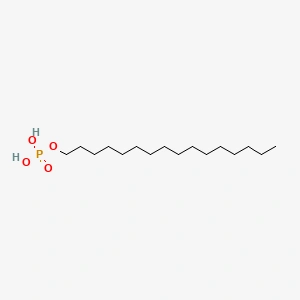
Cetyl Phosphate (CAS 3539-43-3), also called hexadecyl dihydrogen phosphate, is a phosphoric acid monoester. It comprises a hydrophobic, straight-chain C16 alkyl group linked through oxygen to a polar phosphate head. This amphiphilic structure is consistent with its use as an anionic surfactant and emulsifying ingredient. Reported formulation roles include helping emulsify and stabilize oil-and-water systems

Cetyl Phosphate Read More »

REQUEST A QUOTE

Product Inquiry — Popup Form