English | 中文 | Español

Chemical Products

Alpha Campholenic Aldehyde

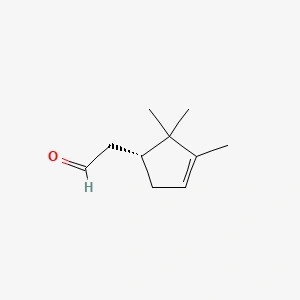
Alpha Campholenic Aldehyde, identified by CAS 4501-58-0, is a specialized monoterpene aldehyde that serves as a critical building block in the fine chemical industry. Derived primarily from the rearrangement of alpha-pinene oxide, this colorless to pale yellow liquid exhibits a distinctive woody and slightly herbal aroma profile. Its chemical structure, characterized by a five-membered ring

Alpha Campholenic Aldehyde Read More »
3′-Methoxypropiophenone

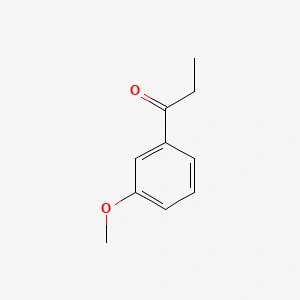
3′-Methoxypropiophenone, identified by CAS number 37951-49-8, is an aromatic ketone characterized by a methoxy group attached to the meta-position of the phenyl ring relative to the propanoyl substituent. This specific substitution pattern provides unique electronic and steric properties compared to its ortho or para isomers, making it a valuable building block in fine chemical synthesis.

3′-Methoxypropiophenone Read More »

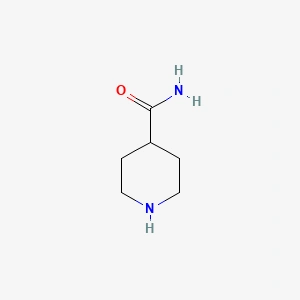
Piperidine-4-carboxylic acid amide

Piperidine-4-carboxylic acid amide, identified by CAS number 39546-32-2, is a heterocyclic organic compound belonging to the piperidine family. Also commonly referred to as isonipecotamide, this molecule features a six-membered saturated ring containing a nitrogen atom, with a primary amide group substituted at the 4-position. It typically appears as a white to off-white crystalline solid and

Piperidine-4-carboxylic acid amide Read More »

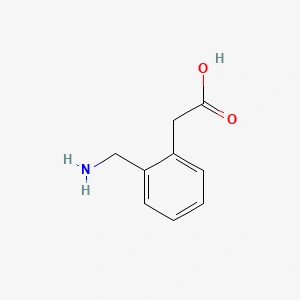
2-Aminomethylphenylacetic acid

2-Aminomethylphenylacetic acid, identified by CAS number 40851-65-8, is a versatile organic compound characterized by the presence of both an amino group and a carboxylic acid moiety attached to a benzene ring. This bifunctional structure makes it a valuable intermediate in the synthesis of various complex molecules. It typically appears as a crystalline solid and exhibits

2-Aminomethylphenylacetic acid Read More »

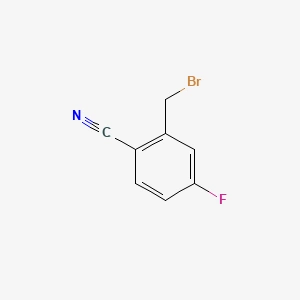
2-(Bromomethyl)-4-fluorobenzonitrile

2-(Bromomethyl)-4-fluorobenzonitrile, identified by CAS number 421552-12-7, is a specialized organic building block characterized by its multi-functionalized aromatic structure. It features a benzonitrile core substituted with a reactive bromomethyl group at the ortho position and a fluorine atom at the para position. This specific arrangement of functional groups makes it a highly valuable intermediate in complex

2-(Bromomethyl)-4-fluorobenzonitrile Read More »

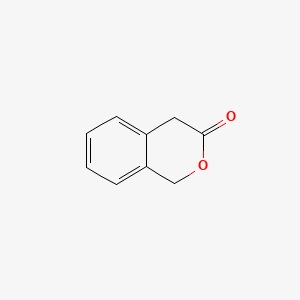
2-Hydroxymethylphenylacetic acid lactone

2-Hydroxymethylphenylacetic acid lactone, commonly identified by its CAS number 4385-35-7 and also known as isochroman-3-one, is a significant organic building block characterized by its bicyclic lactone structure. This compound typically appears as a white to pale yellow crystalline solid and serves as a versatile intermediate in complex chemical synthesis. Its molecular architecture, featuring a fused

2-Hydroxymethylphenylacetic acid lactone Read More »

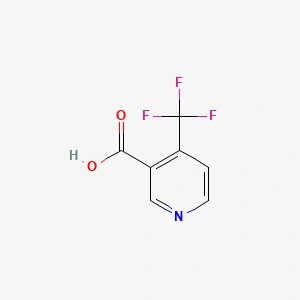
4-(Trifluoromethyl)pyridine-3-carboxylic acid

4-(Trifluoromethyl)pyridine-3-carboxylic acid, identified by CAS number 158063-66-2, is a versatile fluorinated heterocyclic building block widely utilized in advanced organic synthesis. This compound features a pyridine scaffold substituted with a carboxylic acid group at the 3-position and a trifluoromethyl group at the 4-position. The presence of the trifluoromethyl moiety significantly influences the electronic properties and lipophilicity

4-(Trifluoromethyl)pyridine-3-carboxylic acid Read More »

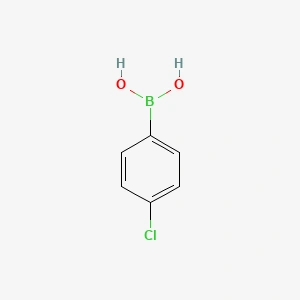
4-Chlorophenylboronic acid

4-Chlorophenylboronic acid, identified by CAS number 1679-18-1, is a versatile organoboron compound widely utilized in modern synthetic chemistry. Appearing as a white to off-white crystalline solid, it serves as a crucial arylating agent. Its chemical structure features a benzene ring substituted with a chlorine atom at the para position and a boronic acid functional group,

4-Chlorophenylboronic acid Read More »

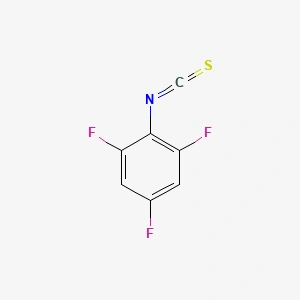
1,3,5-Trifluoro-2-isothiocyanatobenzene

1,3,5-Trifluoro-2-isothiocyanatobenzene, identified by CAS number 206761-91-3, is a specialized organofluorine building block characterized by the presence of an isothiocyanate functional group attached to a trifluorinated benzene ring. This compound serves as a highly reactive intermediate in organic synthesis, where the electron-withdrawing nature of the three fluorine atoms significantly influences the reactivity of the isothiocyanate moiety.

1,3,5-Trifluoro-2-isothiocyanatobenzene Read More »

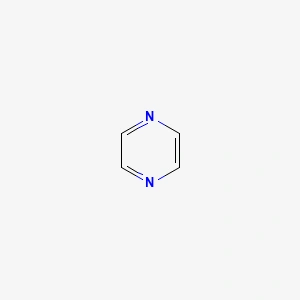
pyrazine phase IV

Pyrazine (CAS 290-37-9) is a fundamental heterocyclic aromatic organic compound characterized by a six-membered ring containing two nitrogen atoms at the 1 and 4 positions. As a symmetrical diazine, it serves as a critical structural motif in various natural and synthetic substances. In its pure state, pyrazine typically appears as a colorless to pale yellow

pyrazine phase IV Read More »

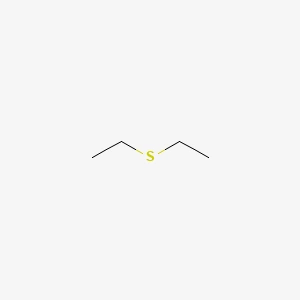
Diethyl sulfide

Diethyl sulfide, identified by CAS number 352-93-2, is a clear, colorless to yellowish organic liquid characterized by its potent, garlic-like thioether odor. As a symmetrical dialkyl sulfide, it exhibits high volatility and flammability, requiring careful handling in controlled environments. It is virtually insoluble in water but demonstrates excellent miscibility with common organic solvents such as

Diethyl sulfide Read More »

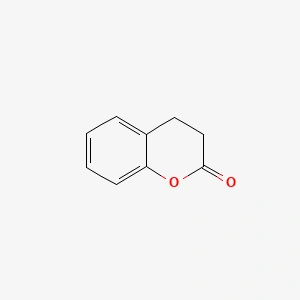
melilotic lactone

Melilotic lactone, chemically identified by CAS 119-84-6 and also known as dihydrocoumarin, is a bicyclic organic compound belonging to the benzopyrone family. It is characterized by its sweet, herbal, and hay-like aroma, often described as having creamy or nutty undertones similar to coumarin but with a softer profile. Structurally, it consists of a benzene ring

melilotic lactone Read More »

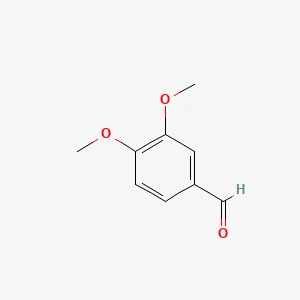
Veratric aldehyde

Veratric aldehyde, chemically identified as 3,4-dimethoxybenzaldehyde, is a crystalline organic compound derived from vanillin or produced through the methylation of protocatechuic aldehyde. It typically appears as white to pale yellow needles or powder and is characterized by a pleasant, sweet, and slightly woody aroma reminiscent of vanilla. This aromatic aldehyde is soluble in alcohol and

Veratric aldehyde Read More »

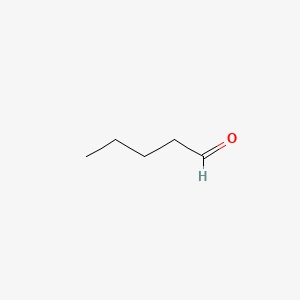
Valeric aldehyde

Valeric aldehyde, also known as pentanal or n-valeraldehyde, is a saturated aliphatic aldehyde with the chemical formula C5H10O. Identified by CAS 110-62-3, this colorless liquid is characterized by a sharp, pungent odor that becomes fruity and nutty at high dilutions. It is highly flammable and exhibits moderate volatility, making it a versatile building block in

Valeric aldehyde Read More »

DIETHYL DISULFIDE

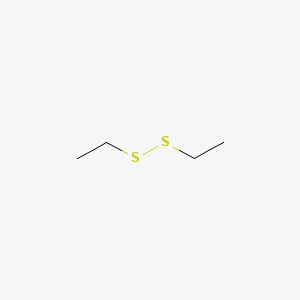
Diethyl disulfide, identified by CAS number 110-81-6, is an organic sulfur compound belonging to the disulfide class. It is characterized as a colorless to pale yellow liquid with a distinct, potent sulfurous or garlic-like odor. Chemically, it consists of two ethyl groups linked by a disulfide bridge, providing it with unique reactivity patterns, particularly in

DIETHYL DISULFIDE Read More »

FERRIC AMMONIUM CITRATE

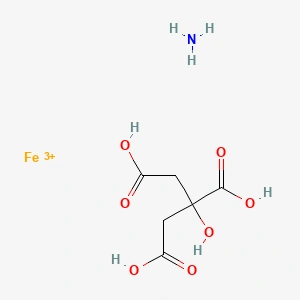
Ferric Ammonium Citrate, identified by CAS number 1185-57-5, is a complex coordination compound composed of iron, ammonia, and citric acid. It typically presents as either reddish-brown or green scales or powder, depending on the specific iron content and oxidation state. This chemical is highly soluble in water and is notably characterized by its significant photosensitivity,

FERRIC AMMONIUM CITRATE Read More »

REQUEST A QUOTE

Product Inquiry — Popup Form