English | 中文 | Español

Chemical Products

Caprylamidopropyl betaine

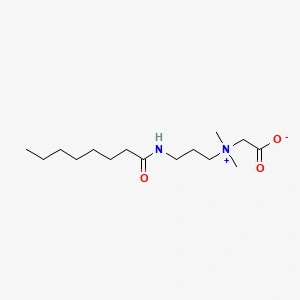
Caprylamidopropyl betaine (CAS 73772-46-0) is a high-purity amphoteric surfactant derived from caprylic acid, a short-chain fatty acid. It belongs to the amidopropyl betaine family and is characterized by its excellent solubility and stability across a wide pH range. Unlike longer-chain analogs, this C8-based surfactant offers unique performance characteristics, particularly in terms of foam quality and

Caprylamidopropyl betaine Read More »
Vinyltriethoxysilane

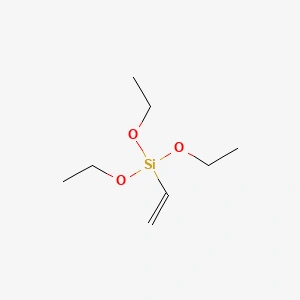
Vinyltriethoxysilane, identified by CAS 78-08-0, is a versatile organosilicon monomer characterized by the presence of a reactive vinyl group and three hydrolyzable ethoxy groups. As a bifunctional silane, it serves as a critical bridge between inorganic substrates and organic polymer matrices. The molecule’s dual reactivity allows it to participate in radical polymerization through its vinyl

Vinyltriethoxysilane Read More »

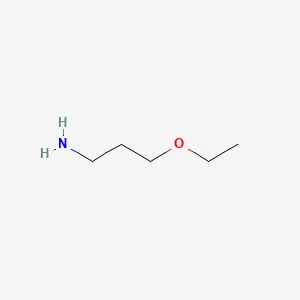
3-Ethoxypropylamine

3-Ethoxypropylamine, identified by CAS number 6291-85-6, is a versatile primary amine characterized by the presence of an ethoxy group attached to a three-carbon propyl chain. This bifunctional molecule combines the reactivity of a primary amino group with the solubility and solvent-like properties of an ether linkage. It typically appears as a clear, colorless to pale

3-Ethoxypropylamine Read More »

Disodium mono(polyoxyethylene alkyl) sulfosuccinate

Disodium mono(polyoxyethylene alkyl) sulfosuccinate, identified by CAS number 68911-93-3, is a versatile anionic surfactant belonging to the sulfosuccinate class. It is characterized by its ethoxylated alkyl chain, which imparts a unique balance of hydrophilicity and lipophilicity. This chemical structure results in a material that exhibits excellent surface activity while maintaining a profile of low toxicity

Disodium mono(polyoxyethylene alkyl) sulfosuccinate Read More »

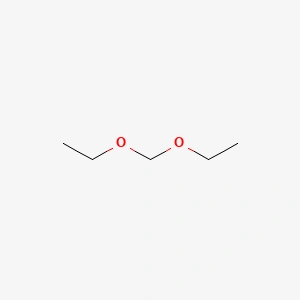
Diethoxymethane

Diethoxymethane, commonly referred to as formaldehyde diethyl acetal or ethylal, is a versatile organic compound characterized by its stable acetal structure. As a clear, colorless liquid with a relatively low boiling point, it serves as an efficient solvent and reagent across a broad spectrum of chemical processes. Its chemical stability under neutral and basic conditions,

Diethoxymethane Read More »

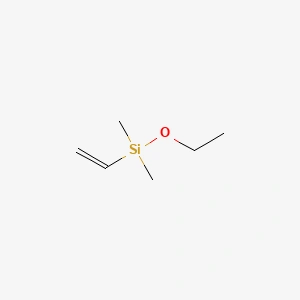
Ethoxydimethylvinylsilane

Ethoxydimethylvinylsilane, identified by CAS number 5356-83-2, is a versatile organosilicon monomer characterized by the presence of both a reactive vinyl group and a hydrolyzable ethoxy group. This bifunctional structure makes it a valuable intermediate in the synthesis of specialized silicone polymers and organic-inorganic hybrid materials. As a clear, colorless liquid, it exhibits the typical reactivity

Ethoxydimethylvinylsilane Read More »

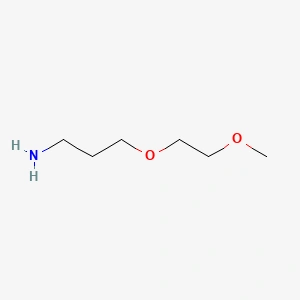
3-(2-Methoxyethoxy)propylamine

3-(2-Methoxyethoxy)propylamine, identified by CAS 54303-31-0, is a versatile ether amine characterized by the presence of a primary amino group and a methoxyethoxy side chain. This bifunctional structure provides a unique balance of reactivity and hydrophilicity, making it a valuable building block in organic synthesis. As a clear to pale yellow liquid, it exhibits the typical

3-(2-Methoxyethoxy)propylamine Read More »

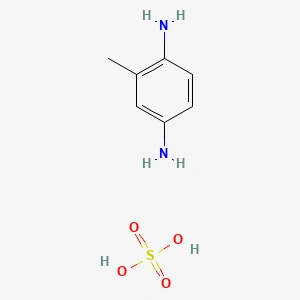
2,5-Diaminotoluene sulfate

2,5-Diaminotoluene sulfate, identified by CAS number 615-50-9, is a significant organic salt widely utilized as a primary intermediate in the synthesis of various colorants. As a derivative of toluene, this compound typically appears as a white to light-grey crystalline powder. It is valued for its high reactivity and ability to form stable, vibrant pigments when

2,5-Diaminotoluene sulfate Read More »

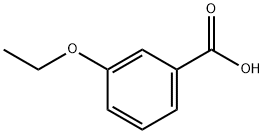
3 ethoxybenzoic acid 624 51 2 structure

3-Ethoxybenzoic acid

3-Ethoxybenzoic acid, identified by CAS number 624-51-2, is a substituted aromatic carboxylic acid characterized by an ethoxy group attached to the meta position of the benzene ring. This white to off-white crystalline powder serves as a versatile building block in organic chemistry. Its structural configuration provides specific reactivity patterns, making it a valuable precursor for

3-Ethoxybenzoic acid Read More »

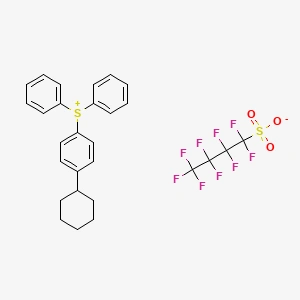
(4-Cyclohexylphenyl)diphenylsulfonium nonafluorobutanesulfonate

(4-Cyclohexylphenyl)diphenylsulfonium nonafluorobutanesulfonate, identified by CAS number 425670-64-0, is a high-performance ionic photoacid generator (PAG) belonging to the triarylsulfonium salt family. This compound features a bulky cyclohexyl substituent on one of the phenyl rings, which enhances its solubility in common organic solvents and improves its compatibility with various polymer matrices. The nonafluorobutanesulfonate (nonaflate) anion provides excellent

(4-Cyclohexylphenyl)diphenylsulfonium nonafluorobutanesulfonate Read More »

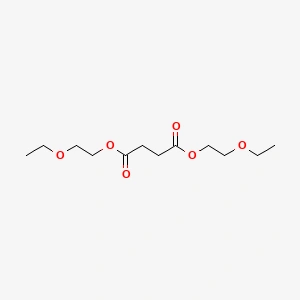
Diethoxyethyl succinate

Diethoxyethyl succinate, identified by CAS number 26962-29-8, is a high-performance diester derived from succinic acid. It is characterized by its excellent solvency and unique amphiphilic properties, which allow it to bridge the gap between oil-based and water-based systems. As a clear, low-viscosity liquid, it offers a non-greasy texture and high spreadability, making it a versatile

Diethoxyethyl succinate Read More »

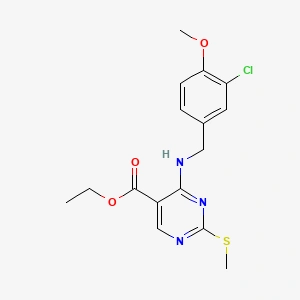
Ethyl 4-[(3-chloro-4-methoxybenzyl)amino]-2-(methylthio)pyrimidine-5-carboxylate

Ethyl 4-[(3-chloro-4-methoxybenzyl)amino]-2-(methylthio)pyrimidine-5-carboxylate, identified by CAS 330785-81-4, is a specialized organic building block primarily utilized in the synthesis of complex nitrogen-containing heterocycles. Structurally, it features a pyrimidine core substituted with an ethyl ester, a methylthio moiety, and a halogenated benzylamino group. This specific arrangement of functional groups makes it a versatile intermediate for downstream chemical transformations,

Ethyl 4-[(3-chloro-4-methoxybenzyl)amino]-2-(methylthio)pyrimidine-5-carboxylate Read More »

Sodium laureth-4 carboxylate

Sodium laureth-4 carboxylate, identified by CAS 38975-04-1, is a versatile anionic surfactant belonging to the alkyl ether carboxylate family. It is synthesized through the carboxymethylation of ethoxylated lauryl alcohol, typically containing an average of four moles of ethylene oxide. This chemical structure imparts unique properties, combining the high foaming and cleansing capabilities of traditional anionic

Sodium laureth-4 carboxylate Read More »

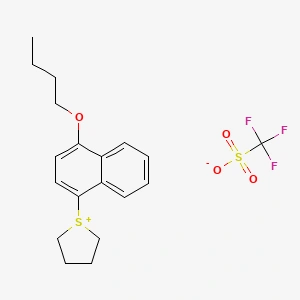
1-(4-Butoxy-1-naphthalenyl)tetrahydrothiophenium triflate

1-(4-Butoxy-1-naphthalenyl)tetrahydrothiophenium triflate, identified by CAS number 209482-15-5, is a high-performance ionic photoacid generator (PAG) belonging to the sulfonium salt family. This chemical compound features a naphthalene-based chromophore substituted with a butoxy group, paired with a cyclic tetrahydrothiophenium cation and a triflate anion. Its molecular design is engineered to provide excellent thermal stability and high sensitivity

1-(4-Butoxy-1-naphthalenyl)tetrahydrothiophenium triflate Read More »

Ammonium sulfate

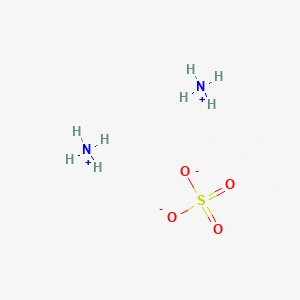
Ammonium sulfate, identified by CAS number 7783-20-2, is a versatile inorganic salt widely utilized across various industrial and laboratory sectors. This white, crystalline solid is highly soluble in water and is characterized by its stability under standard conditions. As a primary source of both nitrogen and sulfur, it serves as a critical raw material in

Ammonium sulfate Read More »

Sodium laureth sulfate

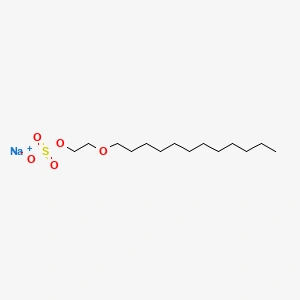
Sodium laureth sulfate, identified by CAS 9004-82-4, is an anionic surfactant and detergent widely utilized in various industrial and commercial formulations. It is an ethoxylated alkyl sulfate, typically derived from ethoxylated lauryl alcohol. This chemical is characterized by its excellent foaming properties, emulsifying capabilities, and effective surface tension reduction. Its chemical structure allows it to

Sodium laureth sulfate Read More »

REQUEST A QUOTE

Product Inquiry — Popup Form