English | 中文 | Español

Chemical Products

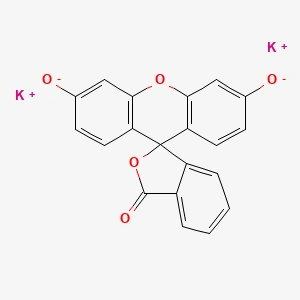
Dipotassium Fluorescein 6417 85 2 Structure

Dipotassium Fluorescein

Dipotassium fluorescein, also recognized as fluorescein dipotassium or Uranine K, is a highly water-soluble potassium salt derivative of fluorescein. It appears as a vibrant orange-red crystalline powder that dissolves readily in water to yield a brilliant yellowish-green fluorescent solution under visible and UV light. This distinct fluorescence property makes it exceptionally valuable across various specialized

Dipotassium Fluorescein Read More »
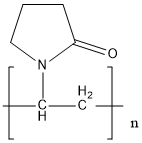
Polyvinylpyrrolidone 9003 39 8 Structure

Polyvinylpyrrolidone

Polyvinylpyrrolidone (PVP, CAS 9003-39-8) is a water-soluble synthetic polymer of N-vinylpyrrolidone with repeat unit (C₆H₉NO)ₙ. It is valued for biocompatibility, chemical stability, low toxicity and film-forming capability. Available in various molecular-weight grades, it functions as a binder, stabilizer, thickener and dispersing agent.

Polyvinylpyrrolidone Read More »

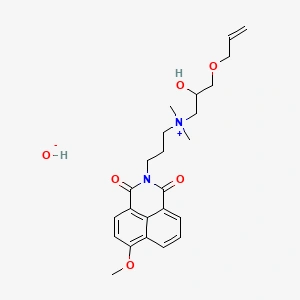
Methoxy Naphthalimide Quaternary Ammonium Hydroxide 276878 97 8 Structure

Methoxy Naphthalimide Quaternary Ammonium Hydroxide

Methoxy naphthalimide quaternary ammonium hydroxide, designated by under CAS 276878-97-8 and internal code KR001484, is a specialized functionalized fluorescent monomer. Its molecular architecture integrates a 1,8-naphthalimide core substituted with a methoxy group at position 6 and a quaternary ammonium hydroxide functional chain containing an allyloxy polymerizable group. This unique construction combines strong fluorescent properties with

Methoxy Naphthalimide Quaternary Ammonium Hydroxide Read More »

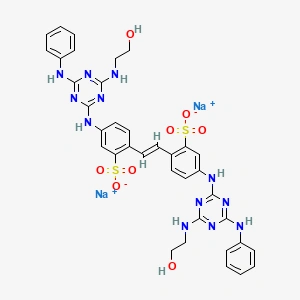
Optical Brightener VBL 12224 06 5 Structure

Optical Brightener VBL

Optical Brightener VBL, also chemically identified as Fluorescent Brightener 85, is a specialized stilbene-derivative fluorescent whitening agent. It is widely engineered for industrial applications requiring enhanced visual brightness and light reflectance. By absorbing invisible ultraviolet radiation within the solar spectrum and re-emitting it as a vibrant blue-violet fluorescence, this compound effectively masks natural yellowish tinges

Optical Brightener VBL Read More »

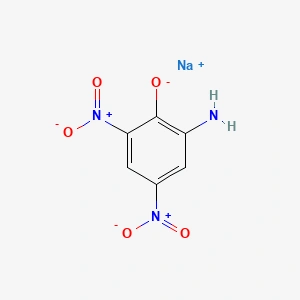
Sodium Picramate 831 52 7 Structure

Sodium Picramate

Sodium Picramate is the sodium salt of picramic acid (2-amino-4,6-dinitrophenol), appearing typically as a dark red crystalline powder or concentrated salt solution. Functioning primarily as a direct non-oxidative hair coloring agent, it possesses specialized chromophoric properties that allow it to impart deep, stable shades directly onto the hair shaft through surface pigment deposition rather than

Sodium Picramate Read More »

image failed

Pyrene-1,3,6,8-Tetrasulfonic Acid Tetrasodium Salt

Pyrene-1,3,6,8-tetrasulfonic acid tetrasodium salt (PTSA, CAS 59570-10-0) is an organic fluorescent compound with a pyrene core substituted by four sulfonate groups, formula C₁₆H₆Na₄O₁₂S₄ and MW 610.43. It exhibits intense blue fluorescence under UV excitation and is used as an inert fluorescent tracer in industrial aqueous systems. Note: the tetrasodium salt is also commonly associated with

Pyrene-1,3,6,8-Tetrasulfonic Acid Tetrasodium Salt Read More »

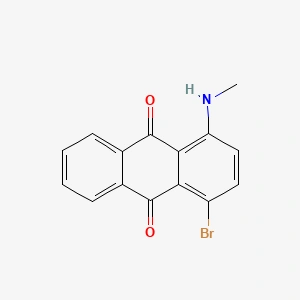
1 Methylamino 4 Bromoanthraquinone 128 93 8 Structure

1-Methylamino-4-bromoanthraquinone

1-Methylamino-4-bromoanthraquinone is a substituted anthraquinone derivative characterized by a polycyclic aromatic quinone core substituted with a bromine atom at the C-4 position and a methylamino group at the C-1 position,. It usually appears as a brown to dark brown solid with high melting stability and strong light absorption properties. The presence of the reactive bromine

1-Methylamino-4-bromoanthraquinone Read More »

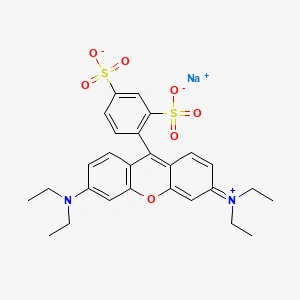
Acid Red 52 3520 42 1 Structure

Acid Red 52

Acid Red 52, widely recognized as Sulforhodamine B sodium salt or CID 9916275, is a synthetic xanthene-class dye characterized by its striking fluorescent magenta or pink coloration. and a molecular weight of, this water-soluble compound exhibits exceptional tinting strength and high visibility under daylight conditions. It is manufactured via precise organic synthesis protocols to meet

Acid Red 52 Read More »

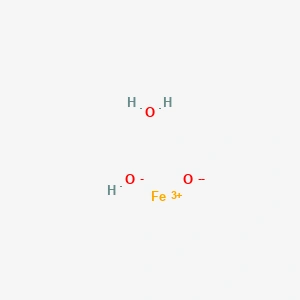
Iron Oxide Yellow Pigment 51274 00 1 Structure

Iron Oxide Yellow Pigment

Iron oxide yellow pigment (CAS 51274-00-1), also known as C.I. Pigment Yellow 42, is a hydrated iron(III) oxide pigment, commonly represented as Fe₂O₃·H₂O or FeO(OH). It offers exceptional lightfastness, weather resistance and chemical stability, and is insoluble in water and organic solvents. Thermal exposure above about 80°C initiates dehydration toward a red ferric oxide phase.

Iron Oxide Yellow Pigment Read More »

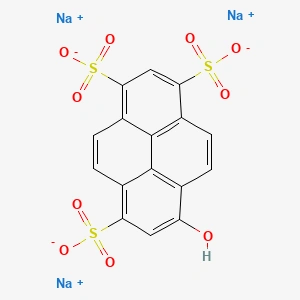
Solvent Green 7 6358 69 6 Structure

Solvent Green 7

Solvent Green 7, commonly recognized as pyranine or trisodium 8-hydroxypyrene-1,3,6-trisulfonate, is a high-purity, water-soluble fluorescent synthetic dye. It presents as a vibrant yellowish-green powder that dissolves effortlessly in aqueous environments without forming unwanted precipitates. The compound exhibits remarkable chemical stability across a broad pH spectrum and glows with an intense yellowish-green fluorescence, particularly under alkaline

Solvent Green 7 Read More »

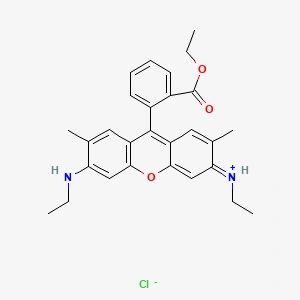
Rhodamine 6G 989 38 8 Structure

Rhodamine 6G

Rhodamine 6G, also identified as Basic Red 1, is a prominent xanthene-class synthetic dye characterized by its brilliant red-to-pink fluorescence and high quantum yield. Available typically as dark reddish-brown crystals or powder, it dissolves readily in water and various polar organic solvents like ethanol and methanol. The molecule possesses an exceptional absorption and emission cross-section,

Rhodamine 6G Read More »

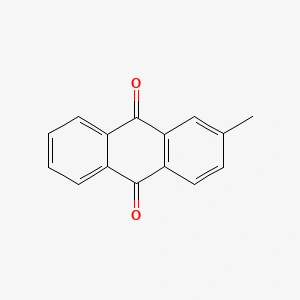
2 Methylanthraquinone 84 54 8 Structure

2-Methylanthraquinone

2-Methylanthraquinone is an organic polycyclic aromatic compound belonging to the quinone family, featuring a central anthraquinone core substituted with a methyl group at the second position. It typically presents as a yellow to light-brown or purplish crystalline solid, exhibiting high thermal stability and very low solubility in aqueous media while dissolving readily in polar organic

2-Methylanthraquinone Read More »

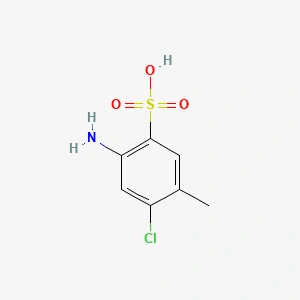
2 Amino 4 Chloro 5 Methylbenzenesulfonic Acid 88 51 7 Structure

2-Amino-4-chloro-5-methylbenzenesulfonic Acid

2-Amino-4-chloro-5-methylbenzenesulfonic acid, commonly known in the colorant industry as 2B acid, is an aromatic sulfonated aniline derivative containing chloro and methyl ring substituents. It typically appears as a light-colored crystalline powder or paste, featuring high polarity and strong water solubility due to the presence of the sulfonic acid group, making it exceptionally useful in aqueous

2-Amino-4-chloro-5-methylbenzenesulfonic Acid Read More »

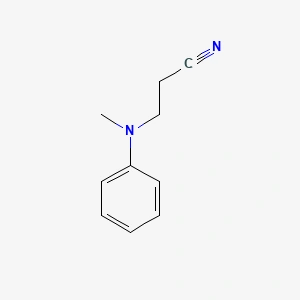
N 2 Cyanoethyl N Methylaniline 94 34 8 Structure

N-(2-Cyanoethyl)-N-methylaniline

N-(2-Cyanoethyl)-N-methylaniline is an organic compound classified as an aromatic nitrile and a substituted aniline derivative, featuring a molecular formula of. It typically manifests as a clear liquid ranging in color from light yellow to orange. As a versatile chemical building block, this substance contains both an aromatic tertiary amine and a reactive cyanoethyl moiety. These

N-(2-Cyanoethyl)-N-methylaniline Read More »

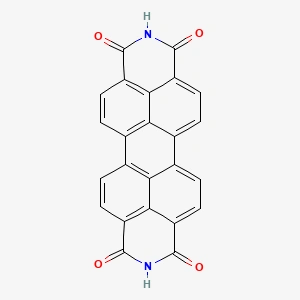
Perylene 3 4 9 10 Tetracarboxylic Diimide 81 33 4 Structure

Perylene-3,4,9,10-tetracarboxylic Diimide

Perylene-3,4,9,10-tetracarboxylic Diimide (often abbreviated as PTCDI) is a high-performance organic semiconductor and pigment precursor characterized by its rigid, highly conjugated polycyclic aromatic ring structure. This distinctive molecular framework confers exceptional chemical, thermal, and photochemical stability, allowing the compound to withstand extreme operational conditions. Its strong absorption profile and stable redox behavior make it a fundamental

Perylene-3,4,9,10-tetracarboxylic Diimide Read More »

REQUEST A QUOTE

Product Inquiry — Popup Form