English | 中文 | Español

Chemical Products

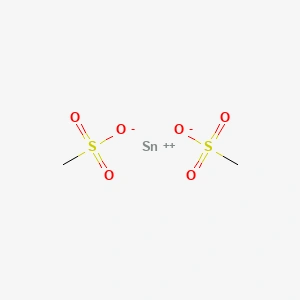
Stannous Methanesulfonate 53408 94 9 Structure

Stannous methanesulfonate

Stannous methanesulfonate, identified by CAS number 53408-94-9, is a high-purity organometallic salt primarily utilized as a source of divalent tin ions in various industrial chemical processes. Characterized by its excellent solubility in water and compatibility with methanesulfonic acid-based systems, this compound serves as a critical electrolyte component. Its chemical structure, Sn(CH3SO3)2, allows for high metal

Stannous methanesulfonate Read More »
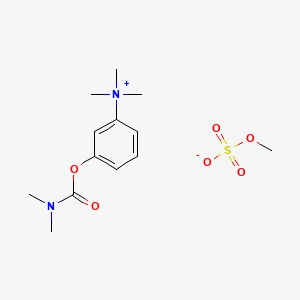
Neostigmine Methyl Sulfate 51 60 5 Structure

Neostigmine methyl sulfate

Neostigmine methyl sulfate, identified by CAS number 51-60-5, is a quaternary ammonium compound that serves as a critical raw material in the pharmaceutical and biochemical sectors. Chemically characterized as a potent acetylcholinesterase inhibitor, this compound typically appears as a white, odorless crystalline powder with high solubility in water and alcohol. Due to its ionic nature

Neostigmine methyl sulfate Read More »

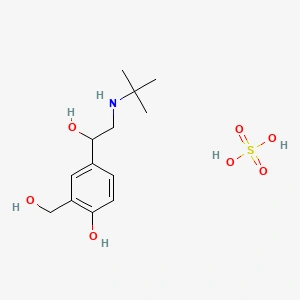
Salbutamol Sulfate 51022 70 9 Structure

Salbutamol sulfate

Salbutamol sulfate, identified by CAS number 51022-70-9, is a significant chemical raw material primarily utilized as an active pharmaceutical ingredient within the respiratory therapeutic category. Chemically, it is the sulfate salt of a selective beta-2 adrenergic agonist, typically appearing as a white to off-white crystalline powder with high solubility in aqueous media. As a sympathomimetic

Salbutamol sulfate Read More »

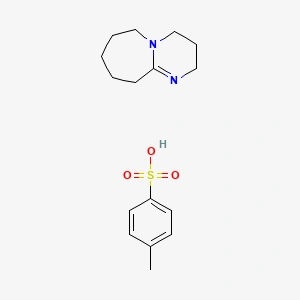
DBU P Toluenesulfonate 51376 18 2 Structure

DBU p-Toluenesulfonate

DBU p-Toluenesulfonate, identified by CAS number 51376-18-2, is a specialized organic salt formed through the neutralization of the bicyclic amidine 1,8-diazabicyclo[5.4.0]undec-7-ene (DBU) with p-toluenesulfonic acid. This compound serves as a stabilized, often latent, source of the strong, non-nucleophilic base DBU, which is highly valued in synthetic organic chemistry and polymer science. As a crystalline solid,

DBU p-Toluenesulfonate Read More »

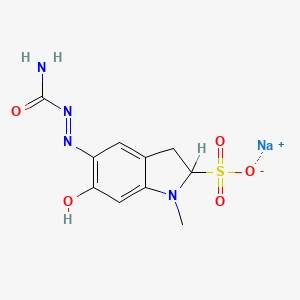
Carbazochrome Sodium Sulfonate 51460 26 5 Structure

carbazochrome sodium sulfonate

Carbazochrome sodium sulfonate, identified by CAS number 51460-26-5, is a specialized water-soluble derivative of carbazochrome, which is an oxidation product of epinephrine. As a chemical raw material, it typically appears as an orange-red crystalline powder that exhibits significant stability in aqueous environments compared to its parent compound. Its chemical structure is characterized by the presence

carbazochrome sodium sulfonate Read More »

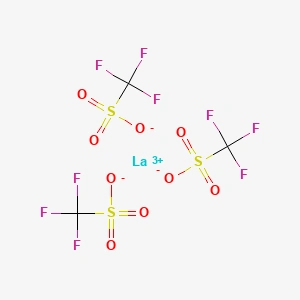
LANTHANUM TRIS 52093 26 2 Structure

LANTHANUM TRIS

Lanthanum(III) trifluoromethanesulfonate, identified by CAS number 52093-26-2 and often referred to as lanthanum triflate, is a highly versatile rare-earth metal salt utilized extensively as a Lewis acid catalyst in organic synthesis. This compound presents as a white, crystalline, and hygroscopic solid that exhibits exceptional thermal stability and solubility in a variety of organic solvents and

LANTHANUM TRIS Read More »

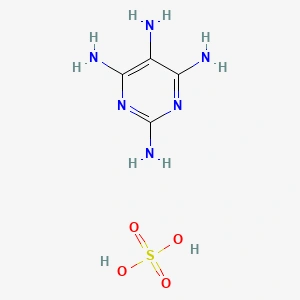
Tetraaminopyrimidine Sulfate 49647 58 7 Structure

Tetraaminopyrimidine Sulfate

Tetraaminopyrimidine Sulfate, identified by CAS number 49647-58-7, is a specialized heterocyclic organic compound that serves as a critical building block in advanced chemical synthesis. As a sulfate salt of 2,4,5,6-tetraaminopyrimidine, this material exhibits high nitrogen density and a reactive pyrimidine core, making it an essential intermediate for the construction of complex molecular architectures. The compound

Tetraaminopyrimidine Sulfate Read More »

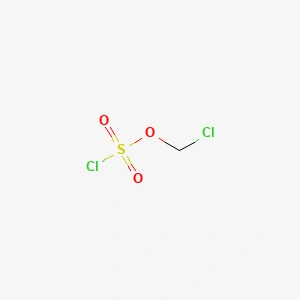
Chloromethyl Chlorosulfate 49715 04 0 Structure

Chloromethyl chlorosulfate

Chloromethyl chlorosulfate, identified by CAS number 49715-04-0, is a highly reactive organosulfur reagent primarily utilized as a specialized intermediate in advanced organic synthesis. Characterized by the presence of both chloromethyl and chlorosulfate functional groups, this compound serves as a potent electrophilic agent capable of facilitating complex substitution and alkylation reactions. Due to its chemical structure,

Chloromethyl chlorosulfate Read More »

Vilanterol Intermediate A 503068 36 8 Structure

Vilanterol Intermediate A

CAS 503068-36-8, technically identified as an intermediate for the synthesis of Vilanterol, represents a sophisticated organic building block essential for modern pharmaceutical development. This compound typically features a benzodioxine scaffold functionalized with a pinacol boronate ester group, facilitating precise molecular construction through palladium-catalyzed cross-coupling methodologies. Its chemical profile makes it an indispensable component in the

Vilanterol Intermediate A Read More »

Vilanterol Intermediate B 503068 37 9 Structure

Vilanterol Intermediate B

CAS 503068-37-9, commonly recognized as Vilanterol Intermediate B, is a sophisticated organic building block essential for the synthesis of advanced pharmaceutical compounds. Chemically identified as 2,2-dimethyl-6-(4,4,5,5-tetramethyl-1,3,2-dioxaborolan-2-yl)-4H-1,3-benzodioxine, this compound serves as a critical structural component in the production of long-acting beta2-adrenoceptor agonists. Its molecular architecture, featuring a protected benzodioxine core and a boronate ester moiety, makes

Vilanterol Intermediate B Read More »

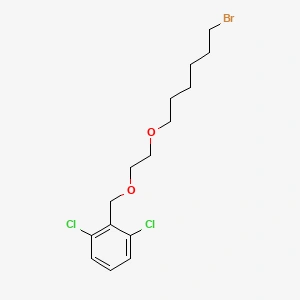
2 Oxy Ethoxy Methyl 1 3 Dichlorobenzene 503070 57 3 Structure

2-oxy)ethoxy)methyl)-1,3-dichlorobenzene

CAS 503070-57-3, chemically identified as 2-((2,6-dichlorobenzyl)oxy)ethanol, is a specialized halogenated aromatic ether that serves as a versatile building block in organic synthesis. The molecule features a 1,3-dichlorobenzene ring system connected via a methylene bridge to a 2-hydroxyethoxy group, providing a unique combination of a stable aromatic core and a reactive primary alcohol functionality. This structural

2-oxy)ethoxy)methyl)-1,3-dichlorobenzene Read More »

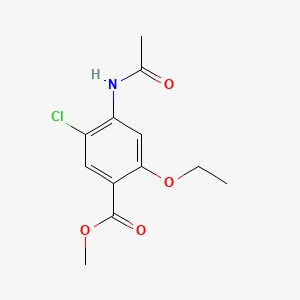
Methyl 4 Acetamido 5 Chloro 2 Ethoxybenzoate 4235 43 2 Structure

Methyl 4-acetamido-5-chloro-2-ethoxybenzoate

Methyl 4-acetamido-5-chloro-2-ethoxybenzoate, identified by CAS number 4235-43-2, is a specialized organic ester that serves as a critical intermediate in the fine chemical and pharmaceutical synthesis sectors. Structurally, it is a substituted derivative of benzoic acid, characterized by the presence of an acetamido group, a chlorine atom, and an ethoxy moiety at specific positions on the

Methyl 4-acetamido-5-chloro-2-ethoxybenzoate Read More »

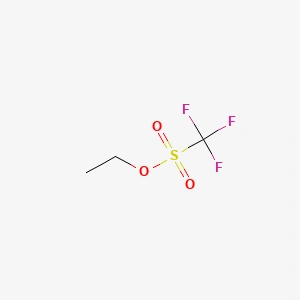
Ethyl Trifluoromethanesulfonate 425 75 2 Structure

Ethyl trifluoromethanesulfonate

Ethyl trifluoromethanesulfonate, identified by CAS number 425-75-2 and often referred to as ethyl triflate, is a highly reactive organic reagent widely utilized in advanced chemical synthesis. As the ethyl ester of trifluoromethanesulfonic acid, it is characterized by the presence of the triflate group, which is recognized as one of the most effective leaving groups in

Ethyl trifluoromethanesulfonate Read More »
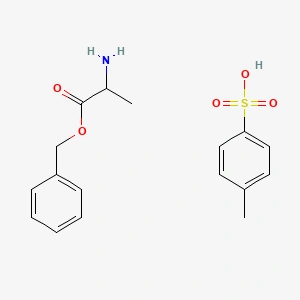
L Alanine Benzyl Ester P Toluenesulfonate 42854 62 6 Structure

L-Alanine Benzyl Ester p-Toluenesulfonate

L-Alanine Benzyl Ester p-Toluenesulfonate, identified by CAS number 42854-62-6, represents a significant chemical intermediate within the domain of organic synthesis and peptide chemistry. This compound is the p-toluenesulfonate salt of the benzyl-protected form of the naturally occurring amino acid L-alanine. The incorporation of the tosylate salt moiety enhances the stability and crystallinity of the material,

L-Alanine Benzyl Ester p-Toluenesulfonate Read More »

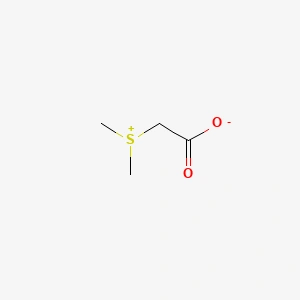
Dimethylsulfonioacetate 4727 41 7 Structure

Dimethylsulfonioacetate

Dimethylsulfonioacetate, identified by CAS number 4727-41-7, is a naturally occurring sulfonium compound characterized as a zwitterionic internal salt. Also known as dimethylthetin, this organic molecule features a positively charged sulfur atom bonded to two methyl groups and a carboxymethyl group with a negative charge. It serves as a significant intermediate in sulfur metabolism and methyl

Dimethylsulfonioacetate Read More »

REQUEST A QUOTE

Product Inquiry — Popup Form