English | 中文 | Español

Industrial Grade

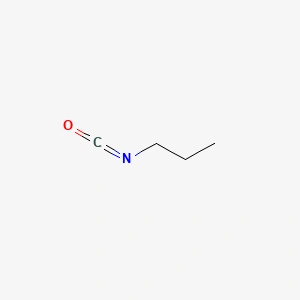
Propyl isocyanate

Propyl isocyanate, identified by CAS number 110-78-1, is a highly reactive organic compound belonging to the isocyanate functional group. This clear, colorless liquid is characterized by its sharp, pungent odor and significant volatility. As a versatile building block in organic chemistry, it serves as a critical intermediate for the synthesis of various nitrogen-containing derivatives. Due
Propyl isocyanate Read More »

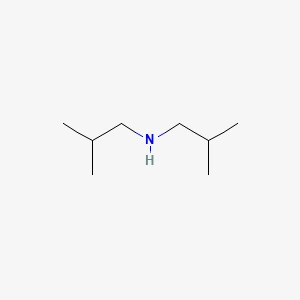
Diisobutylamine

Diisobutylamine, identified by CAS 110-96-3, is a secondary aliphatic amine characterized by its distinct ammonia-like odor and colorless liquid appearance. As a branched-chain amine, it exhibits chemical reactivity typical of secondary amines, serving as a versatile building block in various organic synthesis pathways. It is known for its moderate volatility and flammability, requiring standard industrial

Diisobutylamine Read More »

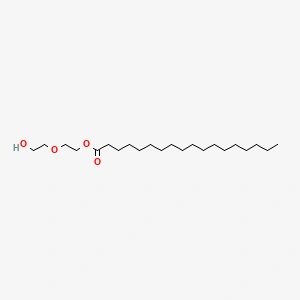
Polyethylene glycol monostearate

Polyethylene glycol monostearate, commonly referred to as PEG stearate, is a non-ionic surfactant and emulsifier synthesized through the esterification of polyethylene glycol with stearic acid. It typically presents as a white to off-white waxy solid, flakes, or paste, depending on the specific molecular weight of the polyethylene glycol chain. Due to its amphiphilic nature, this

Polyethylene glycol monostearate Read More »

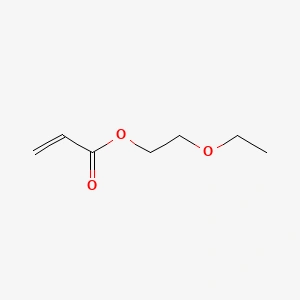
2-Ethoxyethyl acrylate

2-Ethoxyethyl acrylate, identified by CAS number 106-74-1, is a versatile monofunctional acrylate monomer characterized by its unique combination of an ethyl ether group and a reactive acrylate moiety. As a clear, colorless liquid with low viscosity, it serves as a critical building block in the synthesis of various polymers and resins. Its chemical structure allows

2-Ethoxyethyl acrylate Read More »

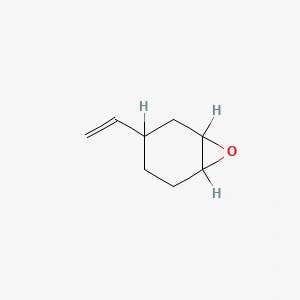
1,2-Epoxy-4-vinylcyclohexane

1,2-Epoxy-4-vinylcyclohexane, identified by CAS 106-86-5, is a versatile cycloaliphatic epoxide monomer characterized by its dual functional groups. It features both a reactive oxirane ring and a terminal vinyl group attached to a cyclohexane backbone. This unique bifunctionality allows for selective chemical transformations, making it a valuable building block in the synthesis of complex organic molecules

1,2-Epoxy-4-vinylcyclohexane Read More »

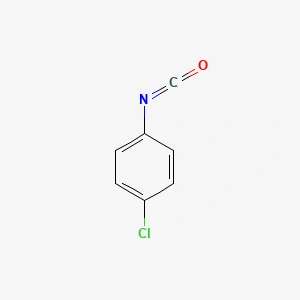
4-Chlorophenyl isocyanate

4-Chlorophenyl isocyanate, identified by CAS number 104-12-1, is a versatile aromatic isocyanate characterized by a benzene ring substituted with both a chlorine atom and a highly reactive isocyanate functional group. This organic intermediate typically presents as a low-melting crystalline solid or a colorless to pale yellow liquid depending on ambient temperature. Its chemical structure makes

4-Chlorophenyl isocyanate Read More »

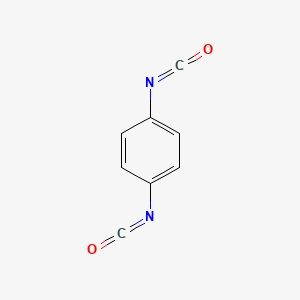
1,4-Phenylene diisocyanate

1,4-Phenylene diisocyanate, commonly referred to as PPDI, is a high-purity aromatic diisocyanate characterized by its symmetrical and linear molecular structure. As a white crystalline solid at room temperature, it offers distinct chemical advantages over more common liquid diisocyanates. Its rigid para-substituted framework allows for the development of polymers with exceptionally high crystallinity and structural regularity,

1,4-Phenylene diisocyanate Read More »

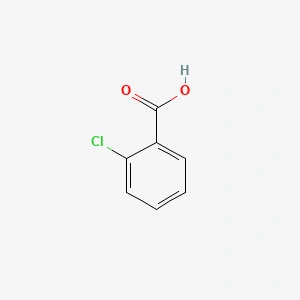
2-Chlorobenzoic acid

2-Chlorobenzoic acid, identified by CAS number 118-91-2, is a significant organic building block characterized by its white to off-white crystalline appearance. As a chlorinated derivative of benzoic acid, this compound exhibits the typical reactivity of both a carboxylic acid and an aryl halide, making it a versatile reagent in various synthetic pathways. Its chemical stability

2-Chlorobenzoic acid Read More »

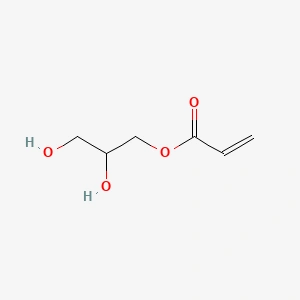
2,3-Dihydroxypropyl acrylate

2,3-Dihydroxypropyl acrylate, identified by CAS 10095-20-2, is a versatile hydrophilic monomer characterized by the presence of a reactive acrylate group and two pendant hydroxyl groups. As a derivative of glycerol, this compound offers a unique combination of polymerizability and polarity, making it a valuable building block in the synthesis of specialized functional polymers. Its molecular

2,3-Dihydroxypropyl acrylate Read More »

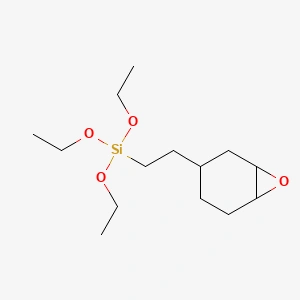
2-(3,4-Epoxycyclohexyl)ethyltriethoxysilane

2-(3,4-Epoxycyclohexyl)ethyltriethoxysilane, identified by CAS number 10217-34-2, is a high-performance bifunctional organosilane coupling agent. It features a reactive cycloaliphatic epoxy group and three hydrolyzable ethoxy groups. This unique chemical structure allows the molecule to bridge the gap between organic polymers and inorganic substrates, significantly enhancing the interfacial adhesion in composite materials. Unlike standard glycidoxy-functional silanes, the

2-(3,4-Epoxycyclohexyl)ethyltriethoxysilane Read More »

Epoxypropoxypropyl terminated polydimethylsiloxane

Epoxypropoxypropyl terminated polydimethylsiloxane, identified by CAS 102782-97-8, is a specialized telechelic silicone fluid characterized by the presence of reactive epoxy groups at the polymer chain ends. This unique molecular architecture bridges the gap between inorganic silicone chemistry and organic polymer systems. The dimethylsiloxane backbone provides inherent flexibility, low glass transition temperatures, and excellent thermal stability,

Epoxypropoxypropyl terminated polydimethylsiloxane Read More »

Phenol-formaldehyde resin

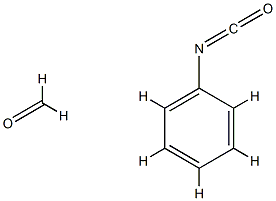
Phenol-formaldehyde resin, identified by CAS 9003-35-4, is a foundational synthetic polymer produced through the condensation polymerization of phenol and formaldehyde. These resins are broadly classified into two categories: novolacs, which are acid-catalyzed and require a curing agent, and resols, which are base-catalyzed and self-curing. As a thermosetting material, it is characterized by its exceptional dimensional

Phenol-formaldehyde resin Read More »

Polyethylene glycol monooleate

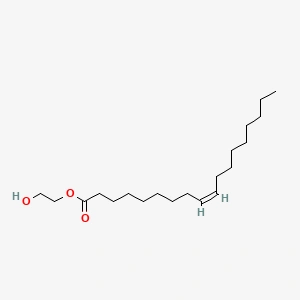
Polyethylene glycol monooleate, identified by CAS number 9004-96-0, is a versatile non-ionic surfactant synthesized through the esterification of polyethylene glycol with oleic acid. This chemical raw material is characterized by its amphiphilic nature, possessing both a hydrophilic polyoxyethylene chain and a lipophilic fatty acid tail. Its physical state, ranging from a viscous liquid to a

Polyethylene glycol monooleate Read More »

Bis(2,2,6,6-tetramethyl-4-piperidyl) sebacate

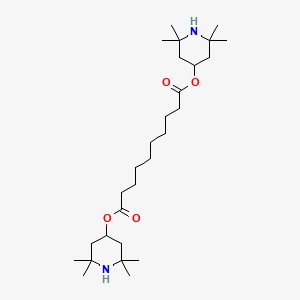
Bis(2,2,6,6-tetramethyl-4-piperidyl) sebacate, identified by CAS 52829-07-9, is a high-performance hindered amine light stabilizer (HALS) essential for the preservation of organic polymers. Functioning as a radical scavenger, it effectively inhibits the photo-oxidative degradation pathways triggered by exposure to ultraviolet radiation. The molecule is characterized by its low molecular weight and high mobility within polymer matrices, which

Bis(2,2,6,6-tetramethyl-4-piperidyl) sebacate Read More »

polymeric mdi 9016 87 9 structure

Polymeric MDI

Polymeric Methylene Diphenyl Diisocyanate (PMDI), identified by CAS 9016-87-9, is a complex mixture of diphenylmethane diisocyanate isomers and higher molecular weight oligomers. It typically appears as a dark brown, viscous liquid at room temperature. PMDI is a vital precursor in the polyurethane industry, valued for its low volatility and high reactivity compared to monomeric MDI.

Polymeric MDI Read More »

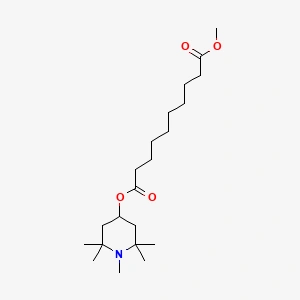
Methyl 1,2,2,6,6-pentamethyl-4-piperidyl sebacate

Methyl 1,2,2,6,6-pentamethyl-4-piperidyl sebacate, identified by CAS number 82919-37-7, is a high-performance liquid hindered amine light stabilizer (HALS). This organic compound is characterized by its methylated piperidine structure, which provides enhanced stability and compatibility compared to non-methylated alternatives. It typically appears as a clear to slightly yellowish liquid, offering excellent solubility in a wide range of

Methyl 1,2,2,6,6-pentamethyl-4-piperidyl sebacate Read More »

REQUEST A QUOTE

Product Inquiry — Popup Form