English | 中文 | Español

Organic Intermediate

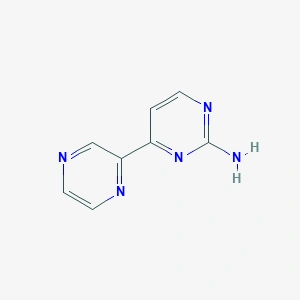
4-(2-Pyrazinyl)-2-pyrimidinamine

4-(2-Pyrazinyl)-2-pyrimidinamine (CAS: 874792-15-1) is a specialized heterocyclic organic compound containing both pyrazine and pyrimidine ring systems. It serves as a structural building block in organic synthesis and medicinal chemistry research. The molecule features an amine functional group on the pyrimidine ring, which facilitates further chemical transformations and the construction of complex molecular architectures in controlled

4-(2-Pyrazinyl)-2-pyrimidinamine Read More »
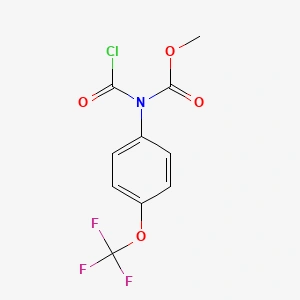
Methyl N-(chlorocarbonyl)-N-(4-(trifluoromethoxy)phenyl)carbamate

Methyl N-(chlorocarbonyl)-N-(4-(trifluoromethoxy)phenyl)carbamate (CAS: 173903-15-6) is a complex carbamate derivative featuring both a highly reactive chlorocarbonyl group and a trifluoromethoxy-substituted phenyl ring. It typically presents as a white to pale yellow solid under standard industrial conditions. The presence of multiple reactive functional groups makes it a highly versatile electrophilic reagent, prized for its utility in advanced

Methyl N-(chlorocarbonyl)-N-(4-(trifluoromethoxy)phenyl)carbamate Read More »

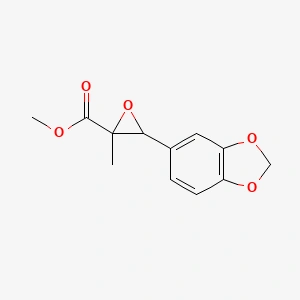
PMK Methyl Glycidate

PMK Methyl Glycidate (CAS: 13605-48-6) is a specialized glycidate ester derivative containing a unique benzodioxole moiety. It typically presents as a white to off-white crystalline powder under standard conditions. As a highly regulated chemical entity, it is subject to strict monitoring and control by international authorities due to its specific structural properties and its recognized

PMK Methyl Glycidate Read More »

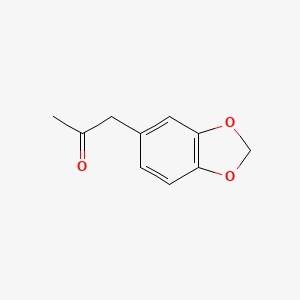
3,4-Methylenedioxyphenyl-2-propanone

3,4-Methylenedioxyphenyl-2-propanone (CAS: 4676-39-5) is a liquid chemical compound recognized within regulatory frameworks due to its specific profile. According to established documentation, this substance is categorized as a listed chemical. It is strictly monitored because, alongside documented legitimate applications, it is relevant to the manufacture of controlled substances. Consequently, its distribution is subject to stringent oversight

3,4-Methylenedioxyphenyl-2-propanone Read More »

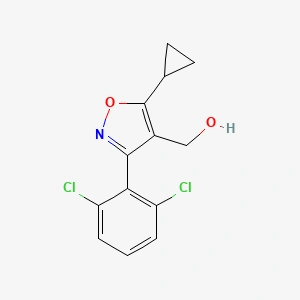
[5-Cyclopropyl-3-(2,6-dichlorophenyl)isoxazol-4-yl]methanol

[5-Cyclopropyl-3-(2,6-dichlorophenyl)isoxazol-4-yl]methanol (CAS: 946426-89-7) is a highly specialized heterocyclic compound utilized primarily as an advanced intermediate in organic synthesis and chemical research. Presenting typically as a solid powder, this molecule features a complex isoxazole core substituted with cyclopropyl and dichlorophenyl groups, along with a reactive hydroxymethyl moiety. This unique structural arrangement provides multiple sites for further

[5-Cyclopropyl-3-(2,6-dichlorophenyl)isoxazol-4-yl]methanol Read More »

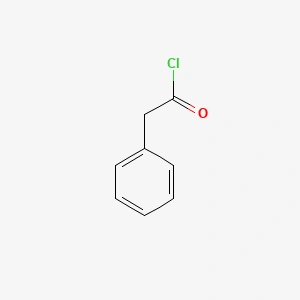
Phenylacetyl chloride

Phenylacetyl chloride (CAS: 103-80-0) appears as a clear, colorless, and volatile liquid characterized by a strong, pungent odor. It is denser than water and is recognized as a highly reactive acyl halide used extensively as a building block in organic synthesis. This compound functions as a vital precursor in the production of various esters and

Phenylacetyl chloride Read More »

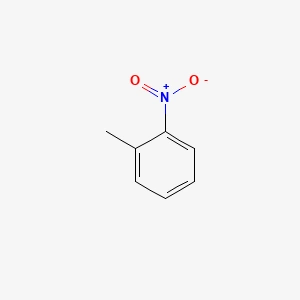
2-Nitrotoluene

2-Nitrotoluene (CAS: 88-72-2) is a fundamental aromatic nitro compound utilized extensively as a chemical building block in industrial synthesis. Presenting as a light yellow oily liquid with a characteristic aromatic odor, it is produced via the controlled nitration of toluene. This versatile intermediate is highly valued for its reactive profile, which allows for downstream conversion

2-Nitrotoluene Read More »

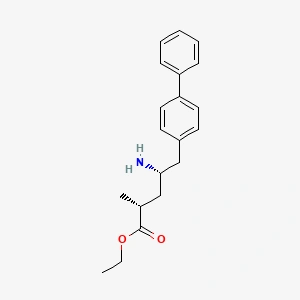
Sacubitril Intermediate

Sacubitril Intermediate (CAS: 752174-62-2) is a chiral amino acid ester that serves as a critical component in the pharmaceutical manufacturing sector. It is most notably recognized as a key precursor in the synthesis of Sacubitril, which is a major constituent of modern cardiovascular medications. The molecule features a biphenyl substituent and specific stereochemistry. The compound’s

Sacubitril Intermediate Read More »

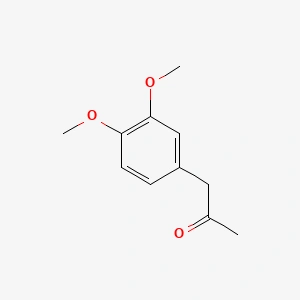
3,4-Dimethoxyphenylacetone

3,4-Dimethoxyphenylacetone (CAS: 776-99-8) is an organic ketone derivative that serves as a vital synthetic intermediate in the chemical industry. It is a substituted phenylacetone characterized by two methoxy groups on the aromatic ring, which provides specific reactivity for various chemical transformations. This compound is a key starting material for several pharmaceutical products. The substance is

3,4-Dimethoxyphenylacetone Read More »

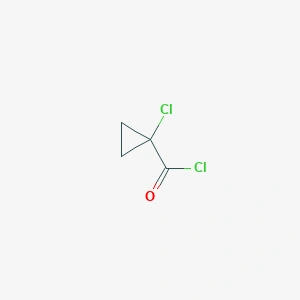
1-Chlorocyclopropanecarbonyl chloride

1-Chlorocyclopropanecarbonyl chloride (CAS: 73492-25-8) is a highly reactive organic intermediate frequently employed in sophisticated chemical synthesis. As an acid chloride derivative of cyclopropane, it functions as a versatile building block for introducing the chlorocyclopropyl moiety into various molecular frameworks. Its high reactivity is a key feature for chemists. This compound is essential for the production

1-Chlorocyclopropanecarbonyl chloride Read More »

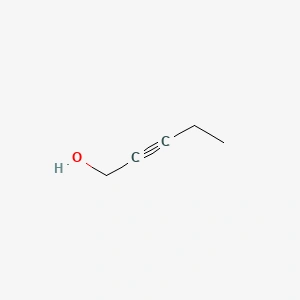
2-Pentyn-1-ol

2-Pentyn-1-ol (CAS: 6261-22-9) is an unsaturated aliphatic alcohol featuring an alkyne functional group, utilized primarily as a versatile building block in general chemical manufacturing. The presence of both a triple bond and a primary hydroxyl group provides multiple reactive sites, enabling a wide range of chemical transformations. This reactivity makes the compound a valuable intermediate

2-Pentyn-1-ol Read More »

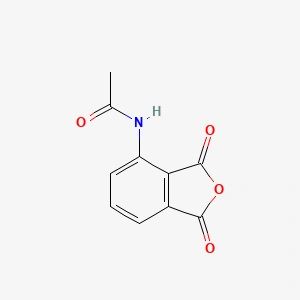
3-Acetamidophthalic Anhydride

3-Acetamidophthalic Anhydride (CAS: 6296-53-3) is a functionalized phthalic anhydride derivative widely utilized as a structural building block in advanced organic synthesis. The presence of the acetamido group on the phthalic ring provides distinct chemical reactivity, enabling the controlled construction of complex heterocyclic structures. This compound serves as a valuable intermediate for researchers and industrial chemists

3-Acetamidophthalic Anhydride Read More »

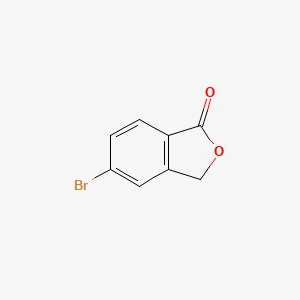
5-Bromophthalide

5-Bromophthalide (CAS: 64169-34-2) is a brominated derivative of isobenzofuranone, widely recognized as a valuable structural intermediate in advanced organic synthesis. The presence of the bromine atom at the 5-position provides an excellent reactive site for various cross-coupling reactions, allowing chemists to introduce diverse functional groups with high precision. This stable lactone structure serves as a

5-Bromophthalide Read More »

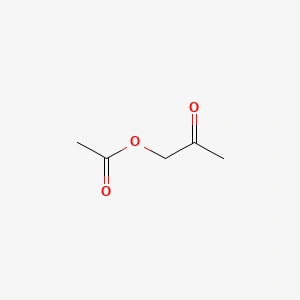
2-Oxopropyl acetate

2-Oxopropyl acetate (CAS: 592-20-1), also known as acetoxyacetone, is a bifunctional organic compound featuring both ester and ketone functional groups. It presents as a pale yellow to amber liquid characterized by a distinct nutty odor. This versatile chemical serves as an important intermediate and building block in various organic synthesis applications across the chemical manufacturing

2-Oxopropyl acetate Read More »

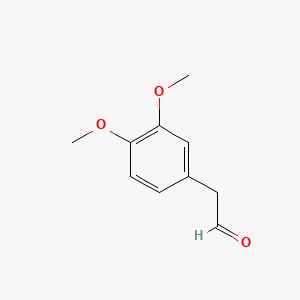
2-(3,4-Dimethoxyphenyl)acetaldehyde

2-(3,4-Dimethoxyphenyl)acetaldehyde (CAS: 5703-21-9), also known as homoveratric aldehyde, is an aromatic aldehyde featuring a dimethoxy-substituted phenyl ring. As a specialized organic compound, it is primarily utilized as a building block in advanced chemical synthesis. The presence of both the reactive aldehyde functional group and the electron-rich dimethoxyphenyl moiety makes it a valuable intermediate for various

2-(3,4-Dimethoxyphenyl)acetaldehyde Read More »

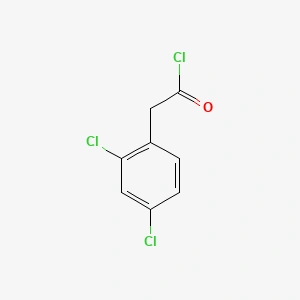
2-(2,4-Dichlorophenyl)acetyl chloride

2-(2,4-Dichlorophenyl)acetyl chloride (CAS: 53056-20-5) is a halogenated acyl chloride that typically presents as a moisture-sensitive, colourless to pale yellow liquid. This highly reactive organic intermediate is characterized by the presence of a 2,4-dichlorophenyl group attached to an acetyl chloride moiety. Its specific structural features make it a versatile and essential building block in advanced organic

2-(2,4-Dichlorophenyl)acetyl chloride Read More »

REQUEST A QUOTE

Product Inquiry — Popup Form