English | 中文 | Español

Chemical Products

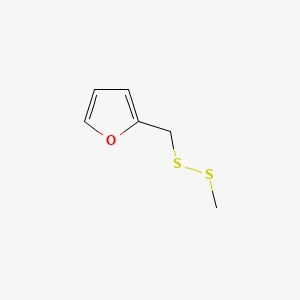
Methyl Furfuryl Disulfide 57500 00 2 Structure

Methyl furfuryl disulfide

Methyl furfuryl disulfide, identified by CAS number 57500-00-2, is an organic sulfur-containing compound characterized by its potent and distinctive organoleptic properties. Chemically, it consists of a furan ring linked to a methyl disulfide group, which contributes to its high reactivity and intense aromatic profile. This clear to pale yellow liquid is valued in specialized chemical

Methyl furfuryl disulfide Read More »
2 Ethyl 3 5 Dimethylpyrazine 55031 15 7 Structure 1024x768

2-Ethyl-3,5-dimethylpyrazine

2-Ethyl-3,5-dimethylpyrazine, identified by CAS number 55031-15-7, is a heterocyclic organic compound belonging to the alkylpyrazine family. This clear to pale yellow liquid is characterized by its potent and distinctive aromatic profile, often described as having roasted, nutty, and cocoa-like notes. As a member of the pyrazine class, it plays a significant role in the organoleptic

2-Ethyl-3,5-dimethylpyrazine Read More »

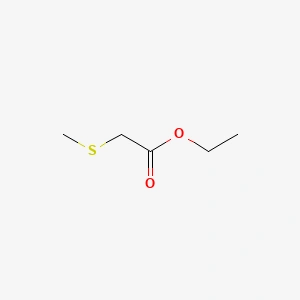
Ethyl Methylthio Acetate 4455 13 4 Structure

Ethyl (methylthio)acetate

Ethyl (methylthio)acetate, identified by CAS 4455-13-4, is an organosulfur compound characterized by its distinct thioether and ester functional groups. This colorless to pale yellow liquid is recognized for its potent and characteristic aroma, often described as sulfurous or vegetable-like. As a versatile building block in organic chemistry, it serves as a critical reagent for the

Ethyl (methylthio)acetate Read More »

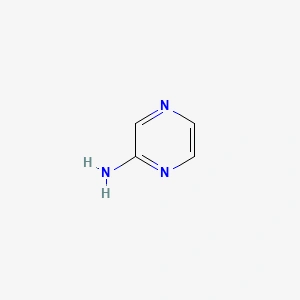
Pyrazine 2 Amino 5049 61 6 Structure

Pyrazine, 2-amino-

2-Aminopyrazine, identified by CAS 5049-61-6, is a fundamental heterocyclic building block widely utilized in the synthesis of diverse organic compounds. This aromatic amine features a pyrazine ring substituted with an amino group at the 2-position, imparting specific electronic properties that make it a valuable intermediate in chemical research and industrial manufacturing. It typically presents as

Pyrazine, 2-amino- Read More »

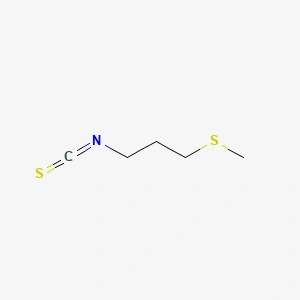
Isothiocyanic Acid 3 Methylthio Propyl Ester 505 79 3 Structure

Isothiocyanic acid, 3-(methylthio)propyl ester

Isothiocyanic acid, 3-(methylthio)propyl ester, commonly referred to as iberverin, is a naturally occurring organosulfur compound belonging to the isothiocyanate family. It is primarily identified as a secondary metabolite found in various cruciferous vegetables, particularly within the Brassicaceae family. Structurally, it features a propyl chain substituted with a methylthio group at one end and an isothiocyanate

Isothiocyanic acid, 3-(methylthio)propyl ester Read More »

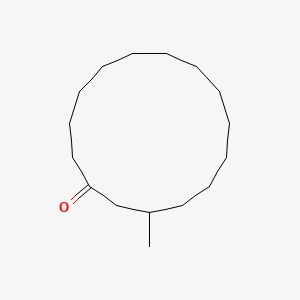
Muskone 541 91 3 Structure

Muskone

Muskone, chemically identified by CAS 541-91-3, is a macrocyclic ketone that serves as the primary odoriferous component of natural musk. As a high-purity synthetic or naturally sourced compound, it is recognized for its intense, sweet, and warm animalic scent profile, often described as having woody and powdery undertones. Its molecular structure, 3-methylcyclopentadecanone, grants it exceptional

Muskone Read More »

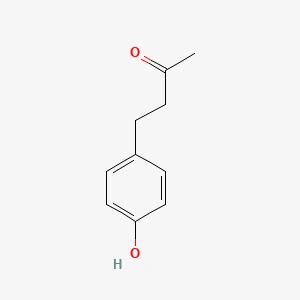
4 4 Hydroxyphenyl 2 Butanone 5471 51 2 Structure

4-(4′-Hydroxyphenyl)-2-butanone

4-(4′-Hydroxyphenyl)-2-butanone, widely recognized by the common name raspberry ketone, is a naturally occurring phenolic compound primarily responsible for the characteristic aroma of red raspberries. Chemically, it is an aromatic ketone consisting of a butanone chain substituted with a para-hydroxyphenyl group. In its pure form, it appears as a white to off-white crystalline solid or powder,

4-(4′-Hydroxyphenyl)-2-butanone Read More »

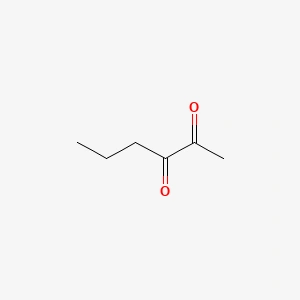
2 3 Hexanedione 3848 24 6 Structure

2,3-Hexanedione

2,3-Hexanedione, identified by CAS number 3848-24-6, is a vicinal diketone characterized by its distinct yellow liquid appearance and a potent, buttery aroma. As an alpha-diketone, it possesses two adjacent carbonyl groups, which significantly influence its chemical reactivity and organoleptic properties. It is naturally occurring in various food items, such as coffee and roasted nuts, and

2,3-Hexanedione Read More »

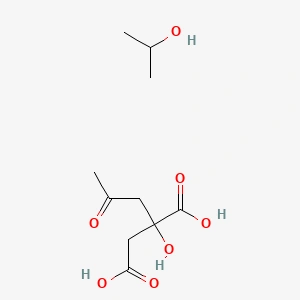
Isopropyl Citrate 39413 05 3 Structure

Isopropyl citrate

Isopropyl citrate, identified by CAS 39413-05-3, is a specialized ester derived from the reaction of citric acid with isopropyl alcohol. This compound typically exists as a mixture of mono-, di-, and tri-isopropyl esters, resulting in a versatile chemical profile characterized by its solubility in both aqueous and organic media. Its primary function in industrial settings

Isopropyl citrate Read More »

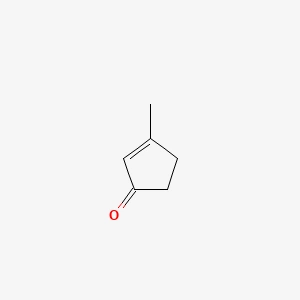
3 Methyl 2 Cyclopenten 1 One 2758 18 1 Structure

3-Methyl-2-cyclopenten-1-one

3-Methyl-2-cyclopenten-1-one, identified by CAS number 2758-18-1, is a cyclic alpha, beta-unsaturated ketone characterized by its distinct five-membered ring structure. This organic compound typically presents as a colorless to pale yellow liquid and is recognized for its unique organoleptic profile, often described as having sweet, nutty, or caramel-like aromatic qualities. Its chemical architecture, featuring a conjugated

3-Methyl-2-cyclopenten-1-one Read More »

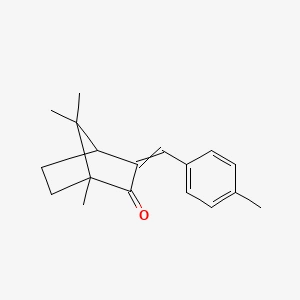
3 4 Methylbenzylidene Camphor 36861 47 9 Structure

3-(4′-Methylbenzylidene)camphor

3-(4′-Methylbenzylidene)camphor, identified by CAS 36861-47-9, is a lipophilic organic camphor derivative widely recognized for its efficacy as a photostabilizing agent. This chemical compound typically appears as a white to off-white crystalline powder and is characterized by its ability to absorb ultraviolet radiation, particularly within the UV-B spectrum. Due to its hydrophobic nature, it is readily

3-(4′-Methylbenzylidene)camphor Read More »

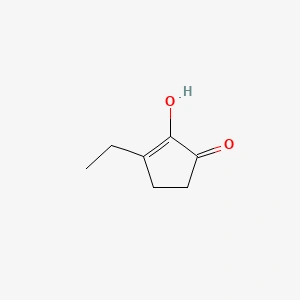
3 Ethyl 2 Hydroxy 2 Cyclopenten 1 One 21835 01 8 Structure

3-Ethyl-2-hydroxy-2-cyclopenten-1-one

3-Ethyl-2-hydroxy-2-cyclopenten-1-one, identified by CAS number 21835-01-8, is a cyclic enolone derivative widely recognized for its potent organoleptic properties. Often referred to as ethyl cyclopentenolone or ethyl cyclotene, this compound typically presents as a white to pale yellow crystalline solid. It is characterized by its remarkable stability and solubility in organic solvents, making it a versatile

3-Ethyl-2-hydroxy-2-cyclopenten-1-one Read More »

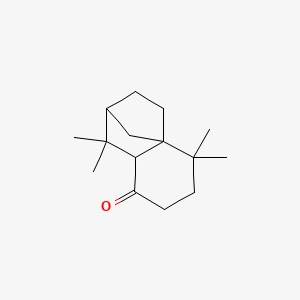
1 3 4 6 7 8a Hexahydro 1 1 5 5 Tetramethyl 2H 2 4a Methanonaphthalen 8 5H One 23787 90 8 Structure

1,3,4,6,7,8a-Hexahydro-1,1,5,5-tetramethyl-2H-2,4a-methanonaphthalen-8(5H)-one

1,3,4,6,7,8a-Hexahydro-1,1,5,5-tetramethyl-2H-2,4a-methanonaphthalen-8(5H)-one, widely recognized in the specialty chemicals industry as Isolongifolanone, is a sophisticated polycyclic ketone derived from the sesquiterpene longifolene. This compound is characterized by its distinct woody and amber olfactory profile, making it a staple in high-end fragrance formulation. As a derivative of natural pine resin components, it bridges the gap between natural precursors

1,3,4,6,7,8a-Hexahydro-1,1,5,5-tetramethyl-2H-2,4a-methanonaphthalen-8(5H)-one Read More »

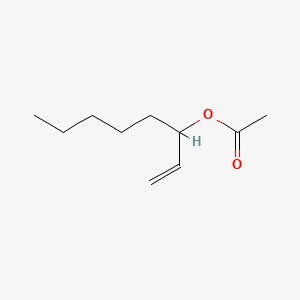
1 Octen 3 Yl Acetate 2442 10 6 Structure

1-Octen-3-yl acetate

1-Octen-3-yl acetate, identified by CAS number 2442-10-6, is an organic ester characterized by its distinctive organoleptic profile. Often referred to as amyl vinyl carbinyl acetate, this clear to pale yellow liquid is naturally occurring in various essential oils, including lavender and mint, as well as in certain mushroom species. Its chemical structure features an unsaturated

1-Octen-3-yl acetate Read More »

REQUEST A QUOTE

Product Inquiry — Popup Form