English | 中文 | Español

Chemical Products

Tritylolmesartan Medoxomil 144690 92 6 Structure

Tritylolmesartan Medoxomil

Tritylolmesartan Medoxomil (CAS: 144690-92-6) is a protected pharmaceutical intermediate used in the synthesis of olmesartan medoxomil. Its structure contains a trityl-substituted tetrazole and medoxomil ester, making this advanced intermediate relevant to pharmaceutical process chemistry and analytical work associated with the olmesartan medoxomil route. Supplied as a solid, it is also offered as a research or

Tritylolmesartan Medoxomil Read More »
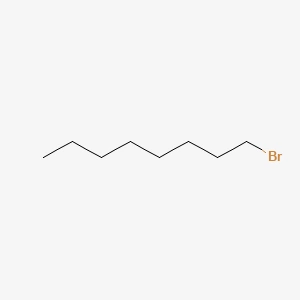
1 Bromooctane 111 83 1 Structure

1-Bromooctane

1-Bromooctane (CAS: 111-83-1) is a linear primary alkyl bromide supplied as a clear liquid for use as a reactive building block in organic synthesis. Its terminal bromine can be displaced in substitution reactions, introducing an octyl group into target molecules. Applications include preparing specialty intermediates and functional materials, with selected uses in surfactant-related compounds and

1-Bromooctane Read More »

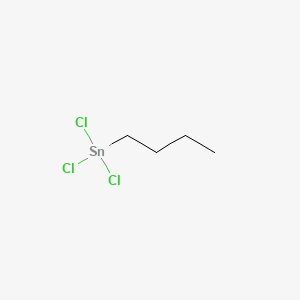
Butyltin Trichloride 1118 46 3 Structure

Butyltin Trichloride

Butyltin Trichloride (CAS: 1118-46-3), also known as n-butyltin trichloride, is an organotin chemical supplied as a clear, colorless-to-yellow liquid. It is primarily handled as a reactive reagent and intermediate for preparing other organotin compounds, rather than as a general-purpose formulation ingredient. Organotin derivatives have been used in PVC stabilization and specialty biocidal or coating applications;

Butyltin Trichloride Read More »

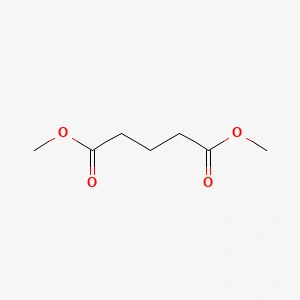
Dimethyl Glutarate 1119 40 0 Structure

Dimethyl Glutarate

Dimethyl Glutarate (CAS: 1119-40-0) is the dimethyl diester of glutaric acid, supplied as a clear, colorless liquid for industrial formulation and synthesis. Its solvent properties support coatings and related formulations, including inks and adhesives. Its ester functionality also supports use as an organic intermediate in resin and specialty-chemical manufacture. Commercial material is available in drums

Dimethyl Glutarate Read More »

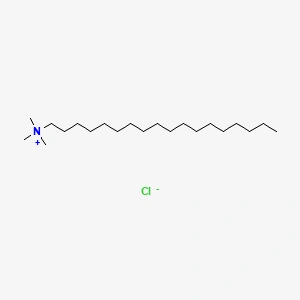
Steartrimonium Chloride 112 03 8 Structure

Steartrimonium Chloride

Steartrimonium Chloride (CAS: 112-03-8) is a quaternary ammonium compound with a long C18 alkyl chain and a positively charged nitrogen center. Supplied as a white solid, it functions as a cationic surfactant. Its charge and hydrophobic chain help it associate with hair and fibers, providing conditioning, softening, and antistatic effects. Applications include personal-care conditioners and

Steartrimonium Chloride Read More »

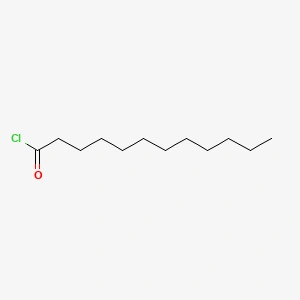
Lauroyl Chloride 112 16 3 Structure

Lauroyl Chloride

Lauroyl Chloride (CAS: 112-16-3), also called dodecanoyl chloride, is a long-chain fatty acyl chloride derived from lauric acid. Supplied as a colorless to pale-yellow liquid, it serves as an acylating reagent and intermediate for organic synthesis. Its reactive acyl chloride group supports preparation of esters and amides. Additional applications include specialty materials modification and surfactant-related

Lauroyl Chloride Read More »

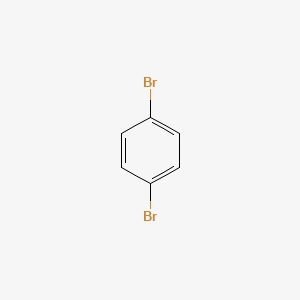
14 Dibromobenzene 106 37 6 Structure

1,4-Dibromobenzene

1,4-Dibromobenzene (CAS: 106-37-6) is a single-component aromatic halide with two bromine substituents positioned opposite one another on a benzene ring. Its defined para structure distinguishes it from the 1,2- and 1,3-dibromobenzene isomers. The two reactive carbon–bromine bonds make it a building block for preparing substituted aromatic compounds and other fine-chemical intermediates. Commonly supplied as a

1,4-Dibromobenzene Read More »

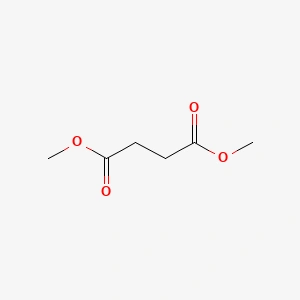
Dimethyl Succinate 106 65 0 Structure

Dimethyl Succinate

Dimethyl Succinate (CAS: 106-65-0) is an aliphatic diester of succinic acid, commonly supplied as a colorless liquid. It is used as a specialty solvent and as a chemical intermediate in organic synthesis. Its solvency supports formulation work involving coatings, resins, and adhesives, while its ester functionality makes it a building block for downstream chemical products.

Dimethyl Succinate Read More »

Perindopril Erbumine 107133 36 8 Structure

Perindopril Erbumine

Perindopril Erbumine (CAS: 107133-36-8), also known as perindopril tert-butylamine, is the tert-butylamine salt of perindopril. Supplied as a solid, it is an orally active prodrug of perindoprilat. Following oral administration, conversion to perindoprilat produces the compound that inhibits angiotensin-converting enzyme, or ACE. Perindopril erbumine has been used as an active pharmaceutical ingredient in formulations for

Perindopril Erbumine Read More »

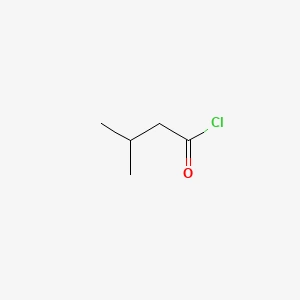
Isovaleryl Chloride 108 12 3 Structure

Isovaleryl Chloride

Isovaleryl Chloride (CAS: 108-12-3), also known as 3-methylbutanoyl chloride, is a branched-chain aliphatic acyl chloride supplied as a clear, colorless to light-yellow liquid. Its reactive acyl chloride group enables formation of amide and ester linkages, supporting its role as a building block in organic synthesis. The material is moisture-sensitive and is handled as a flammable,

Isovaleryl Chloride Read More »

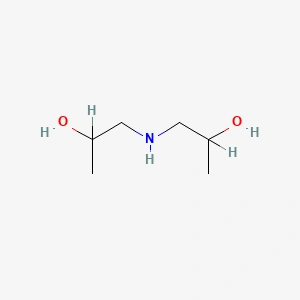
Diisopropanolamine 110 97 4 Structure

Diisopropanolamine

Diisopropanolamine (CAS: 110-97-4), also known as DIPA, is a water-soluble amino alcohol supplied as a colorless crystalline solid. Its amine and hydroxyl groups support use as a neutralizing agent, emulsifier, and chemical building block. Industrial applications include resin coatings, gas treatment, and metalworking formulations. It can neutralize anionic resin systems and contribute to coating film

Diisopropanolamine Read More »

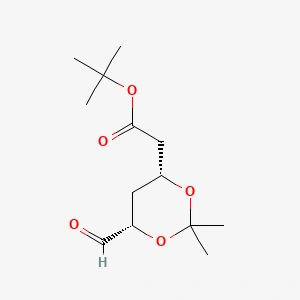
Tert Butyl 4R6S 6 Formyl 22 Dimethyl 13 Dioxane 4 Acetate 124752 23 4 Structure

tert-Butyl (4R,6S)-6-formyl-2,2-dimethyl-1,3-dioxane-4-acetate

tert-Butyl (4R,6S)-6-formyl-2,2-dimethyl-1,3-dioxane-4-acetate (CAS: 124752-23-4) is a chiral, protected hydroxy-oxo ester used as a pharmaceutical synthesis building block. Its dioxane framework carries a formyl group and tert-butyl acetate side chain, providing defined stereochemistry and functional handles for further transformations. Patent literature identifies it as a key intermediate for preparing several statin medicines. Supplied as a solid

tert-Butyl (4R,6S)-6-formyl-2,2-dimethyl-1,3-dioxane-4-acetate Read More »

5 Chlorothiophene 2 Carboxylic Acid 24065 33 6 Structure

5-Chlorothiophene-2-carboxylic acid

5-Chlorothiophene-2-carboxylic acid (CAS: 24065-33-6) is a chlorinated thiophene building block supplied as a solid for organic synthesis. Its heteroaromatic ring and carboxylic acid group enable conversion to acyl derivatives and further functionalization, while the ring-bound chlorine provides an additional point of structural differentiation. Technical literature and published synthesis work document applications in rivaroxaban preparation and

5-Chlorothiophene-2-carboxylic acid Read More »

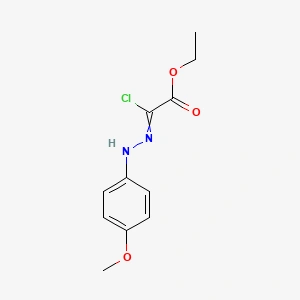
Ethyl Chloro4 Methoxyphenylhydrazonoacetate 27143 07 3 Structure

Ethyl chloro[(4-methoxyphenyl)hydrazono]acetate

Ethyl chloro[(4-methoxyphenyl)hydrazono]acetate (CAS: 27143-07-3) is a defined small-molecule organic intermediate supplied as a yellow to dark-yellow solid. Reference and product listings identify it as an intermediate associated with apixaban synthesis and as an apixaban-related impurity or reference material. Its listed applications therefore encompass both synthetic work and research or analytical workflows involving apixaban-related materials. Product

Ethyl chloro[(4-methoxyphenyl)hydrazono]acetate Read More »

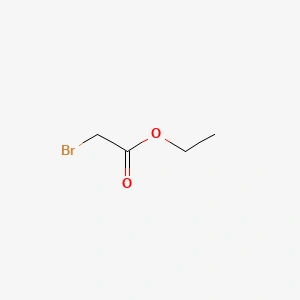
Ethyl Bromoacetate 105 36 2 Structure

Ethyl Bromoacetate

Ethyl Bromoacetate (CAS: 105-36-2), also known as ethyl 2-bromoacetate, is a reactive α-bromo ester supplied as a liquid building block for chemical synthesis. Its brominated methylene group supports alkylation and carbon–carbon bond-forming transformations, including Reformatsky-type reactions. It is used as an intermediate in organic, pharmaceutical, and agrochemical synthesis, as well as a laboratory alkylating reagent.

Ethyl Bromoacetate Read More »

Hydrogenated Tallow Amine 61788 45 2 Structure

Hydrogenated Tallow Amine

Hydrogenated tallow amine (CAS 61788-45-2) is a primary fatty amine derived from hydrogenated tallow fatty acids. It is not a single molecular species: the alkyl-chain distribution typically spans even-numbered C12 to C18 chains, with C16 and C18 as the major fractions and a low unsaturated fraction. It is commonly supplied as a white solid or

Hydrogenated Tallow Amine Read More »

REQUEST A QUOTE

Product Inquiry — Popup Form