English | 中文 | Español

Chemical Products

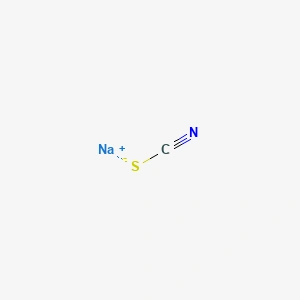
Sodium Thiocyanate 540 72 7 Structure

Sodium Thiocyanate

Sodium thiocyanate (NaSCN; CAS 540-72-7), also known as sodium rhodanide, is an inorganic sodium salt and a source of thiocyanate ions (SCN−). It is a highly water-soluble, hygroscopic crystalline solid used in laboratory chemistry and selected industrial processes. Commercial grades and specifications vary, so suitability depends on the supplier’s documented purity and intended application. Uses

Sodium Thiocyanate Read More »
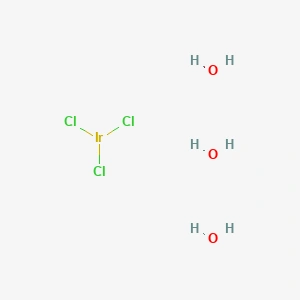
Iridium III Chloride Trihydrate 13569 57 8 Structure

Iridium(III) Chloride Trihydrate

Iridium(III) chloride trihydrate (CAS 13569-57-8; IrCl₃·3H₂O; formula Cl₃H₆IrO₃; 352.62 g/mol) is a hydrated iridium(III) salt and a source of Ir(III) for inorganic and precious-metal chemistry. Its principal role is as a precursor for preparing iridium coordination compounds and other iridium-containing materials. Solubility and reactivity depend on the solvent and intended chemistry; the AI Mode answer

Iridium(III) Chloride Trihydrate Read More »

Hexaammineruthenium III Chloride 14282 91 8 Structure

Hexaammineruthenium(III) Chloride

Hexaammineruthenium(III) chloride (CAS 14282-91-8; [Ru(NH3)6]Cl3; formula weight 309.61) is an inorganic coordination salt composed of a hexaammine ruthenium(III) cation and three chloride counterions. Its defined coordination structure and ruthenium oxidation state make it useful as a research reagent, particularly in electrochemistry and coordination chemistry. This material is a laboratory chemical, not a medicine, nutrient, or

Hexaammineruthenium(III) Chloride Read More »

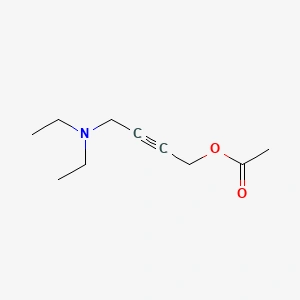
1 Acetoxy 4 Diethylamino 2 Butyne 22396 77 6 Structure

1-Acetoxy-4-diethylamino-2-butyne

1-Acetoxy-4-diethylamino-2-butyne (CAS 22396-77-6), also named 4-(diethylamino)but-2-yn-1-yl acetate, is an organic compound bearing an alkyne, a tertiary diethylamino group, and an acetate ester.These functional groups characterize it as a functionalized building block for specialized organic synthesis. The supported use is as a laboratory or fine-chemical intermediate/reagent in research and process-development synthesis, including as a precursor for

1-Acetoxy-4-diethylamino-2-butyne Read More »

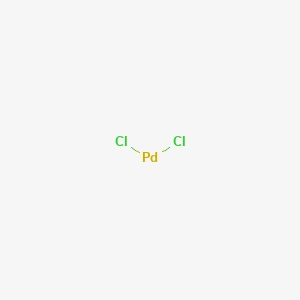
Palladium II Chloride 7647 10 1 Structure

Palladium(II) Chloride

Palladium(II) chloride (palladous chloride; PdCl2; CAS 7647-10-1) is an inorganic palladium(II) salt with a molar mass of 177.33 g/mol. It is typically encountered as a dark reddish-brown to brown-black, moisture-sensitive solid. Its chemical form and palladium content matter when selecting it as a source of palladium for catalysts or materials; the compound can behave differently

Palladium(II) Chloride Read More »

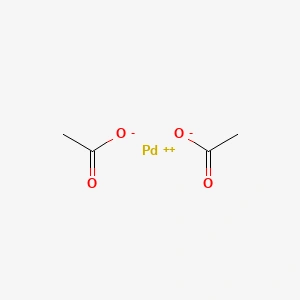
Palladium II Acetate 3375 31 3 Structure

Palladium(II) Acetate

Palladium(II) acetate (CAS 3375-31-3; Pd(OAc)2, empirical formula C4H6O4Pd; formula-unit molar mass 224.50 g/mol) is a palladium(II) carboxylate supplied as a red-brown solid. Its molecular or solid-state association may be oligomeric, commonly described as a cyclic trimer, so formula-unit mass should not be confused with the mass of an associated species. Confirm identity, assay, and physical

Palladium(II) Acetate Read More »

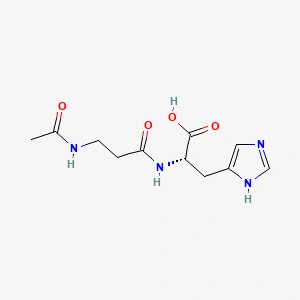
N Acetyl L Carnosine 56353 15 2 Structure

N-Acetyl-L-Carnosine

N-Acetyl-L-carnosine (NAC; CAS 56353-15-2) is the N-acetylated derivative of the dipeptide β-alanyl-L-histidine (carnosine).Acetylation is associated with greater resistance to carnosinase-mediated degradation than unmodified carnosine; this chemical property does not itself establish clinical benefit or suitability for a finished product. This material is described principally in biochemical and ophthalmic research contexts, including investigation of antioxidant, anti-glycation,

N-Acetyl-L-Carnosine Read More »

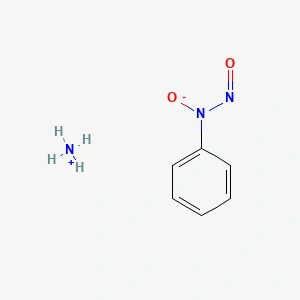
Cupferron 135 20 6 Structure

Cupferron

Cupferron (CAS 135-20-6) is ammonium N-nitroso-N-phenylhydroxylamine, also called ammonium N-nitrosophenylhydroxylamine (formula C6H9N3O2; molecular mass 155.15 g/mol). It is a metal-complexing precipitant used as an analytical reagent, rather than a general-purpose formulation ingredient. This listing describes an industrial-grade product with assay ≥98% and a white to pale cream crystalline appearance; confirm the exact specification against the

Cupferron Read More »

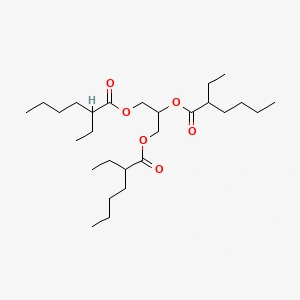
Triethylhexanoin 7360 38 5 Structure

Triethylhexanoin

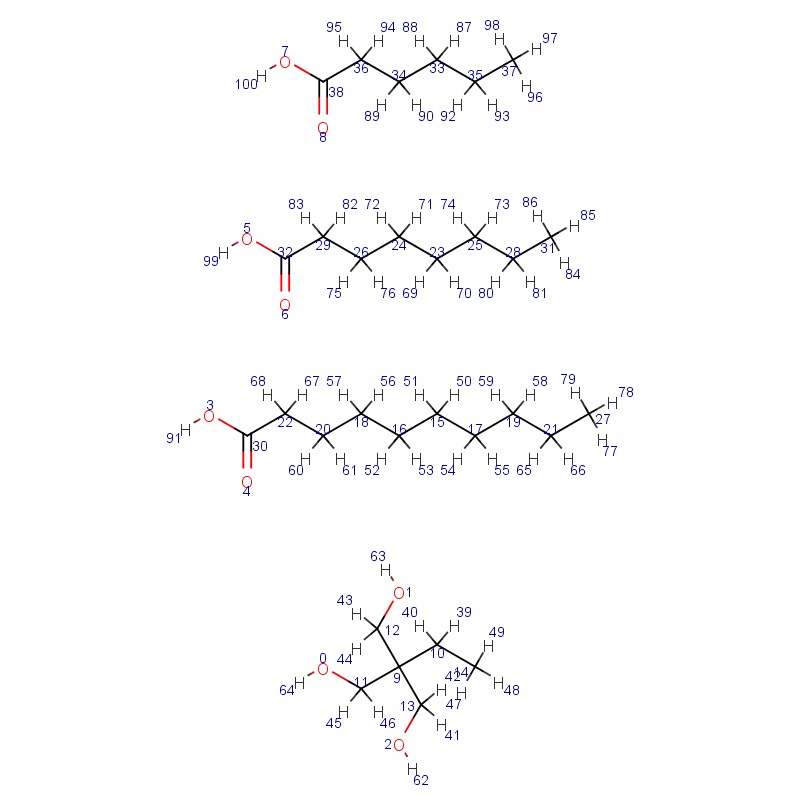
Triethylhexanoin (CAS 7360-38-5) is the triglyceride formed from glycerol and three 2-ethylhexanoic acid groups, also called glyceryl tri(2-ethylhexanoate), glyceryl triisocaprylate, or glycerol tris(2-ethylhexanoate). It is a lipophilic ester oil, not a drug active or a single fatty-acid ester. In personal-care formulations, it is used primarily as an emollient and skin-conditioning oil, contributing spreadability and a

Triethylhexanoin Read More »

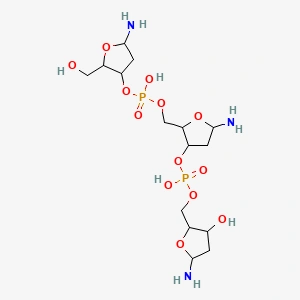
Deoxyribonucleic Acid 9007 49 2 Structure

Deoxyribonucleic Acid

Deoxyribonucleic acid (DNA, CAS 9007-49-2) is a biopolymer of nucleotide units with a deoxyribose-phosphate backbone and adenine, thymine, guanine and cytosine bases. The CAS designation refers to DNA generally, not one defined sequence or chain length; a common repeat-unit representation is (C₁₅H₃₁N₃O₁₃P₂)ₙ. Source, fragment distribution and preparation (free acid or salt) can vary.

Deoxyribonucleic Acid Read More »

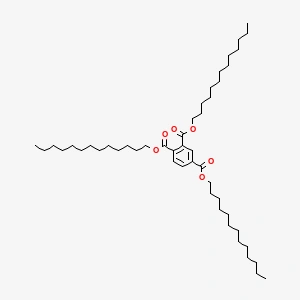
Tri Tridecyl Trimellitate 94109 09 8 Structure

Tri(tridecyl) Trimellitate

Tri(tridecyl) trimellitate (also called tridecyl trimellitate; CAS 94109-09-8) is the triester of trimellitic acid and tridecyl alcohol. It is described as a clear, viscous, colorless-to-pale-yellow liquid. Commercial tridecyl feedstocks may contain a distribution of alkyl chains, so the name alone does not specify every component or grade property. Supplier and ingredient listings describe uses in

Tri(tridecyl) Trimellitate Read More »

Tetrabutylphosphonium Bromide 3115 68 2 Structure

Tetrabutylphosphonium Bromide

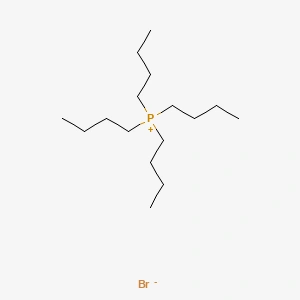
Tetrabutylphosphonium bromide (CAS 3115-68-2) is a quaternary phosphonium salt composed of a tetrabutylphosphonium cation and a bromide anion. It is also known as tetra-n-butylphosphonium bromide (TBPB). Its principal established application is as a phase-transfer catalyst in organic synthesis, where the lipophilic phosphonium cation can assist transfer of ionic species between phases. It is also used

Tetrabutylphosphonium Bromide Read More »

Isopropyl Lauroyl Sarcosinate 230309 38 3 Structure

Isopropyl Lauroyl Sarcosinate

Isopropyl Lauroyl Sarcosinate (CAS 230309-38-3) is the isopropyl ester of N-lauroyl sarcosine, a lipophilic sarcosinate ester used as a cosmetic formulation ingredient. The supplied record specifies cosmetic grade, assay ≥98%, and a colorless to pale-yellow oily liquid. It is an oil-phase ingredient, not a therapeutic active. In personal-care formulations, its reported functions include lightweight emolliency,

Isopropyl Lauroyl Sarcosinate Read More »

Polyglyceryl Methacrylate 28474 30 8 Structure

Poly(glyceryl Methacrylate)

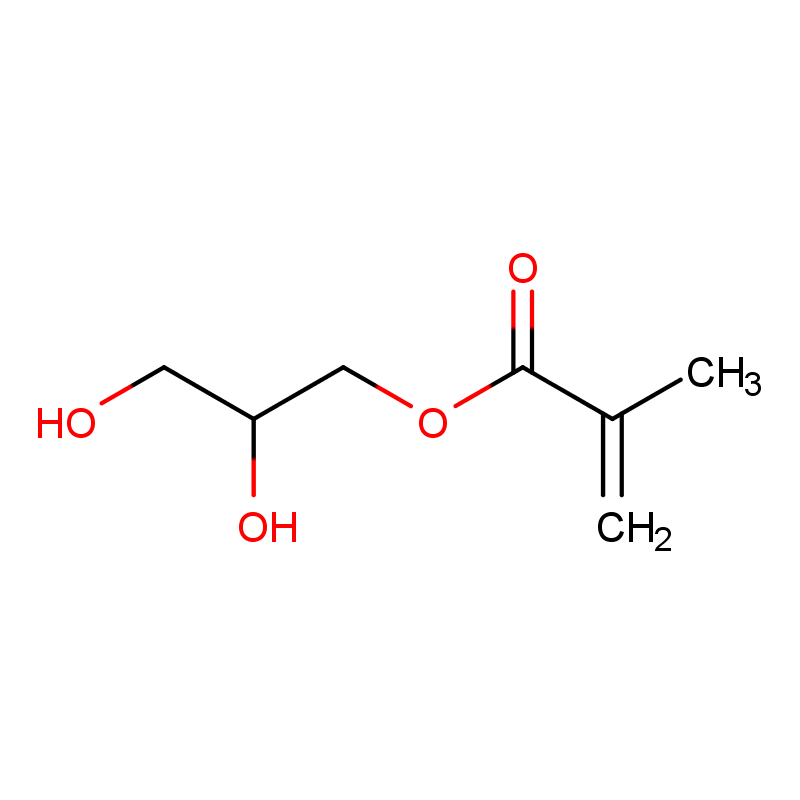
Poly(glyceryl methacrylate) (CAS 28474-30-8) is a polymer of glyceryl methacrylate, also known as poly(2,3-dihydroxypropyl methacrylate) or poly(glycerol monomethacrylate). The repeat unit is commonly represented as (C₇H₁₂O₄)ₙ; chain length and molecular-weight distribution vary by grade. The polymer is hydrophilic and bears glycerol-derived hydroxyl groups.

Poly(glyceryl Methacrylate) Read More »

Hexyl Laurate 34316 64 8 Structure

Hexyl Laurate

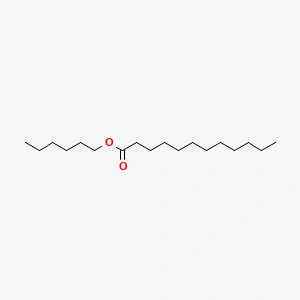
Hexyl Laurate (CAS 34316-64-8), also called hexyl dodecanoate or hexyl laurate, is the hexyl ester of lauric (dodecanoic) acid. The supplied record describes the cosmetic-grade material as a colorless to pale-yellow oily liquid with an assay of at least 98%; these are product specifications and should be confirmed against the applicable batch documentation. In personal-care

Hexyl Laurate Read More »

REQUEST A QUOTE

Product Inquiry — Popup Form