English | 中文 | Español

Chemical Products

Tetrabutylphosphonium Hydroxide 14518 69 5 Structure

Tetrabutylphosphonium Hydroxide

Tetrabutylphosphonium hydroxide (TBPH; CAS 14518-69-5) is a quaternary phosphonium hydroxide and strong organic base. commercial material is commonly supplied in water. This record specifies a 40–44 wt.% aqueous solution and describes it as a clear, colorless to almost colorless liquid. Reported chemical roles include use as a strong base in selected organic synthesis and as

Tetrabutylphosphonium Hydroxide Read More »
Tauroursodeoxycholic Acid 14605 22 2 Structure

Tauroursodeoxycholic Acid

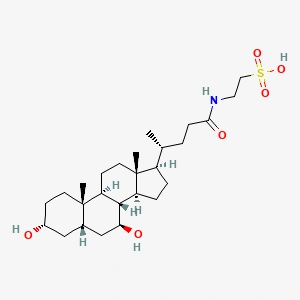
Tauroursodeoxycholic acid (TUDCA; taurine-conjugated ursodeoxycholic acid) is a hydrophilic conjugated bile acid. For CAS 14605-22-2. It is distinct from sodium tauroursodeoxycholate, which has a different composition and molecular mass; TUDCA is used mainly as an experimental bile-acid reagent in biochemical and cell biology research. Studies investigate bile-acid transport and metabolism and, in cellular or animal

Tauroursodeoxycholic Acid Read More »

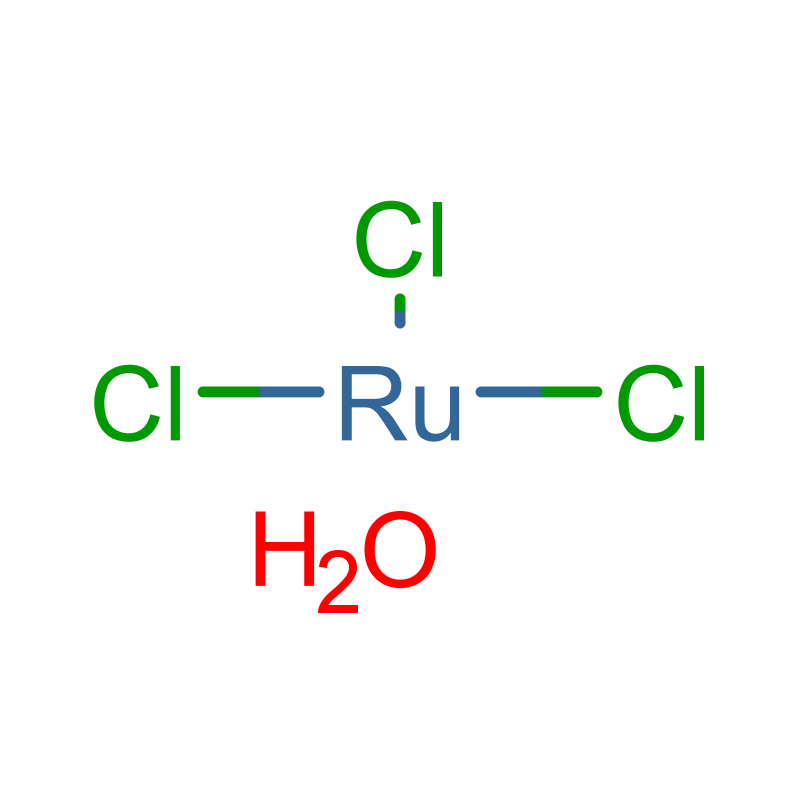
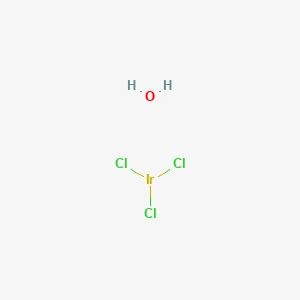
IridiumIII Chloride Hydrate 14996 61 3 Structure

Iridium(III) Chloride Hydrate

Iridium(III) chloride hydrate (CAS 14996-61-3) is a dark, water-soluble iridium salt supplied in hydrated form with controlled iridium content. Hydrate content varies between lots, so specifications are quoted on iridium assay. It is a convenient entry point into iridium chemistry for catalysts, coordination complexes and high-purity iridium materials.

Iridium(III) Chloride Hydrate Read More »

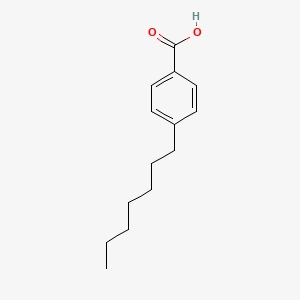
4 Heptylbenzoic Acid 38350 87 7 Structure

4-Heptylbenzoic Acid

4-Heptylbenzoic acid (CAS 38350-87-7), also known as 4-n-heptylbenzoic acid or p-heptylbenzoic acid, is a para-substituted aromatic carboxylic acid bearing a straight-chain C7 alkyl group. The para-heptyl substituent gives this molecule a hydrophobic aromatic structure; it is a building block, not a finished liquid-crystal material. Its supported specialty-material role is as an intermediate or building block

4-Heptylbenzoic Acid Read More »

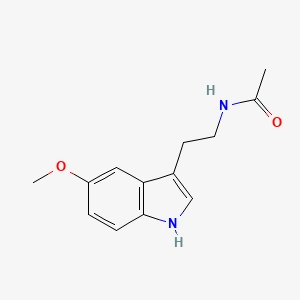
Melatonin 73 31 4 Structure

Melatonin

Melatonin (CAS 73-31-4) is N-acetyl-5-methoxytryptamine, an indoleamine with formula C13H16N2O2 and molecular mass 232.28 g/mol. It is produced mainly by the pineal gland and functions as a hormone involved in circadian timing and sleep–wake signaling. Its actions include signaling through MT1 and MT2 receptors. Commercial reference materials are commonly described as white to off-white crystalline

Melatonin Read More »

Platinum II Chloride 10025 65 7 Structure

Platinum(II) Chloride

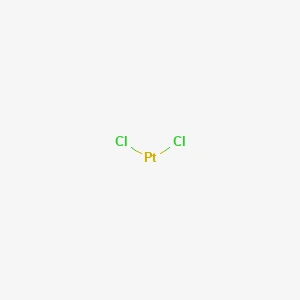
Platinum(II) chloride (CAS RN 10025-65-7; PtCl₂; formula mass 265.98 g/mol) is an inorganic platinum(II) halide, also known as platinous chloride or platinum dichloride. It is typically supplied as an olive-brown to brown powder, although appearance can vary with grade and handling. The compound is poorly soluble in water and is used chiefly as a specialized

Platinum(II) Chloride Read More »

Antimony Trichloride 10025 91 9 Structure

Antimony Trichloride

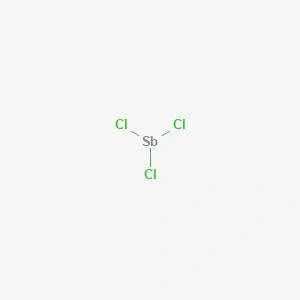
Antimony trichloride (antimony(III) chloride; CAS 10025-91-9) is an inorganic antimony halide with the formula SbCl₃. It is a moisture-sensitive, corrosive solid that can hydrolyze in moist conditions, producing acidic products. Established uses include use as a Lewis-acid reagent or catalyst in selected chemical synthesis, as a precursor to other antimony compounds, and as a specialized

Antimony Trichloride Read More »

Palladium II Nitrate 10102 05 3 Structure

Palladium(II) Nitrate

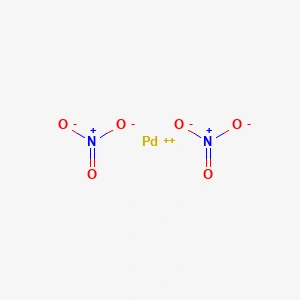
Palladium(II) nitrate (CAS 10102-05-3) is an inorganic palladium(II) salt used primarily as a soluble precursor for palladium-containing catalysts and materials. The anhydrous formula is Pd(NO₃)₂, with a molar mass of approximately 230.43 g/mol. Commercial products may instead be hydrated or supplied as aqueous solutions. Its principal value is as a source of Pd(II) for catalyst

Palladium(II) Nitrate Read More »

Platinum II Nitrate 18496 40 7 Structure

Platinum(II) Nitrate

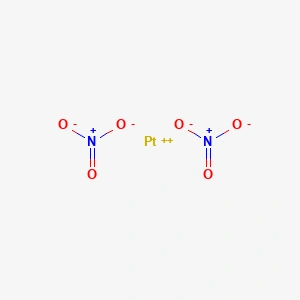
Platinum(II) nitrate (platinum dinitrate; CAS 18496-40-7) is a platinum(II) salt with nominal formula Pt(NO3)2 (N2O6Pt) . Supplier listings commonly describe it as an orange- to reddish-brown solution; the supplied product may instead be a hygroscopic material or a compositionally defined solution. Platinum nitrate solutions can hydrolyze or change during storage, so the exact physical form,

Platinum(II) Nitrate Read More »

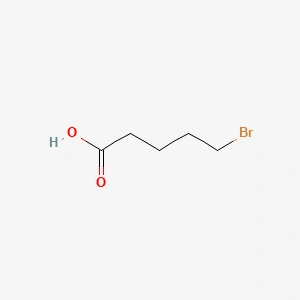
5 Bromovaleric Acid 2067 33 6 Structure

5-Bromovaleric Acid

5-Bromovaleric acid (5-bromopentanoic acid; CAS 2067-33-6) is a bifunctional organic building block with a terminal primary bromide and a carboxylic acid group (Br(CH2)4COOH; C5H9BrO2; 181.03 g/mol). The bromide provides a site for carbon-nitrogen, carbon-oxygen, or carbon-sulfur bond-forming substitution, while the acid group can be used for ester formation or other coupling and derivatization. It is

5-Bromovaleric Acid Read More »

DL 2 Aminobutyric Acid 2835 81 6 Structure

DL-2-Aminobutyric Acid

DL-2-Aminobutyric acid (DL-2-aminobutanoic acid; DL-α-aminobutyric acid; CAS 2835-81-6) is the racemic form of 2-aminobutanoic acid, a chiral, non-proteinogenic α-amino acid. The DL designation indicates both R and S enantiomers; it is distinct from enantiopure L- or D-2-aminobutyric acid. Its amino and carboxyl groups make it a starting material for chemical derivatization and preparation of amino-acid-related

DL-2-Aminobutyric Acid Read More »

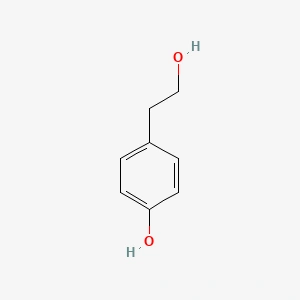
Tyrosol 501 94 0 Structure

Tyrosol

Tyrosol (4-(2-hydroxyethyl)phenol; also called 2-(4-hydroxyphenyl)ethanol or 4-hydroxyphenethyl alcohol) is the compound associated with CAS 501-94-0. It is a phenylethanoid with a para-substituted phenolic hydroxyl group and a two-carbon hydroxyethyl side chain. Tyrosol is reported as a naturally occurring phenolic constituent in olive-derived materials and other plant or fermented-food matrices. Its defensible applications are primarily analytical

Tyrosol Read More »

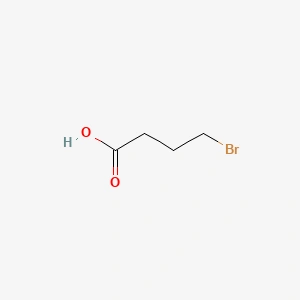
4 Bromobutyric Acid 2623 87 2 Structure

4-Bromobutyric Acid

4-Bromobutyric acid (CAS 2623-87-2), also called 4-bromobutanoic acid, is a four-carbon brominated carboxylic acid with structure Br-(CH2)3-COOH. The carboxyl group and terminal primary bromide provide two distinct functional handles on the same molecule. Its established role is as an intermediate or reagent for organic synthesis, rather than as a therapeutic ingredient or consumer-use product. The

4-Bromobutyric Acid Read More »

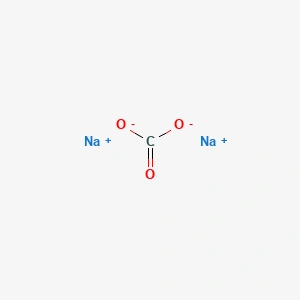
Sodium Carbonate 497 19 8 Structure

Sodium Carbonate

Sodium carbonate (Na₂CO₃; CAS 497-19-8), commonly called soda ash in its anhydrous commercial form, is an inorganic sodium salt. Anhydrous grades are typically white, odorless crystalline powder or granules and dissolve readily in water to give alkaline solutions. An established, high-volume industrial alkali and flux, sodium carbonate is used to manufacture glass and other sodium

Sodium Carbonate Read More »

Sodium Thiocyanate 540 72 7 Structure

Sodium Thiocyanate

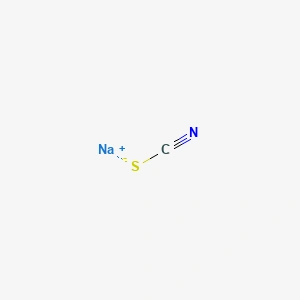
Sodium thiocyanate (NaSCN; CAS 540-72-7), also known as sodium rhodanide, is an inorganic sodium salt and a source of thiocyanate ions (SCN−). It is a highly water-soluble, hygroscopic crystalline solid used in laboratory chemistry and selected industrial processes. Commercial grades and specifications vary, so suitability depends on the supplier’s documented purity and intended application. Uses

Sodium Thiocyanate Read More »

REQUEST A QUOTE

Product Inquiry — Popup Form