English | 中文 | Español

Chemical Products

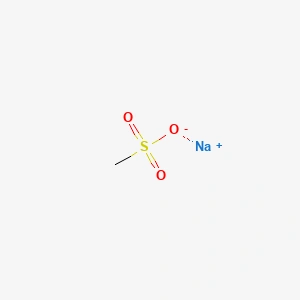
Sodium Methanesulfonate 2386 57 4 Structure

Sodium methanesulfonate

Sodium methanesulfonate (CAS: 2386-57-4) is the sodium salt of methanesulfonic acid, a strong organic acid whose salt combines high water solubility with excellent thermal and chemical stability. This white crystalline compound serves as a convenient source of the methanesulfonate anion in chemical synthesis, electrochemistry, and specialty formulations. In organic synthesis, it functions as a mild

Sodium methanesulfonate Read More »
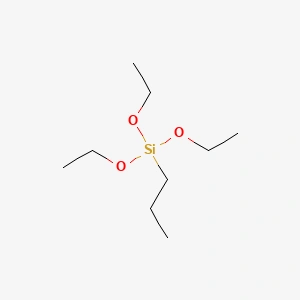
Triethoxypropylsilane 2550 02 9 Structure

Triethoxypropylsilane

Triethoxypropylsilane (CAS: 2550-02-9), also known as n-propyltriethoxysilane, is an organosilane coupling agent combining three hydrolyzable ethoxy groups with a hydrophobic n-propyl chain. Upon exposure to moisture, the ethoxy groups hydrolyze to silanols that bond covalently to silica, glass, metals, and mineral surfaces, while the short alkyl chain modifies surface energy and compatibility with organic matrices.

Triethoxypropylsilane Read More »

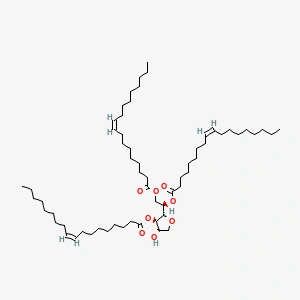
Sorbitan Trioleate 26266 58 0 Structure

Sorbitan Trioleate

Sorbitan Trioleate (CAS: 26266-58-0), commercially known as Span 85, is a non-ionic lipophilic surfactant produced by esterifying sorbitan with three oleic acid chains. This amber oily liquid possesses a very low hydrophilic-lipophilic balance, making it an exceptional water-in-oil emulsifier and dispersing agent for oil-based systems. It is widely employed to stabilize emulsions in cosmetic creams

Sorbitan Trioleate Read More »

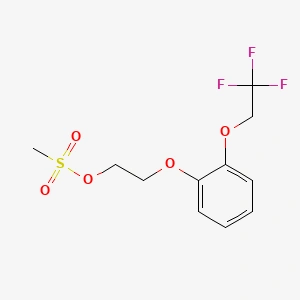
2 2 Phenoxy Ethyl Methanesulfonate 160969 03 9 Structure

2-[2-phenoxy]ethyl Methanesulfonate

2-[2-phenoxy]ethyl Methanesulfonate (CAS: 160969-03-9) is a functionalized alkyl methanesulfonate (mesylate) ester featuring a phenoxy-substituted ethyl chain. As an activated alcohol derivative, the mesylate group serves as an excellent leaving group in nucleophilic substitution reactions, enabling efficient carbon-heteroatom bond formation in pharmaceutical and fine chemical synthesis. The phenoxy aromatic ring provides a hydrophobic handle that can

2-[2-phenoxy]ethyl Methanesulfonate Read More »
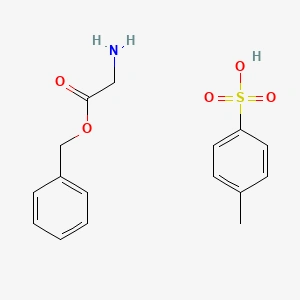
O Benzylglycine Toluene P Sulphonate 1738 76 7 Structure

O-benzylglycine toluene-p-sulphonate

O-benzylglycine toluene-p-sulphonate (CAS: 1738-76-7) is a protected amino acid derivative consisting of glycine benzyl ester paired with p-toluenesulfonic acid. The benzyl ester protects the carboxyl group during peptide coupling reactions, while the salt form provides a crystalline, easily handled solid that stabilizes the free amine. Upon completion of synthetic transformations, the benzyl group is readily

O-benzylglycine toluene-p-sulphonate Read More »

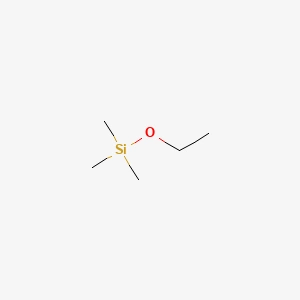
Ethoxytrimethylsilane 1825 62 3 Structure

Ethoxytrimethylsilane

Ethoxytrimethylsilane (CAS: 1825-62-3), also known as ethyl trimethylsilyl ether, is a silylating reagent featuring a trimethylsilyl group bonded to an ethoxy oxygen. This volatile liquid serves as an efficient trimethylsilyl group donor in organic synthesis, protecting alcohols, phenols, and carboxylic acids as their trimethylsilyl ethers during multi-step transformations. The resulting silyl ethers are stable to

Ethoxytrimethylsilane Read More »

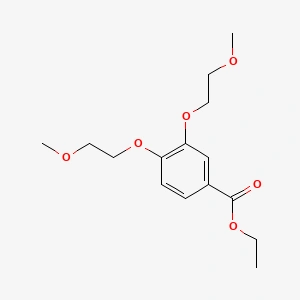
Ethyl 3 4 Bisbenzoate 183322 16 9 Structure

Ethyl 3,4-bisbenzoate

Ethyl 3,4-bisbenzoate (CAS: 183322-16-9) is a diester intermediate derived from a substituted aromatic diacid, featuring two ester groups capable of independent or simultaneous transformation. The ester functionalities serve as versatile handles for hydrolysis to the parent acid, aminolysis to amides, reduction to alcohols, or transesterification to higher-value esters, making this compound a flexible building block

Ethyl 3,4-bisbenzoate Read More »

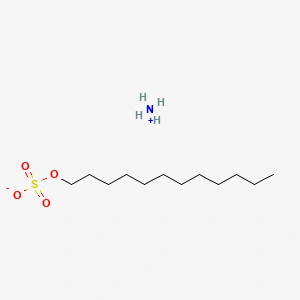
Ammonium Lauryl Sulfate 2235 54 3 Structure

Ammonium Lauryl Sulfate

Ammonium Lauryl Sulfate (CAS: 2235-54-3) is an anionic surfactant featuring a C12 alkyl chain sulfate neutralized with ammonium rather than sodium. This clear aqueous solution or paste delivers strong detergency, rapid wetting, and abundant foam, with the ammonium counterion offering slightly different solubility and mildness characteristics compared to sodium lauryl sulfate. It is extensively used

Ammonium Lauryl Sulfate Read More »

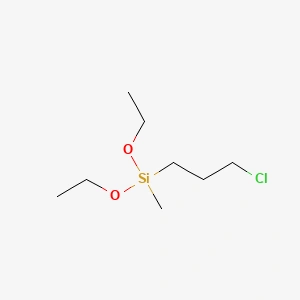
Diethoxymethylsilane 13501 76 3 Structure

diethoxymethylsilane

diethoxymethylsilane (CAS: 13501-76-3) refers to chloromethyldiethoxymethylsilane, a reactive organosilane featuring a hydrolyzable chloromethyl group and two ethoxy groups on silicon. This dual-functionality building block is valued in silicone chemistry, where the ethoxy groups undergo moisture-catalyzed hydrolysis and condensation for cross-linking or surface bonding, while the chloromethyl group provides a reactive handle for nucleophilic substitution, quaternization,

diethoxymethylsilane Read More »

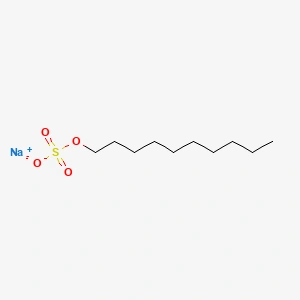
Sodium Decyl Sulfate 142 87 0 Structure

Sodium Decyl Sulfate

Sodium Decyl Sulfate (CAS: 142-87-0) is an anionic surfactant featuring a C10 alkyl chain terminated by a sulfate group neutralized with sodium. This water-soluble surfactant offers intermediate hydrophobicity between shorter and longer chain sulfates, providing effective wetting, foaming, and emulsifying performance with lower irritation potential than longer-chain homologs. It is widely used in personal care

Sodium Decyl Sulfate Read More »

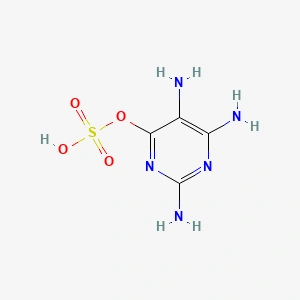
4 Pyrimidinol 2 5 6 Triamino Hydrogen Sulfate 1603 02 7 Structure

4-Pyrimidinol, 2,5,6-triamino-, hydrogen sulfate

4-Pyrimidinol, 2,5,6-triamino-, hydrogen sulfate (CAS: 1603-02-7), also named 2,4,5-triamino-6-hydroxypyrimidine sulfate, is a polyfunctional pyrimidine derivative closely related to guanine in structure. This white crystalline compound serves as a critical intermediate in the industrial synthesis of folic acid, where it provides the pyrimidine ring that is elaborated into the pterin portion of the vitamin molecule. Its

4-Pyrimidinol, 2,5,6-triamino-, hydrogen sulfate Read More »

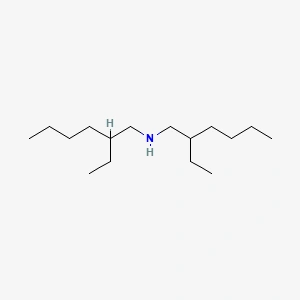
Bisamine 106 20 7 Structure

Bisamine

Bisamine (CAS: 106-20-7), chemically Bis(2-ethylhexyl)amine, is a high-boiling, water-insoluble secondary fatty amine featuring two branched C8 alkyl chains attached to a secondary nitrogen center. This clear, colorless to pale-yellow liquid combines strong basicity with excellent solubility in hydrocarbons and organic solvents, making it a versatile intermediate for surfactants, corrosion inhibitors, and specialty additives. Its secondary

Bisamine Read More »

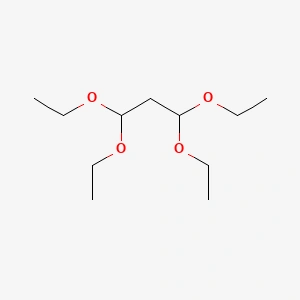
1 1 3 3 Tetraethoxypropane 122 31 6 Structure

1,1,3,3-Tetraethoxypropane

1,1,3,3-Tetraethoxypropane (CAS: 122-31-6) is the tetraethyl acetal of malondialdehyde, serving as a stable, storable precursor to this highly reactive dialdehyde. In aqueous or acidic conditions, the acetal undergoes hydrolysis to release malondialdehyde in situ, enabling controlled participation in condensation reactions that would be impractical with the free aldehyde. This clear liquid is widely employed in

1,1,3,3-Tetraethoxypropane Read More »

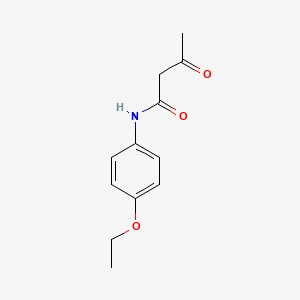
N 3 Oxobutanamide 122 82 7 Structure

N–3-oxobutanamide

N–3-oxobutanamide (CAS: 122-82-7), also known as p-acetoacetophenetidide or 4′-ethoxyacetoacetanilide, is an acetoacetylated aromatic amide combining an activated methylene keto-amide with an ethoxy-substituted anilide structure. This crystalline intermediate is primarily valued in dye chemistry, where the reactive methylene group between the two carbonyl functions condenses with diazonium salts and coupling components to build azo dye structures

N–3-oxobutanamide Read More »

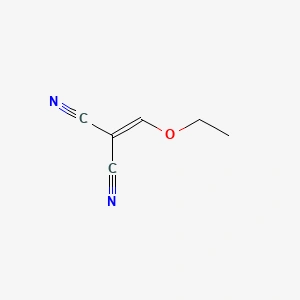
2 Propanedinitrile 123 06 8 Structure

2-propanedinitrile

2-propanedinitrile (CAS: 123-06-8), commonly known as ethoxymethylenemalononitrile (EMMN), is a highly electron-deficient olefin combining a nitrile, an ethoxyvinyl group, and a second nitrile on a compact three-carbon framework. This reactivity profile makes it an exceptional electrophile and cyclocondensation partner in heterocyclic synthesis. It readily reacts with amidines, hydrazines, guanidines, and enaminones to construct pyrimidines, pyrazoles,

2-propanedinitrile Read More »

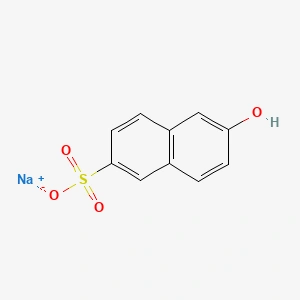
2 Naphthol 6 Sulfonic Acid Sodium 135 76 2 Structure

2-Naphthol-6-sulfonic acid sodium

2-Naphthol-6-sulfonic acid sodium (CAS: 135-76-2), known as Schaeffer’s salt, is a naphthalene-based intermediate combining a reactive naphthol hydroxyl with a sulfonate group that imparts water solubility. This white to off-white crystalline powder is a foundational building block in the dye industry, serving as a coupling component in the synthesis of a wide range of azo

2-Naphthol-6-sulfonic acid sodium Read More »

REQUEST A QUOTE

Product Inquiry — Popup Form