English | 中文 | Español

Chemical Products

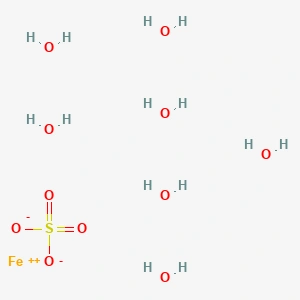
Ferrous Sulfate Heptahydrate 7782 63 0 Structure

Ferrous sulfate heptahydrate

Ferrous sulfate heptahydrate (CAS: 7782-63-0) is a blue-green crystalline salt providing a highly bioavailable source of iron(II) for nutritional, pharmaceutical, agricultural, and industrial applications. In medicine and food fortification, it treats and prevents iron-deficiency anemia, replenishing hemoglobin and supporting oxygen transport, making it one of the most widely used iron supplements globally. Agriculture employs it

Ferrous sulfate heptahydrate Read More »
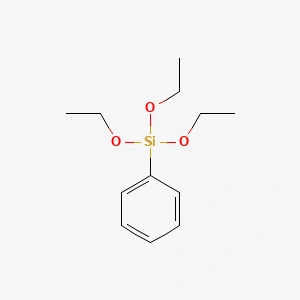
Phenyltriethoxysilane 780 69 8 Structure

Phenyltriethoxysilane

Phenyltriethoxysilane (CAS: 780-69-8) is an organosilane coupling agent combining three hydrolyzable ethoxy groups with a phenyl substituent on silicon. Moisture-catalyzed hydrolysis generates silanols that condense onto glass, silica, and metal oxide surfaces, while the phenyl ring enhances thermal stability, UV resistance, and compatibility with aromatic polymer systems. This clear liquid is used as a key

Phenyltriethoxysilane Read More »

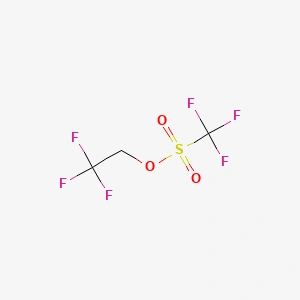
2 2 2 Trifluoroethyl Trifluoromethanesulfonate 6226 25 1 Structure

2,2,2-Trifluoroethyl trifluoromethanesulfonate

2,2,2-Trifluoroethyl trifluoromethanesulfonate (CAS: 6226-25-1), known as trifluoroethyl triflate, is a specialized triflate ester designed for introducing the 2,2,2-trifluoroethyl group into organic molecules. The electron-withdrawing trifluoromethyl group enhances the leaving-group ability of triflate, making this reagent a potent alkylating agent for O-, N-, and S-nucleophiles under mild conditions. It is employed in pharmaceutical synthesis for installing

2,2,2-Trifluoroethyl trifluoromethanesulfonate Read More »

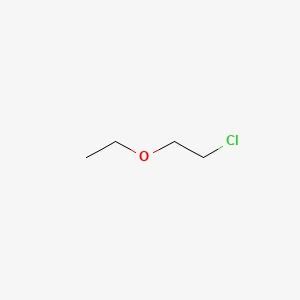
Ethane 1 Chloro 2 Ethoxy 628 34 2 Structure

Ethane, 1-chloro-2-ethoxy-

Ethane, 1-chloro-2-ethoxy- (CAS: 628-34-2), commonly 2-chloroethyl ethyl ether, is a bifunctional ether featuring a reactive primary alkyl chloride alongside an ethoxy group. The chloromethyl terminus readily undergoes nucleophilic substitution with amines, alkoxides, thiolates, and carbanions, while the ether oxygen provides solubility and coordinative properties. This clear liquid serves as a versatile alkylating intermediate in pharmaceutical

Ethane, 1-chloro-2-ethoxy- Read More »

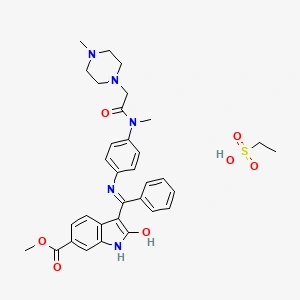
Nintedanib Esylate 656247 18 6 Structure

Nintedanib esylate

Nintedanib esylate (CAS: 656247-18-6) is the ethanesulfonate salt of nintedanib, a small-molecule tyrosine kinase inhibitor targeting VEGFR, PDGFR, and FGFR receptors. By blocking these angiogenic and fibrogenic signaling pathways, it inhibits the proliferation and migration of endothelial and perivascular cells, making it effective in oncology and fibrotic disease treatment. It is approved for the treatment

Nintedanib esylate Read More »

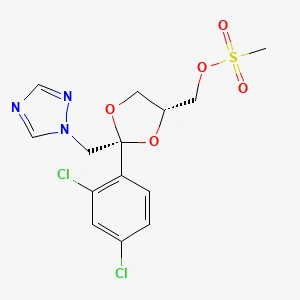
1 3 Dioxolane 4 Methanol 2 2 4 Methanesulfonate Rel 67914 86 7 Structure

1,3-Dioxolane-4-methanol, 2–2–, 4-methanesulfonate,-rel-

1,3-Dioxolane-4-methanol, 2–2–, 4-methanesulfonate (CAS: 67914-86-7) is a functionalized dioxolane intermediate bearing a methanesulfonate leaving group on a chlorinated heterocyclic framework. The activated mesylate enables efficient nucleophilic displacement by amines, alkoxides, and other nucleophiles, making this compound a strategic building block in pharmaceutical synthesis, particularly for constructing chiral side chains and heterocyclic cores of cardiovascular and

1,3-Dioxolane-4-methanol, 2–2–, 4-methanesulfonate,-rel- Read More »

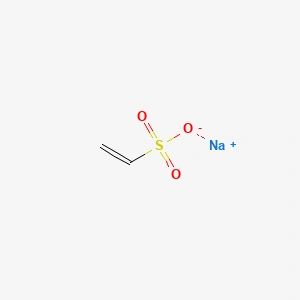
Sodium Vinylsulfonate 3039 83 6 Structure

Sodium vinylsulfonate

Sodium vinylsulfonate (CAS: 3039-83-6) is a reactive anionic monomer comprising a polymerizable vinyl group and a strongly hydrophilic sulfonate group. Supplied typically as an aqueous solution, it readily copolymerizes with acrylamide, acrylic esters, styrene, and other vinyl monomers, introducing permanent anionic charge and exceptional water solubility into the resulting polymers. These copolymers serve as high-performance

Sodium vinylsulfonate Read More »

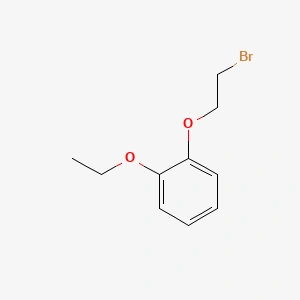
1 2 Ethoxybenzene 3259 03 8 Structure

1–2-ethoxybenzene

1–2-ethoxybenzene (CAS: 3259-03-8) is a brominated aromatic ether intermediate featuring a reactive bromine substituent alongside an ethoxy group on a substituted benzene ring. The bromine atom serves as a versatile handle for palladium-catalyzed cross-coupling reactions including Suzuki, Heck, and Buchwald-Hartwig amination, while the ether functionality modulates electronic properties and solubility of derived products. This building

1–2-ethoxybenzene Read More »

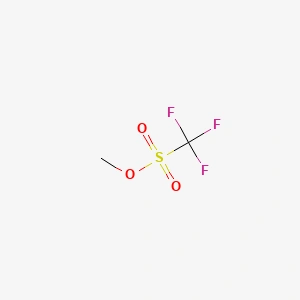
Methyl Triflate 333 27 7 Structure

Methyl triflate

Methyl triflate (CAS: 333-27-7), also known as methyl trifluoromethanesulfonate, is one of the most powerful methylating agents available in organic synthesis, combining the excellent leaving-group ability of triflate with high electrophilicity at the methyl carbon. This colorless to pale liquid methylates alcohols, phenols, carboxylic acids, amines, and thiols under mild conditions, often at low temperatures,

Methyl triflate Read More »

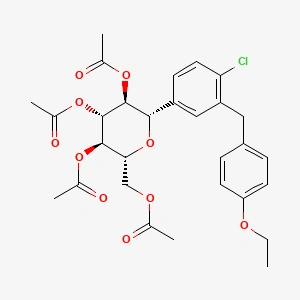
2 6 4 Chloro 3 Phenyl Tetrahydro 2H Pyran 3 4 5 Triyl Triacetate 461432 25 7 Structure

-2–6-[4-chloro-3-phenyl]tetrahydro-2H-pyran-3,4,5-triyl triacetate

-2–6-[4-chloro-3-phenyl]tetrahydro-2H-pyran-3,4,5-triyl triacetate (CAS: 461432-25-7) is a protected glucose-derived intermediate featuring a chlorinated aromatic aglycone and acetyl-protected hydroxyl groups on the pyranose ring. This compound represents a key intermediate in the synthesis of C-glycoside pharmaceutical ingredients, most notably the SGLT2 inhibitor class of antidiabetic drugs. The acetate protecting groups stabilize the sugar moiety during synthetic transformations

-2–6-[4-chloro-3-phenyl]tetrahydro-2H-pyran-3,4,5-triyl triacetate Read More »

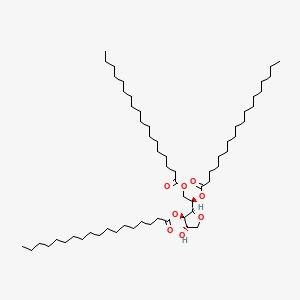
Sorbitan Trioctadecanoate 26658 19 5 Structure

Sorbitan trioctadecanoate

Sorbitan trioctadecanoate (CAS: 26658-19-5), known as Span 65, is a non-ionic lipophilic surfactant formed by esterifying sorbitan with three stearic acid chains. This cream-colored waxy solid functions primarily as a water-in-oil emulsifier and stabilizer with a very low hydrophilic-lipophilic balance, making it ideal for structuring oil-rich formulations and providing texture to creams and ointments. In

Sorbitan trioctadecanoate Read More »

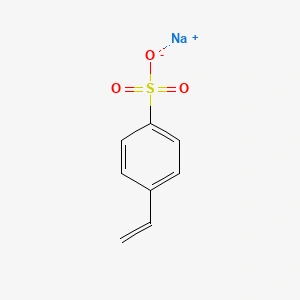
Sodium 4 Styrenesulfonate 2695 37 6 Structure

Sodium 4-styrenesulfonate

Sodium 4-styrenesulfonate (CAS: 2695-37-6) is a reactive water-soluble monomer featuring a vinyl group for polymerization and a sulfonate group that imparts strong anionic character to derived polymers. This white crystalline solid readily undergoes free-radical polymerization alone or with comonomers such as acrylamide, acrylic acid, and styrene, producing polymers with excellent water solubility, dispersing power, and

Sodium 4-styrenesulfonate Read More »

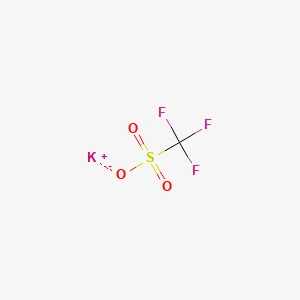
Potassium Trifluoromethanesulfonate 2926 27 4 Structure

Potassium Trifluoromethanesulfonate

Potassium Trifluoromethanesulfonate (CAS: 2926-27-4), commonly called potassium triflate, is the potassium salt of triflic acid featuring the highly stable, weakly coordinating triflate anion. This white crystalline salt serves as a versatile reagent and electrolyte component in organic synthesis, electrochemistry, and advanced materials. In synthetic chemistry, it functions as a source of the triflate anion for

Potassium Trifluoromethanesulfonate Read More »

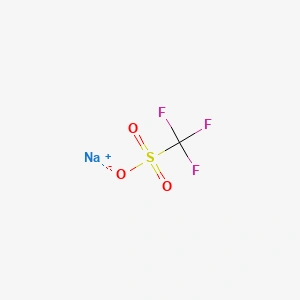
Sodium Trifluoromethanesulfonate 2926 30 9 Structure

Sodium trifluoromethanesulfonate

Sodium trifluoromethanesulfonate (CAS: 2926-30-9), known as sodium triflate, is the sodium salt of trifluoromethanesulfonic acid, combining the weakly coordinating triflate anion with a readily available alkali cation. This white, highly water-soluble salt serves multiple roles in chemical synthesis, electrochemistry, and materials science. In organic synthesis, it acts as a mild base and triflate source for

Sodium trifluoromethanesulfonate Read More »

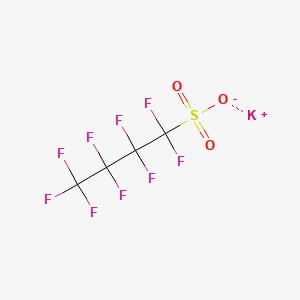
Potassium Perfluorobutanesulfonate 29420 49 3 Structure

Potassium perfluorobutanesulfonate

Potassium perfluorobutanesulfonate (CAS: 29420-49-3), known as PFBS potassium salt, is a short-chain perfluorinated sulfonate surfactant featuring exceptional chemical and thermal stability. Unlike long-chain perfluoroalkyl substances, its C4 fluorocarbon tail offers a more favorable environmental profile while retaining the surface-active properties of fluorosurfactants: dramatically lowering surface tension, providing outstanding wetting on low-energy surfaces, and resisting harsh

Potassium perfluorobutanesulfonate Read More »

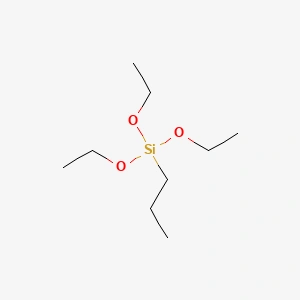
Triethoxypropylsilane 2550 02 9 Structure

Triethoxypropylsilane

Triethoxypropylsilane (CAS: 2550-02-9), also known as n-propyltriethoxysilane, is an organosilane coupling agent combining three hydrolyzable ethoxy groups with a hydrophobic n-propyl chain. Upon exposure to moisture, the ethoxy groups hydrolyze to silanols that bond covalently to silica, glass, metals, and mineral surfaces, while the short alkyl chain modifies surface energy and compatibility with organic matrices.

Triethoxypropylsilane Read More »

REQUEST A QUOTE

Product Inquiry — Popup Form