English | 中文 | Español

Chemical Products

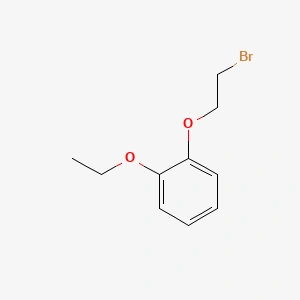
1 2 Ethoxybenzene 3259 03 8 Structure

1–2-ethoxybenzene

1–2-ethoxybenzene (CAS: 3259-03-8) is a brominated aromatic ether intermediate featuring a reactive bromine substituent alongside an ethoxy group on a substituted benzene ring. The bromine atom serves as a versatile handle for palladium-catalyzed cross-coupling reactions including Suzuki, Heck, and Buchwald-Hartwig amination, while the ether functionality modulates electronic properties and solubility of derived products. This building
1–2-ethoxybenzene Read More »

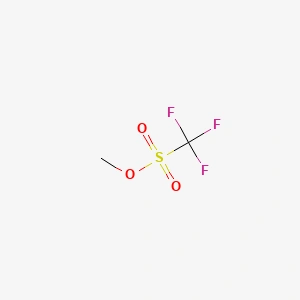
Methyl Triflate 333 27 7 Structure

Methyl triflate

Methyl triflate (CAS: 333-27-7), also known as methyl trifluoromethanesulfonate, is one of the most powerful methylating agents available in organic synthesis, combining the excellent leaving-group ability of triflate with high electrophilicity at the methyl carbon. This colorless to pale liquid methylates alcohols, phenols, carboxylic acids, amines, and thiols under mild conditions, often at low temperatures,

Methyl triflate Read More »

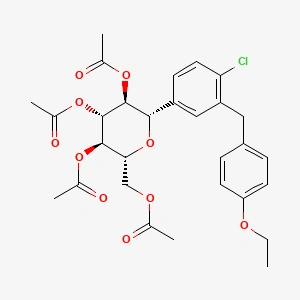
2 6 4 Chloro 3 Phenyl Tetrahydro 2H Pyran 3 4 5 Triyl Triacetate 461432 25 7 Structure

-2–6-[4-chloro-3-phenyl]tetrahydro-2H-pyran-3,4,5-triyl triacetate

-2–6-[4-chloro-3-phenyl]tetrahydro-2H-pyran-3,4,5-triyl triacetate (CAS: 461432-25-7) is a protected glucose-derived intermediate featuring a chlorinated aromatic aglycone and acetyl-protected hydroxyl groups on the pyranose ring. This compound represents a key intermediate in the synthesis of C-glycoside pharmaceutical ingredients, most notably the SGLT2 inhibitor class of antidiabetic drugs. The acetate protecting groups stabilize the sugar moiety during synthetic transformations

-2–6-[4-chloro-3-phenyl]tetrahydro-2H-pyran-3,4,5-triyl triacetate Read More »

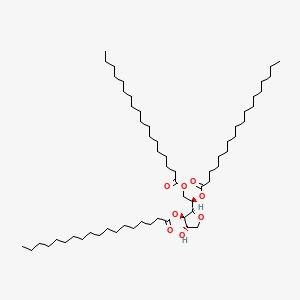
Sorbitan Trioctadecanoate 26658 19 5 Structure

Sorbitan trioctadecanoate

Sorbitan trioctadecanoate (CAS: 26658-19-5), known as Span 65, is a non-ionic lipophilic surfactant formed by esterifying sorbitan with three stearic acid chains. This cream-colored waxy solid functions primarily as a water-in-oil emulsifier and stabilizer with a very low hydrophilic-lipophilic balance, making it ideal for structuring oil-rich formulations and providing texture to creams and ointments. In

Sorbitan trioctadecanoate Read More »

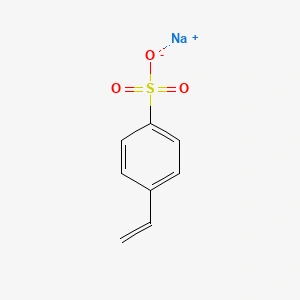
Sodium 4 Styrenesulfonate 2695 37 6 Structure

Sodium 4-styrenesulfonate

Sodium 4-styrenesulfonate (CAS: 2695-37-6) is a reactive water-soluble monomer featuring a vinyl group for polymerization and a sulfonate group that imparts strong anionic character to derived polymers. This white crystalline solid readily undergoes free-radical polymerization alone or with comonomers such as acrylamide, acrylic acid, and styrene, producing polymers with excellent water solubility, dispersing power, and

Sodium 4-styrenesulfonate Read More »

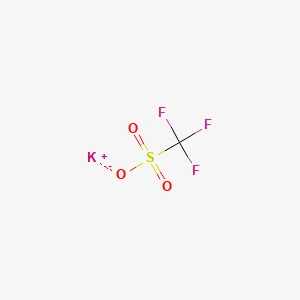
Potassium Trifluoromethanesulfonate 2926 27 4 Structure

Potassium Trifluoromethanesulfonate

Potassium Trifluoromethanesulfonate (CAS: 2926-27-4), commonly called potassium triflate, is the potassium salt of triflic acid featuring the highly stable, weakly coordinating triflate anion. This white crystalline salt serves as a versatile reagent and electrolyte component in organic synthesis, electrochemistry, and advanced materials. In synthetic chemistry, it functions as a source of the triflate anion for

Potassium Trifluoromethanesulfonate Read More »

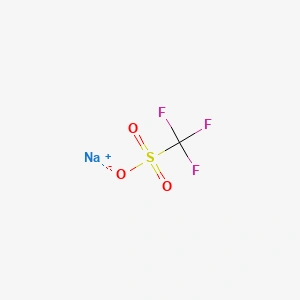
Sodium Trifluoromethanesulfonate 2926 30 9 Structure

Sodium trifluoromethanesulfonate

Sodium trifluoromethanesulfonate (CAS: 2926-30-9), known as sodium triflate, is the sodium salt of trifluoromethanesulfonic acid, combining the weakly coordinating triflate anion with a readily available alkali cation. This white, highly water-soluble salt serves multiple roles in chemical synthesis, electrochemistry, and materials science. In organic synthesis, it acts as a mild base and triflate source for

Sodium trifluoromethanesulfonate Read More »

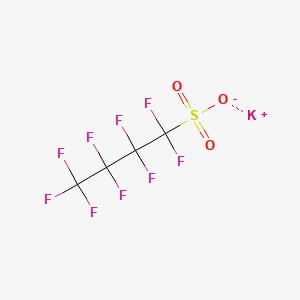
Potassium Perfluorobutanesulfonate 29420 49 3 Structure

Potassium perfluorobutanesulfonate

Potassium perfluorobutanesulfonate (CAS: 29420-49-3), known as PFBS potassium salt, is a short-chain perfluorinated sulfonate surfactant featuring exceptional chemical and thermal stability. Unlike long-chain perfluoroalkyl substances, its C4 fluorocarbon tail offers a more favorable environmental profile while retaining the surface-active properties of fluorosurfactants: dramatically lowering surface tension, providing outstanding wetting on low-energy surfaces, and resisting harsh

Potassium perfluorobutanesulfonate Read More »

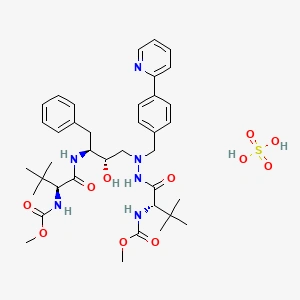
Atazanavir Sulfate 229975 97 7 Structure

Atazanavir Sulfate

Atazanavir Sulfate (CAS: 229975-97-7) is the sulfate salt of atazanavir, an azapeptide protease inhibitor widely used in antiretroviral therapy for the treatment of HIV-1 infection. By selectively binding to the HIV-1 protease enzyme, it prevents the cleavage of viral polyproteins into functional components, thereby blocking viral maturation and the production of infectious virions. The sulfate

Atazanavir Sulfate Read More »

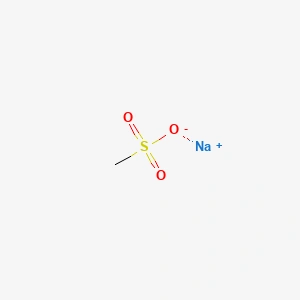
Sodium Methanesulfonate 2386 57 4 Structure

Sodium methanesulfonate

Sodium methanesulfonate (CAS: 2386-57-4) is the sodium salt of methanesulfonic acid, a strong organic acid whose salt combines high water solubility with excellent thermal and chemical stability. This white crystalline compound serves as a convenient source of the methanesulfonate anion in chemical synthesis, electrochemistry, and specialty formulations. In organic synthesis, it functions as a mild

Sodium methanesulfonate Read More »

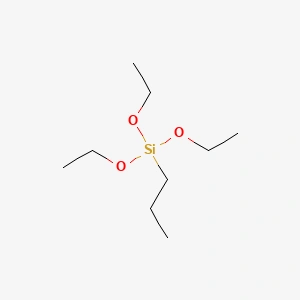
Triethoxypropylsilane 2550 02 9 Structure

Triethoxypropylsilane

Triethoxypropylsilane (CAS: 2550-02-9), also known as n-propyltriethoxysilane, is an organosilane coupling agent combining three hydrolyzable ethoxy groups with a hydrophobic n-propyl chain. Upon exposure to moisture, the ethoxy groups hydrolyze to silanols that bond covalently to silica, glass, metals, and mineral surfaces, while the short alkyl chain modifies surface energy and compatibility with organic matrices.

Triethoxypropylsilane Read More »

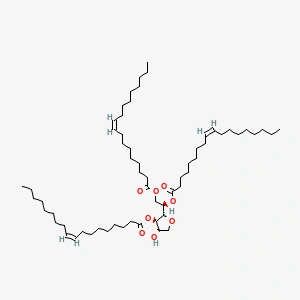
Sorbitan Trioleate 26266 58 0 Structure

Sorbitan Trioleate

Sorbitan Trioleate (CAS: 26266-58-0), commercially known as Span 85, is a non-ionic lipophilic surfactant produced by esterifying sorbitan with three oleic acid chains. This amber oily liquid possesses a very low hydrophilic-lipophilic balance, making it an exceptional water-in-oil emulsifier and dispersing agent for oil-based systems. It is widely employed to stabilize emulsions in cosmetic creams

Sorbitan Trioleate Read More »

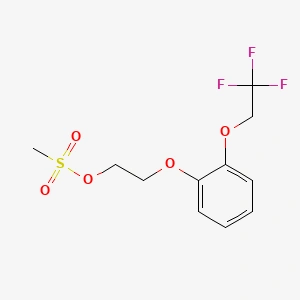
2 2 Phenoxy Ethyl Methanesulfonate 160969 03 9 Structure

2-[2-phenoxy]ethyl Methanesulfonate

2-[2-phenoxy]ethyl Methanesulfonate (CAS: 160969-03-9) is a functionalized alkyl methanesulfonate (mesylate) ester featuring a phenoxy-substituted ethyl chain. As an activated alcohol derivative, the mesylate group serves as an excellent leaving group in nucleophilic substitution reactions, enabling efficient carbon-heteroatom bond formation in pharmaceutical and fine chemical synthesis. The phenoxy aromatic ring provides a hydrophobic handle that can

2-[2-phenoxy]ethyl Methanesulfonate Read More »

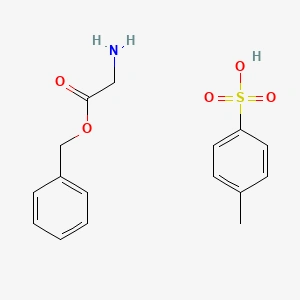
O Benzylglycine Toluene P Sulphonate 1738 76 7 Structure

O-benzylglycine toluene-p-sulphonate

O-benzylglycine toluene-p-sulphonate (CAS: 1738-76-7) is a protected amino acid derivative consisting of glycine benzyl ester paired with p-toluenesulfonic acid. The benzyl ester protects the carboxyl group during peptide coupling reactions, while the salt form provides a crystalline, easily handled solid that stabilizes the free amine. Upon completion of synthetic transformations, the benzyl group is readily

O-benzylglycine toluene-p-sulphonate Read More »

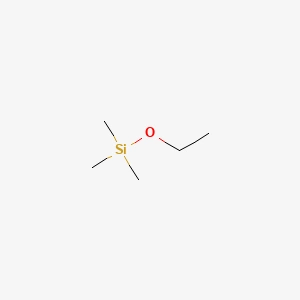
Ethoxytrimethylsilane 1825 62 3 Structure

Ethoxytrimethylsilane

Ethoxytrimethylsilane (CAS: 1825-62-3), also known as ethyl trimethylsilyl ether, is a silylating reagent featuring a trimethylsilyl group bonded to an ethoxy oxygen. This volatile liquid serves as an efficient trimethylsilyl group donor in organic synthesis, protecting alcohols, phenols, and carboxylic acids as their trimethylsilyl ethers during multi-step transformations. The resulting silyl ethers are stable to

Ethoxytrimethylsilane Read More »

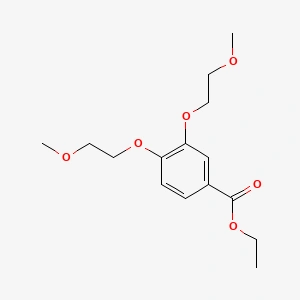
Ethyl 3 4 Bisbenzoate 183322 16 9 Structure

Ethyl 3,4-bisbenzoate

Ethyl 3,4-bisbenzoate (CAS: 183322-16-9) is a diester intermediate derived from a substituted aromatic diacid, featuring two ester groups capable of independent or simultaneous transformation. The ester functionalities serve as versatile handles for hydrolysis to the parent acid, aminolysis to amides, reduction to alcohols, or transesterification to higher-value esters, making this compound a flexible building block

Ethyl 3,4-bisbenzoate Read More »

REQUEST A QUOTE

Product Inquiry — Popup Form