English | 中文 | Español

Chemical Products

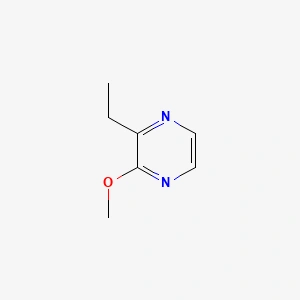
Pyrazine, 2-ethyl-3-methoxy-

2-Ethyl-3-methoxypyrazine, identified by CAS 25680-58-4, is a heterocyclic organic compound belonging to the methoxypyrazine family. It is characterized by its exceptionally low odor threshold and potent organoleptic profile, which is often described as earthy, nutty, and reminiscent of raw vegetables or potatoes. As a clear to pale yellow liquid, this chemical is highly valued in

Pyrazine, 2-ethyl-3-methoxy- Read More »
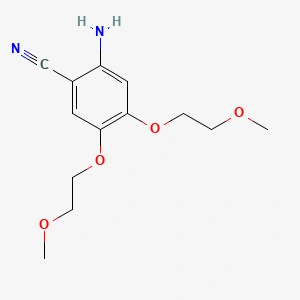
2-Amino-4,5-bis(2-methoxyethoxy)benzonitrile

2-Amino-4,5-bis(2-methoxyethoxy)benzonitrile, identified by CAS number 950596-58-4, is a specialized organic intermediate characterized by its substituted benzonitrile scaffold. The molecule features a primary amine and two methoxyethoxy side chains, which impart specific solubility and reactivity profiles suitable for complex organic synthesis. It typically appears as a crystalline solid and is handled within laboratory and industrial settings

2-Amino-4,5-bis(2-methoxyethoxy)benzonitrile Read More »

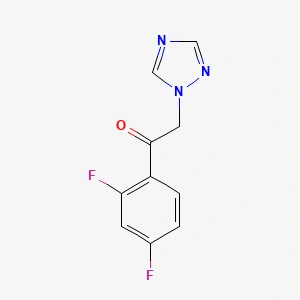
1-(2,4-Difluorophenyl)-2-(1H-1,2,4-triazol-1-yl)ethanone

1-(2,4-Difluorophenyl)-2-(1H-1,2,4-triazol-1-yl)ethanone, identified by CAS 86404-63-9, is a specialized organic building block characterized by its distinct difluorinated phenyl ring and triazole moiety. This compound typically appears as a crystalline solid and serves as a critical precursor in the synthesis of complex heterocyclic molecules. Its chemical structure provides a specific reactivity profile, particularly at the carbonyl and

1-(2,4-Difluorophenyl)-2-(1H-1,2,4-triazol-1-yl)ethanone Read More »

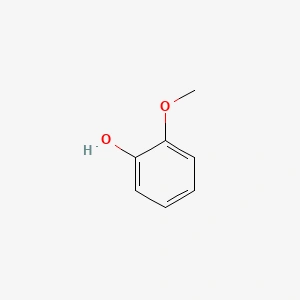
Pyroguaiac acid

Pyroguaiac acid, commonly known as guaiacol, is an organic compound with the chemical formula C7H8O2. It is a naturally occurring phenolic substance typically derived from wood creosote or guaiacum resin, though it is also produced synthetically for industrial applications. Characterized by its distinct smoky, medicinal aroma, this compound appears as a colorless to pale yellow

Pyroguaiac acid Read More »

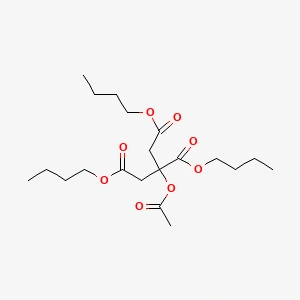
ACETYL TRIBUTYL CITRATE

Acetyl Tributyl Citrate, identified by CAS number 77-90-7, is a versatile organic compound primarily utilized as a high-performance plasticizer. Chemically, it is a citric acid ester that appears as a colorless, odorless, and oily liquid. Its molecular structure provides excellent compatibility with a wide range of resin systems, characterized by low volatility and high resistance

ACETYL TRIBUTYL CITRATE Read More »

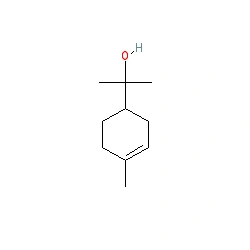
Terpineol

Terpineol, identified by CAS number 8000-41-7, is a naturally occurring monoterpene alcohol found in various essential oils, such as pine, petitgrain, and cajuput. It typically exists as a mixture of isomers, including alpha-, beta-, and gamma-terpineol, though alpha-terpineol is the primary component responsible for its characteristic aroma. This chemical presents as a colorless liquid or

Terpineol Read More »

Turpentine Oil

Turpentine oil, identified by CAS number 8006-64-2, is a versatile fluid obtained through the distillation of resin harvested from various pine species. Chemically, it is composed primarily of monoterpenes, specifically alpha-pinene and beta-pinene, which contribute to its distinct aromatic profile and solvent capabilities. As a naturally derived hydrocarbon mixture, it serves as a fundamental raw

Turpentine Oil Read More »

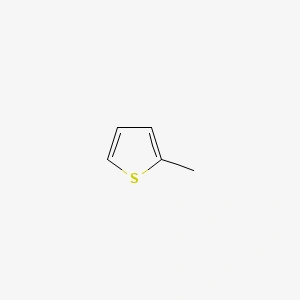
2-Methylthiophene

2-Methylthiophene, identified by CAS number 554-14-3, is a five-membered heterocyclic sulfur compound and a methylated derivative of thiophene. This clear, colorless to pale yellow liquid is characterized by its distinct sulfurous odor and is widely utilized as a versatile building block in organic chemistry. Its chemical structure, featuring a methyl group at the alpha position

2-Methylthiophene Read More »

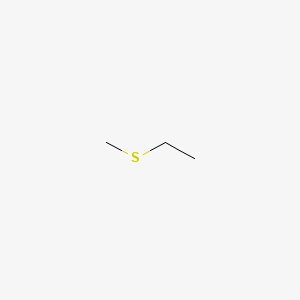
Ethyl methyl sulfide

Ethyl methyl sulfide, identified by CAS number 624-89-5, is an organic thioether characterized by its distinct, pungent odor and volatile nature. As a clear, colorless to pale yellow liquid, this compound serves as a critical building block in organic synthesis and specialty chemical manufacturing. Its molecular structure, consisting of a sulfur atom bonded to both

Ethyl methyl sulfide Read More »

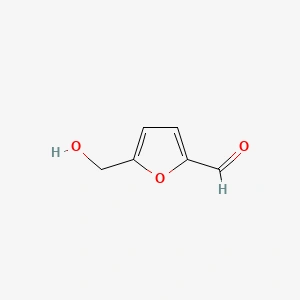
5-Hydroxymethylfuran-2-aldehyde

5-Hydroxymethylfuran-2-aldehyde, commonly known as 5-Hydroxymethylfurfural (HMF), is a versatile organic compound identified by CAS 67-47-0. It is characterized as a cyclic aldehyde containing a furan ring and a hydroxymethyl functional group. Naturally occurring during the thermal decomposition or acid-catalyzed dehydration of hexose sugars, HMF serves as a critical bridge between biomass-derived carbohydrates and high-value industrial

5-Hydroxymethylfuran-2-aldehyde Read More »

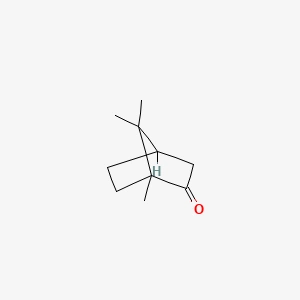
camphor

Camphor (CAS 76-22-2) is a naturally occurring bicyclic monoterpene ketone traditionally derived from the wood of the camphor laurel tree, though it is now predominantly synthesized from turpentine for industrial scale. It is characterized by its distinct, penetrating aromatic odor and a waxy, translucent white appearance. Chemically, it is a volatile solid that sublimes at

camphor Read More »

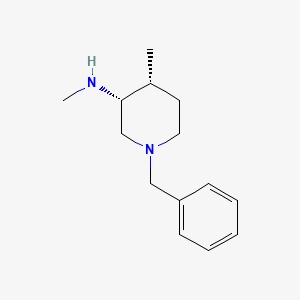
(3R,4R)-1-Benzyl-N,4-dimethylpiperidin-3-amine

(3R,4R)-1-Benzyl-N,4-dimethylpiperidin-3-amine, identified by CAS 477600-70-7, is a specialized chiral organic compound characterized by its substituted piperidine core. This molecule features a benzyl protecting group on the ring nitrogen and specific stereochemistry at the 3 and 4 positions, which is critical for its function as a building block in complex organic synthesis. As a secondary amine

(3R,4R)-1-Benzyl-N,4-dimethylpiperidin-3-amine Read More »

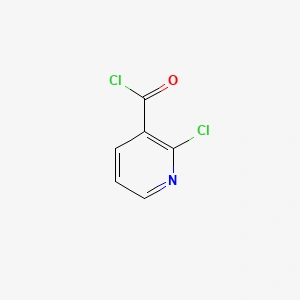
2-Chloronicotinoyl chloride

2-Chloronicotinoyl chloride, identified by CAS number 49609-84-9, is a highly reactive organic intermediate belonging to the pyridine carboxylic acid chloride family. It typically appears as a colorless to pale yellow liquid or low-melting solid and is characterized by its distinct pungent odor. As an acyl halide, it serves as a versatile building block in organic

2-Chloronicotinoyl chloride Read More »

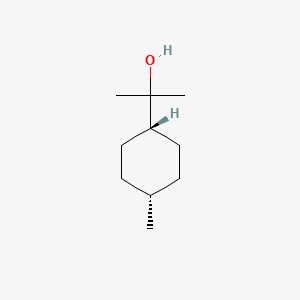
p-MENTHAN-8-OL

p-Menthan-8-ol, identified by CAS number 498-81-7, is a saturated monoterpenoid alcohol also commonly referred to as dihydro-alpha-terpineol. This chemical compound is characterized by its stable molecular structure, which distinguishes it from its unsaturated counterparts like alpha-terpineol. It typically appears as a colorless liquid or a low-melting crystalline solid, exhibiting a pleasant, mild woody-floral aroma with

p-MENTHAN-8-OL Read More »

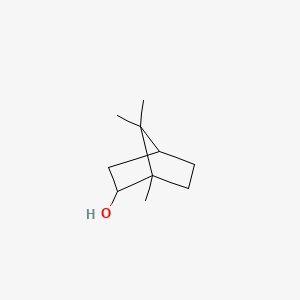
Borneol

Borneol, identified by CAS number 507-70-0, is a bicyclic monoterpene alcohol that occurs naturally in several species of Artemisia and Dipterocarpaceae. It typically appears as a white to off-white crystalline solid or translucent lumps with a characteristic pungent, camphor-like odor and a cooling sensation. As a member of the terpene family, it exhibits significant chemical

Borneol Read More »

REQUEST A QUOTE

Product Inquiry — Popup Form